Adaptive Content: Delivering the Right Format on the Right Channel
Adaptive content is about delivering the same message in the right format for each channel. Instead of using one format everywhere, it adapts structure, depth, tone, and delivery to how people actually consume content across search, social, and email.

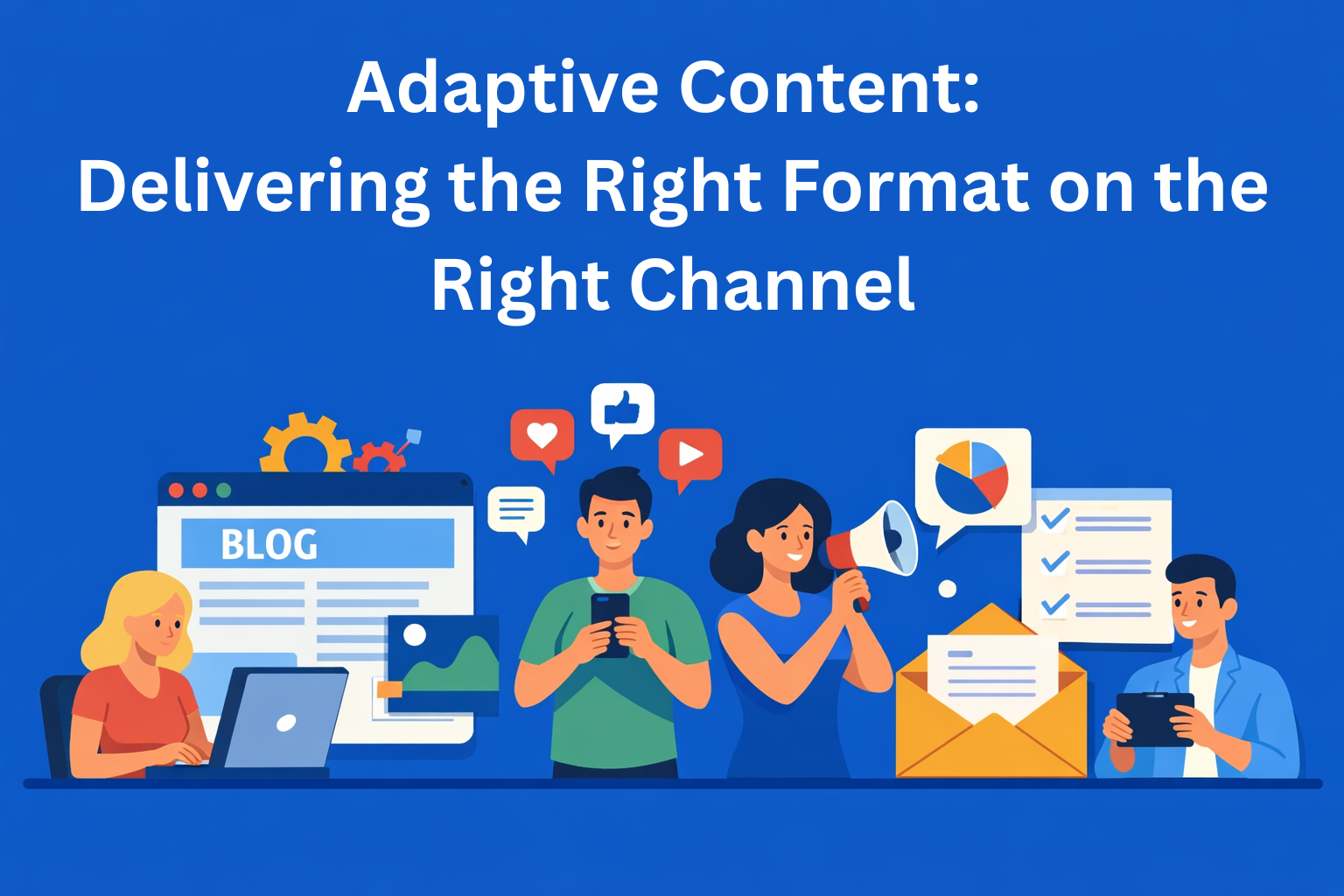
Today, content is used across many different channels. People read blog posts through Google search, scroll social media non-stop, check email while working, and consume content in many other ways. Even when the message stays the same, the way people reach that content and how they read it is not the same.
This is where the concept of adaptive content comes in. It means that the same content does not work equally well on every channel. There is a big difference between someone actively searching for an answer on Google and someone casually reading a post on social media. When we use the same format everywhere, content quickly loses its impact.
In this blog, we will talk about what adaptive content means in practice, why it has become essential in modern content strategies, and how to apply it without unnecessary complexity.
Key Takeaways
- One message doesn’t work everywhere - the same content needs different structures, depth, and tone depending on the channel.
- Adaptive content is about context - how people consume content matters as much as what the message says.
- Format should follow the channel - blogs explain, social posts highlight, and emails guide next steps.
- Adaptation works best when planned early - modular content makes cross-channel adaptation easier and more consistent.
- Adaptive content increases impact, not workload - better reuse and clarity lead to stronger results without creating more content.
What Is Adaptive Content (And What It Is Not)
Adaptive content means intentionally adapting content to each channel. This does not simply mean shortening text or changing a headline. It means adapting:
- content structure - how the content is organized and the order in which information is presented. On some channels, people need a clear introduction and a logical flow, while on others it is more important that the main point is visible immediately.
- depth of explanation - how deeply you go into the topic. In some cases, things need to be explained step by step, while in others a short and clear explanation of the core idea is enough.
- tone of communication - the way you speak to your audience. The same message can sound more formal, more relaxed, or more direct depending on where it is published.
- delivery format - whether the content is a long-form text, a short post, an email, a list, or a visual. The right format helps the message be received and understood more easily.
In other words, adaptive content takes into account the context in which the content is consumed.
It is also important to understand what adaptive content is not. It is not:
- copy-pasting the same text across multiple channels
- quickly shortening a blog post into a LinkedIn post
- blindly reworking content without thinking about where and to whom it is published
True adaptive content keeps the same message, but changes the way that message is delivered.
Why the One-Size-Fits-All Approach No Longer Works
For a long time, the rule was that writing one good piece of content and publishing it everywhere was enough. Today, this approach no longer delivers results.
The reason is that each channel has a different role and different audience expectations. When you publish the same text as:
- a blog post
- a LinkedIn post
- an email
what usually happens is that none of the versions work properly. The blog feels too shallow, the LinkedIn post is too long, and the email lacks a clear focus.
Adaptive content solves this problem by starting from the idea that every channel has its own purpose. Once you understand that, it becomes clear why the same format cannot work equally well everywhere.
Understanding Channel Context: How People Consume Content
For adaptive content to make sense, you first need to understand how people use different channels.
Google search
On Google, people have a clear problem and are looking for a specific answer. That is why a blog post needs to be detailed, clear, and well-structured. Keywords play an important role here because they help the content get discovered.
Social media
On social media, people scroll quickly and read superficially. Short, clear messages that are easy to understand at first glance perform best. Adaptive content in this case means extracting the main point and communicating it simply, without going into details.
Email is a more personal channel. People prefer to receive content gradually rather than all at once. That is why the message should be simple and clearly communicate what the next step is.
Matching the Right Format to the Right Channel
One of the most common problems in content teams is choosing the wrong format. Adaptive content means selecting the format based on the channel, not the other way around.
For example:
- a blog is ideal for explaining complex topics
- social media is good for sharing opinions and experiences
- email works well for follow-ups and deepening relationships
When thinking about adaptive content, ask yourself what people on that channel understand most easily and what they usually expect. If you get that right, the content will naturally perform better.
Designing Content for Adaptation From the Start
One of the biggest mistakes is trying to adapt content only after it has already been written. Adaptive content works best when it is planned from the very beginning.
This means you do not write content as one large block, but instead break it into smaller parts that can later be adjusted and adapted for different channels.
A useful way of thinking about this is a modular approach:
- main idea
- key messages
- examples
- conclusions
When content has a clear structure, it becomes much easier to adapt it for different channels without losing meaning.
One Idea, Multiple Adaptive Formats
Imagine that you have one central topic.
If you are writing a blog post, the topic is explored in more detail and explained step by step. If you are writing a social media post, the topic is reduced to one clear message or insight.
In email format, that same idea can be split across several shorter messages that build on each other. As a visual, the topic is reduced to a few key points.
In all of these cases, the message stays the same. Only the way it is presented changes.
That is the essence of adaptive content.
Common Mistakes When Repurposing Content
Even though adaptive content sounds simple, the same mistakes are often made in practice.
The most common mistake is focusing only on the format instead of the message. Another frequent mistake is overloading channels with too much information, such as overly long LinkedIn posts or emails that try to say too much at once.
The third mistake is losing consistency. Adaptive content does not mean having a different message on every channel, but expressing the same message in different ways.
How Adaptive Content Increases Value Without More Work
One of the biggest advantages of adaptive content is that it increases the value of existing content. Instead of constantly creating new pieces, the focus shifts to using what already exists more effectively.
This leads to:
- greater visibility
- better engagement
- clearer communication
Adaptive content allows teams to work smarter, not harder.
Conclusion
Adaptive content reminds us that content is not only about what you say, but also how, where, and when you say it.
By adapting the format to each channel, you are not changing the message, but giving it a better chance to be understood correctly.
For teams that want better results without constantly starting from scratch, adaptive content becomes an essential part of a content strategy.