Your “Always-Visible” Dashboard: What Belongs on It and Why
An always-visible content dashboard helps teams make better decisions by keeping key metrics in plain sight. This post explains which data matters most, what to exclude, and how visibility improves focus, accountability, and day-to-day execution.

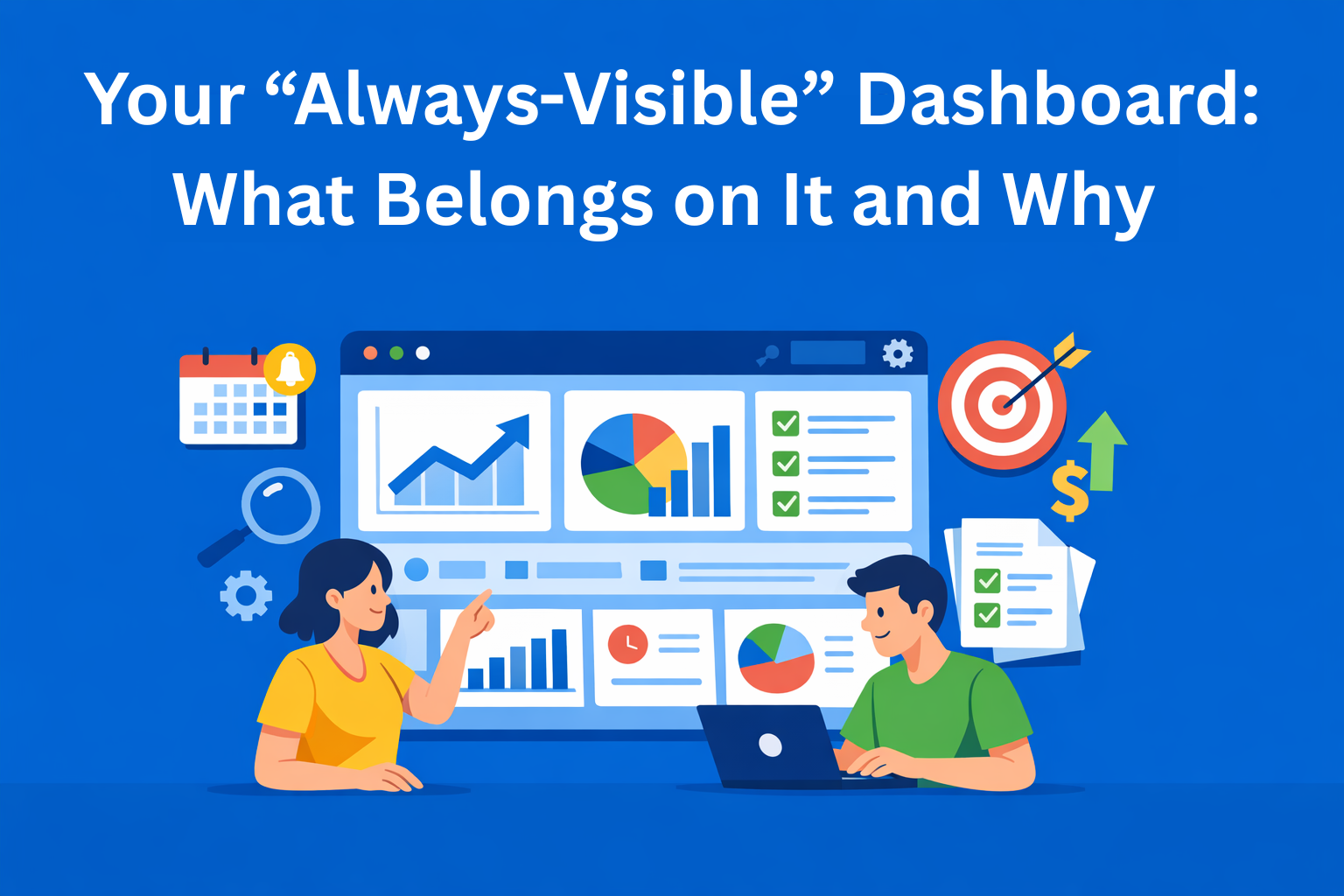
Your team makes better decisions when the right information is always visible. Not hidden inside analytics tools, not buried in monthly reports, but right where the team works every day. That’s why a content dashboard is one of the most important things for any content team, but only if it’s designed to support daily work, not just reporting.
This blog explains what should actually live on an always-visible dashboard, why those data points matter, and how they help a team work with more focus, speed, and fewer unnecessary surprises.
Key Takeaways
- Visibility drives better daily decisions - when key information is always visible, teams stop guessing and act faster with confidence.
- Dashboards should support daily work, not reports - an effective dashboard answers what matters today, not just what happened last month.
- Output metrics reveal real momentum - seeing what’s published, in progress, or stuck shows whether the team is moving or just busy.
- Operational signals expose bottlenecks early - clear status, deadlines, and aging content help teams fix problems before they escalate.
- Clear ownership reduces friction - knowing who’s responsible for each next step eliminates constant check-ins and delays.
Why visibility changes how a team works
The biggest problem most content teams have isn’t a lack of data. The problem is that they don’t see all the data in one place. If you need to open three tools, five tabs, or wait for a monthly report just to understand what’s going on, decisions will always come too late.
When key content metrics are always visible, the team doesn’t have to guess. Everyone sees the same information in real time. That means fewer misunderstandings, fewer ad-hoc questions, and a clearer focus on what matters today.
An always-visible dashboard isn’t there to impress management. It exists to help the people who write, edit, design, and publish content every day.
Dashboards aren’t for reporting, they’re for daily work
Traditional dashboards are often built only for reporting to management. They show what happened in the past. But a content team dashboard should support the team’s day-to-day work and simply answer one basic question:
Are we working on the right things today?
For operational work, you don’t need perfect numbers. You need clear signals. When the team can see what’s late, what’s been published, and what’s stuck in the process, decisions happen immediately, not two weeks later.
Output metrics: are we actually publishing enough content?
The first thing a dashboard should show is output. Not because volume is the most important thing, but because without output, there are no results.
On a content dashboard, it should be clear:
- how much content has been published
- how much is currently in progress
- how much is waiting for review or approval
These content metrics help the team understand whether there’s real momentum or just a feeling of being busy. If everyone is working but very little is getting published, the dashboard makes that visible immediately.
Engagement signals: is the content doing its job?
You don’t need deep analytics on your dashboard. Basic signals are enough to show whether content is having any impact at all.
These can include:
- views or reach
- basic engagement (clicks, comments, reactions)
- which content stands out and which goes unnoticed
The goal of these content metrics isn’t detailed analysis, but quick orientation. The dashboard should help the team quickly see what’s working and ask a simple question: does it make sense to continue this, or do we need to change something?
Operational data: where does the process slow down?
One of the most valuable parts of a content team dashboard is operational data. It often reveals more problems than performance metrics alone.
The dashboard should show:
- the status of every piece of content
- deadlines that are approaching or overdue
- the average time needed for production
These signals help the team spot bottlenecks. Is content getting stuck in review? Is feedback taking too long? Without this visibility, problems usually surface only when it’s already too late.
Ownership: who is responsible for what?
Visibility helps everyone take ownership, without pressure. When it’s clear who’s working on what and where each piece of content is in the process, there’s no need for constant check-ins or reminders.
A good content dashboard clearly shows:
- who owns the next step
- what’s waiting on a response
- where input from others is needed
This level of transparency reduces micromanagement and helps the team manage their work independently.
What doesn’t belong on an always-visible dashboard
Not all data is useful for daily work. Some information only distracts and creates noise.
On an operational content team dashboard, you usually don’t want:
- deep SEO analyses
- complex funnel reports
- monthly KPI breakdowns
If a data point exists mainly for presentations or needs a lot of explanation, it probably doesn’t need to be visible all the time.
The one simple question your dashboard should answer
At the end of the day, a good dashboard should answer one question:
Do we know what we need to work on today?
When a writer sees their next task, an editor knows what’s waiting for review, and a stakeholder has a basic view of the situation, the team can move forward without friction.
In that case, the content dashboard becomes a shared view of reality, not a tool that’s opened only from time to time.
Conclusion
When key data is always visible, teams work more calmly and confidently. There are fewer surprises, less guessing, and fewer last-minute fixes.
An always-visible dashboard isn’t there to control the team. It’s a simple operational tool that helps content teams stay focused, keep a healthy pace, and maintain momentum day after day.