The Content Mistakes Teams Keep Repeating Every January
Every January, content teams reset with new plans and big goals, but repeat the same mistakes. This blog breaks down the most common content issues teams face at the start of the year, why they keep happening, and how to fix them for good.

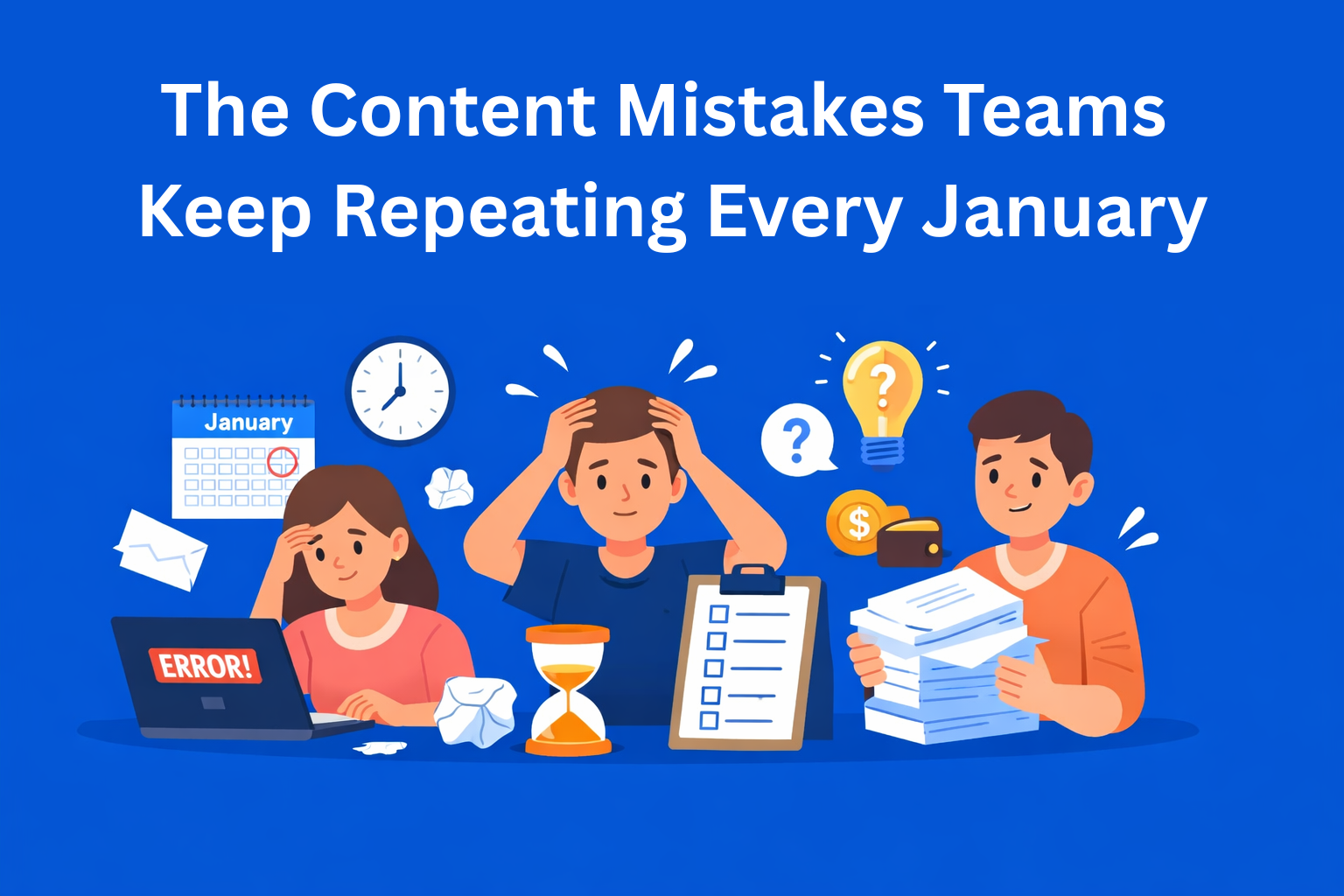
A new year means new goals, a new strategy, a new content plan, and of course, a full content calendar. Everything feels fresh and optimistic. However, very quickly, the same problems from last year start to appear again. Delays, confusion, too much feedback, unrealistic expectations, and the feeling that the team is constantly going in circles.
The problem is not that content teams lack knowledge or good intentions. The real issue is that January is often used as a superficial reset. Instead of actually fixing problems in the content process, teams simply replace the old plan with a new one - without fixing the things that slowed them down the year before.
In this blog, I will explain which content mistakes teams repeat every January, why these mistakes keep coming back, and how to avoid carrying old problems into a new content strategy and roadmap.
Key Takeaways
- January often resets plans, not problems - new strategies fail when last year’s blockers are ignored.
- A full content calendar doesn’t equal control - without a clear workflow, deadlines and quality still slip.
- Bigger goals without more capacity lead to burnout - the same team can’t sustainably produce more without real changes.
- Small process issues cause the biggest slowdowns - unclear briefs, feedback chaos, and too many approvers quietly break momentum.
- Fix how the team works before changing tools - tools support good processes, they don’t replace them.
January as a false reset for content teams
January has a special psychological weight. A new year brings a sense of control and motivation. Leadership expects a new plan. The marketing team wants clear goals. The content team is asked to “deliver more and better” than last year.
Because of this, teams very quickly write a new content strategy, create a large content plan, and fill the content calendar months in advance.
On paper, everything looks perfect. In reality, the same old problems remain. Poor workflows, unclear decisions, and everyday problems are simply hidden behind a new plan. That is why the same content mistakes repeat every year, regardless of the team’s experience or the quality of the strategy.
Mistake #1: A new content strategy without analyzing last year
One of the most common content mistakes is skipping a retrospective. Teams want to move forward and rarely look back at what didn’t work.
Instead of asking questions like:
- Why did articles miss deadlines?
- Why did feedback take so long?
- Why did the same mistakes keep happening?
They ask questions such as:
- Which new topics should we cover?
- How many pieces of content should we publish per month?
Without understanding past problems, a new content strategy is built on assumptions. The result is a plan that looks ambitious but falls apart very quickly.
If a content team does not understand what slowed them down last year, the same issues will appear again as early as February or March.
Mistake #2: A full content calendar without a clear workflow
A content calendar often creates a false sense of control. When all dates are filled, it feels like the content process is under control.
But if it’s not clear who makes decisions, who gives feedback, how many review rounds exist, and where time is being wasted, a full content calendar is useless.
If the workflow is unclear, a packed content calendar only increases confusion. Content gets delayed, people get frustrated, and quality starts to drop.
A real content strategy does not start with a calendar. It starts with a clear process. Only when the workflow is stable does content planning truly make sense.
Mistake #3: Unrealistic goals with the same amount of resources
Another common content mistake is setting bigger goals without increasing capacity.
Phrases like:
- “We need to do more this year”
- “We need to publish twice as often”
sound familiar to almost every content team.
The problem starts when these goals are set, but nothing actually changes in the working conditions. Most often, teams do not change:
- team size - the same number of people try to do more work, which leads to burnout or skipping important steps.
- budget - there is no extra money for support (freelancers, design, video, tools), so everything is pushed back onto the same team.
- time distribution - people still have the same meetings and responsibilities, so the time left for content stays just as limited as before.
The same people, with the same responsibilities, are given higher expectations. This almost always leads to burnout and lower content quality.
A good content strategy is built around real capacity, not wishes or pressure from the top.
Mistake #4: Ignoring internal problems in the content process
Many problems inside content teams are not obvious at first. They are hidden in things like:
- unclear briefs
- too many approvers
- vague or confusing feedback
- decisions that are not documented
These problems slow down the content process every single day, but they are rarely addressed in January. They are often seen as “small issues” or something that will “work itself out over time.”
In reality, these small issues create the biggest chaos in the content workflow. If they are not removed, no new content strategy will work properly.
Mistake #5: Focusing on tools instead of ways of working
When a content process does not work, the first reaction is often: “We need a new tool.”
While tools can help, they do not fix a bad way of working. If roles are unclear, decisions are not visible, and feedback is unstructured, a new tool only digitizes existing chaos.
The right order is always the same:
- define how the content team should work
- remove unnecessary steps
- only then choose a tool that supports that way of working
Without this, content mistakes will repeat regardless of technology. For example, EasyContent is the type of tool that helps teams fix poor workflows by defining clear roles, structured feedback, and visible decisions. This way, teams don’t have to worry about a new tool slowing them down or creating more problems - because it is designed to do the opposite.
Why these content mistakes keep repeating
There are several reasons why the same content mistakes show up every January:
- Psychological pressure of a new beginning - January feels like a “fresh chance,” so teams rush to show results instead of first fixing old problems.
- Leadership expectations - management often wants plans and numbers immediately, which pushes teams to focus on presentations and deadlines instead of improving processes.
- Lack of time for reflection - very few people set aside focused time to review what went wrong last year, because everyone jumps straight into new tasks.
- Focus on speed instead of stability - when the priority is to “publish content as fast as possible,” the process becomes rushed and messy, and mistakes repeat week after week.
Content teams often don’t have the space to stop and fix the system. Instead, they are expected to deliver immediately.
That is why old problems simply get repackaged into a new content strategy.
How January can become a real reset for content teams
A real reset does not mean writing a new plan. It means removing the blockers and problems that slowed the team down last year.
This means:
- defining a clear content workflow
- setting realistic goals
- creating a smaller but more sustainable content plan
- documenting decisions and processes
When the focus shifts from “more content” to removing problems, content teams start working in a more stable and efficient way.
Conclusion
If content problems are not solved, they will repeat no matter the strategy, roadmap, or tool.
January is the perfect opportunity to fix a content system - but only if the team is willing to look honestly at what really slowed them down last year.
Real success does not come from a perfect plan, but from a clear, simple, and sustainable content process.