How Agencies Can Eliminate the Content Collection Bottleneck
Content collection bottleneck is why projects stall, teams burn out, and clients get frustrated. Learn how to set up a simple system to collect content faster, stay on schedule, and stop chasing clients for files.


You send the client an email. They say they’ll send everything by Friday. Friday comes and goes. You follow up. They apologize and say next week for sure. Next week comes, still nothing. Meanwhile, your team is sitting around waiting, the deadline is getting closer, and the project is stuck.
This is one of the main reasons why agency projects run late, teams burn out, and clients end up unhappy. The interesting part is that it’s rarely anyone’s fault. Clients aren’t trying to be difficult. Agencies aren’t disorganized on purpose. The problem is simply that no one has set up a clear and simple system for collecting content from the start.
In this blog, I’ll explain why this keeps happening, how much it actually costs your agency, and, most importantly, how to fix it once and for all.
Key Takeaways
- Content collection delays are a system problem - projects get stuck not because of clients, but because there is no clear and structured process in place.
- Lack of clarity creates chaos - vague requests, scattered communication, and unclear expectations lead to missing or unusable content.
- Hidden costs add up quickly - follow-ups, delays, and idle team time waste money and damage client relationships over time.
- A simple system fixes most issues - a clear checklist, one centralized platform, defined deadlines, and clear submission standards eliminate confusion.
- Better process improves everything - faster delivery, fewer delays, happier teams, and a more professional experience for clients.
1. Why content collection breaks down
Let’s start with the basics. When an agency takes on a project, whether it’s building a website, running a marketing campaign, or managing social media, they need things from the client. Photos, copy, logos, brand guidelines, product descriptions… everything.
The problem is that most clients have no idea what “sending content” actually means. They think they’ll just forward a few files and that’s it. But then the agency ends up with blurry images, outdated logos, text copied from an old website, and maybe a Word document with half the information missing.
That’s where the whole process starts to fall apart.
On top of that, communication is all over the place. Some things come via email, some through WhatsApp, something else in a Google Drive folder that no one can find. Everything is scattered, nothing is in one place. And since there’s no clear deadline or a proper checklist, the client doesn’t feel any urgency and keeps postponing.
And then the project manager spends half the day chasing people instead of actually managing the project.
2. The hidden cost of this problem
Something most agency owners never really think about is: how much does this actually cost?
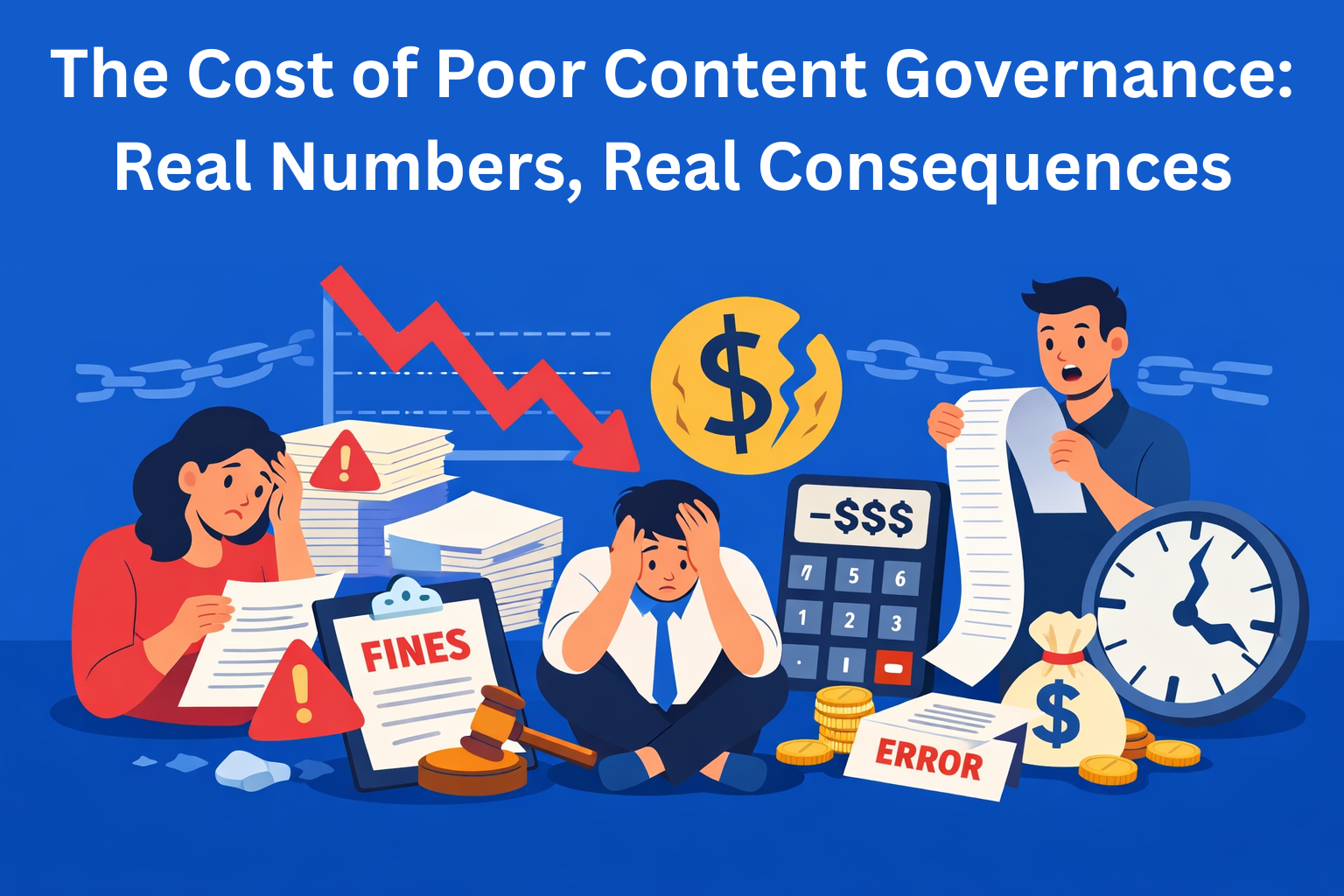
Think about it. Every follow-up email your project manager sends, that’s 15 minutes gone. Every time the team has to stop because they’re waiting on content, that’s literally money being wasted. And every time a deadline gets pushed because something is missing, the relationship with the client starts to suffer.
And it’s not just about money. This drains your team. There’s nothing worse than being ready to work and not being able to continue because you’re waiting for a logo or a product description. As time goes on, that frustration just keeps growing. People feel like they’re always behind, always chasing something, but never actually finishing the work they’re paid to do.
There’s also reputation. Clients notice when projects are late. Even if it’s technically their fault for not sending materials, they’ll still blame the agency. It’s not fair, but that’s how it works. A good content collection process protects your reputation just as much as it protects your deadlines.
3. The real causes most agencies ignore
Why does this keep happening, even in organized agencies? There are a few reasons people don’t talk about enough.
No standardized onboarding process. Most agencies have a sales process, a design process, a development process, but no real process for collecting content at the start. It’s treated like something that will sort itself out along the way. It won’t.
Clients don’t know what “good content” looks like. When you tell a client to send images, they send whatever they have on their phone. They’re not lazy, they just don’t know what you actually need. If you don’t define format, dimensions, and style, you’ll get whatever is easiest for them to send.
The wrong tools. Email and WhatsApp are great for communication, but terrible for content collection. Files get lost, buried in threads, and there’s no way to track what’s been received and what’s missing.
Too much back-and-forth. Without a clear process, every small thing becomes a new conversation. “Did you get the logo?” “Which version?” “The one from Tuesday.” “I only see the one from Monday.” This also wastes a lot of time.
4. The fix: a structured content collection system
But this is a completely solvable problem. You don’t need complex tools or a massive change in how you work. You just need a simple, clear system.
Step 1: Create a content checklist for every project.
Before the project starts, make a list of everything you need from the client. Be specific. Don’t say “send images,” say “send 10 high-resolution JPG images, minimum 1200px wide, showing the product from the front, side, and in use.”
This is the foundation of a good onboarding process.
Step 2: One place for everything.
Pick a single platform where clients upload content, and stick to it. No more email attachments, no more links scattered across Slack. One place, clearly organized.
Step 3: Set real deadlines and reminders.
Don’t say “send it whenever you can.” Give a specific date. And explain what happens if they’re late, the entire project timeline shifts. Add automatic reminders a few days before the deadline.
Step 4: Define what “done” means.
Explain to the client what a complete submission looks like. Give them a checklist they can go through before sending anything. This drastically reduces incomplete content.
5. Tools that speed things up
You don’t have to build all of this from scratch. There are tools specifically made for content management and client collaboration.
What should you look for?
- It should be simple for the client
- It should give you real-time visibility
- It should fit into your workflow
Some agencies use dedicated client portals, others use tools they already have. For example, EasyContent can help a lot here. It lets you create your own workflow, communicate with your team in real time, keep all content files in one place, and share links so clients can view content directly inside the platform, which is ideal when you want to send content for approval.
A good tool doesn’t just save time, it changes the dynamic between you and your client. You look more organized, more professional, and more in control.
6. What happens when you fix this
When agencies implement a proper content collection system:
- Projects finish on time
- There are far fewer follow-up emails
- Clients have a better experience
- The team is happier
This is one of those things that has a huge impact in an agency. You invest a little, and you get a big return.
Conclusion
The content collection problem is not a small issue. It’s like a slow leak that drains your time, money, reputation, and team energy, and you often don’t even realize how much it’s costing you.
But it can be fixed.
You need a checklist, one central place for content, clear deadlines, and a simple process.
You don’t have to change your entire agency. Start with your next project. Set up the system and see what happens.
Chances are, you’ll never go back to the old way.
If you want to take it a step further and see how this works in practice, we can show you. Book a demo and see it in action.