GenAI: Another Tool in Your Content Toolbox
GenAI isn’t replacing content teams, it’s changing how they work. Used the right way, it helps with research, outlines, and first drafts, while people stay in control. This blog explains where GenAI fits into real content workflows, and where it doesn’t.

If you follow any news about marketing or content, there’s a good chance you’ve already come across claims that GenAI will replace writers, content teams, and the entire content creation process. Headlines often sound dramatic, as if this is a technology that’s coming to take over everything people do. For someone who doesn’t have much contact with this topic, that can feel scary or confusing.
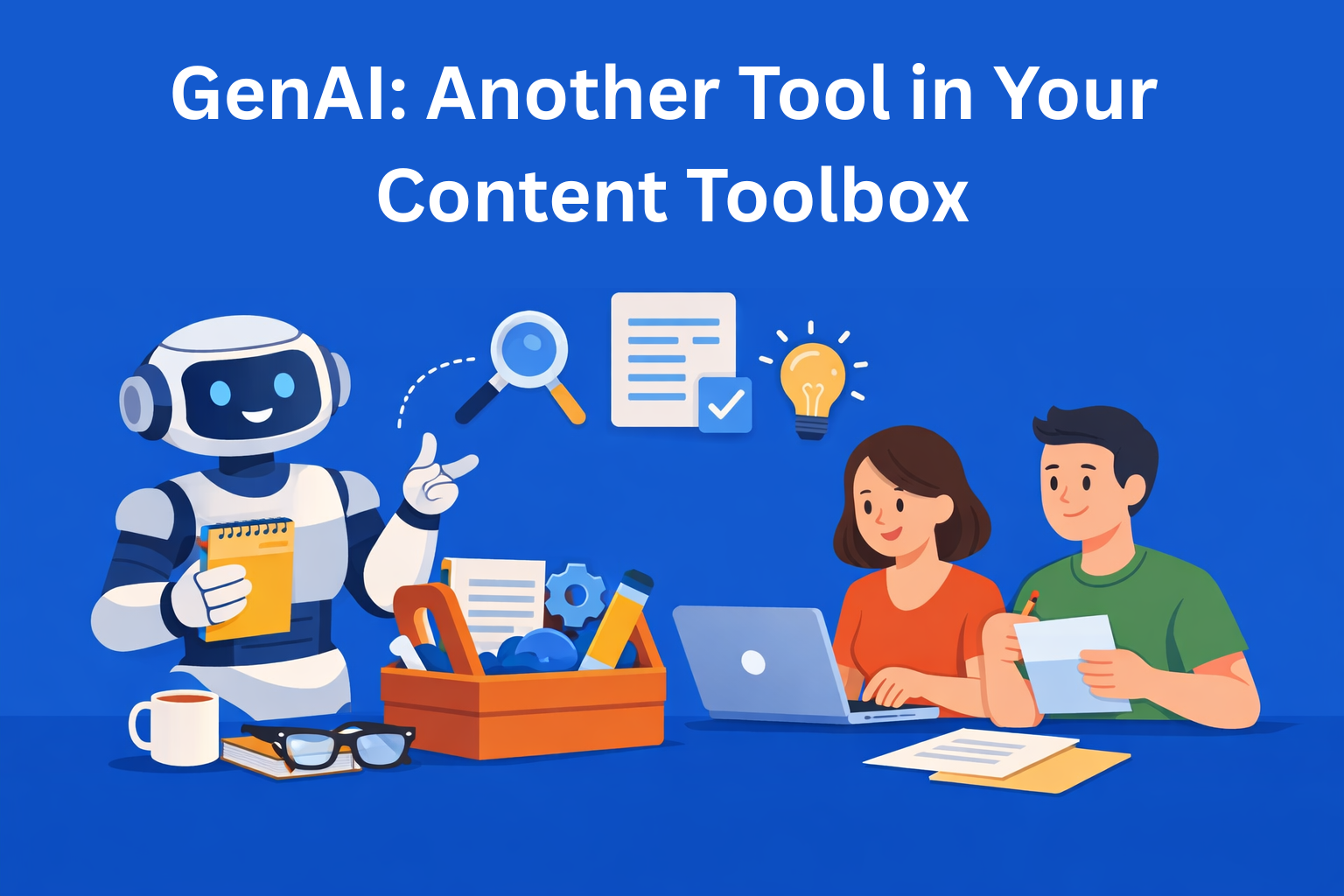
But it’s not actually that dramatic. GenAI in content marketing is not a replacement for people, but a tool that helps us do our work. Just like Google Docs, SEO tools, or design software did before it. In this blog, I’ll explain what GenAI really is, where it actually makes sense to use it, and why the healthiest way to think about it is as part of your content toolbox, not as a strategy on its own.
Key Takeaways
- GenAI is a tool, not a replacement - it supports content work the same way other productivity tools do, without replacing people.
- Its biggest value is at the start - GenAI helps with research, structure, and first drafts, especially when facing a blank page.
- Quality still comes from humans - context, audience understanding, and brand voice cannot be automated.
- AI needs clear boundaries - strategy, messaging, and final decisions should always stay in human hands.
- GenAI works best inside a system - when used within workflows, templates, and reviews, it becomes truly useful.
How We’ve Seen “Revolutionary” Tools Before
If we look back a few years, it becomes clear that this isn’t the first time a tool has been announced as a “game changer.” When collaboration tools like Google Docs first appeared, many people thought they would change, or even remove, the need for teams. That didn’t happen. Instead, teams started working faster, more easily, and in a more organized way.
The same thing happened with SEO tools. They didn’t replace marketers, but helped them make better decisions. The same goes for design tools, which made work easier but didn’t replace creative thinking. GenAI content tools are going through the same cycle today. A lot of hype, a lot of fear, but in practice , just a new way to make certain parts of the job more efficient.
What GenAI Actually Is in Everyday Content Work
In real content work, GenAI is most often used as help in the early stages of the process. That means it helps in the moments where people usually get stuck or lose time.
For example, during topic research, collecting basic information, or thinking about the structure of a text.
Many content teams use GenAI to make starting a piece of content easier. Instead of staring at a blank document, they get a first draft or a basic outline that they later improve. It’s important to understand that speed doesn’t automatically mean quality. AI for content writing can speed up the start, but quality still comes from human control, understanding the audience, and knowing the context.
GenAI and the “Blank Page” Problem
One of the biggest problems in content writing is getting started. When you don’t have a clear idea of how to begin, it’s easy to waste time. This is where GenAI in content processes can be very helpful. It can suggest a few opening versions, headline ideas, or a basic structure for the text.
For beginners, this can be a huge help. Even for experienced writers, this approach reduces mental pressure and helps shift focus from “how do I start?” to “how can I make this better?”
In that sense, GenAI is just help in the process, not something that writes instead of you.
Where GenAI Doesn’t Really Make Sense
Even though it’s useful in certain phases, it’s just as important to understand where GenAI in content marketing doesn’t bring real value. The biggest problems appear when AI is used without context. AI doesn’t understand your audience the way a team that works with them every day does. It doesn’t understand brand nuances, tone of voice, or long-term direction.
That’s why GenAI shouldn’t be relied on for strategy, core messaging, or brand tone. Without clear guidance, AI often produces content that sounds the same as everything else. That’s why today it often feels like many texts look and sound alike , and that’s not far from the truth.
Why Human Control Is Essential
No matter how advanced AI content tools become, human control remains the most important part of the process. People provide context, set boundaries, and make the final decisions. AI can suggest things, but it shouldn’t decide.
This principle is often called “human-in-the-loop.” It means AI helps, but every change goes through human review. In practice, this looks like a mix of speed and control , we get help where we need it, but we keep responsibility for the final result.
How GenAI Naturally Fits Into Tools Like EasyContent
In real content teams, GenAI works best when it’s part of an existing workflow. For example, in platforms like EasyContent, AI features aren’t a separate chatbot, but are built directly into the content workflow. That means AI for content creation is used together with clear templates, workflows, and rules.
EasyContent allows AI to be used for first drafts, research, or improving existing text, but always with human review and approval. This approach shows that GenAI only makes sense when it helps in the process, not something that drives the entire strategy.
GenAI as Part of a Bigger System, Not a Solution for Everything
One common mistake is expecting a single tool to solve every problem. When generative AI is used for every task in content work, people quickly get disappointed. AI can’t think, plan, or understand an audience the way a human can.
A healthy approach is to use GenAI together with the other tools you already have, like content calendars, SEO tools, and editorial processes. Only then can AI truly help and deliver better results.
Why Content Team Maturity Affects AI Success
Interestingly, GenAI in content teams helps the most when teams already have structured processes. Teams with clear roles, workflows, and standards find it easier to integrate AI and get better results. On the other hand, teams without structure often expect AI to fix everything, which rarely happens.
AI only amplifies what’s already there. If the process is good, it becomes more efficient. If the process is bad, the problems become more visible.
Conclusion
In the end, GenAI is neither a savior nor a threat. It’s simply another tool in your content toolbox. Like any tool, it can be useful or useless, depending on how it’s used. When you look at it without hype or fear, it becomes clear that its biggest value is in support, not in replacing people.
The best content teams today use AI in a smart way: to work faster, stay more organized, and make starting easier. But strategy, creativity, and responsibility still stay in human hands. And that’s where the real strength of modern content work lies.