How a Small AI Stack Can Do the Work of a Full Content Team
In 2026, content teams don’t need large teams or massive tool stacks to be effective. This article explains how a small AI stack can handle planning, writing, optimization, and content operations, so people can focus on strategy, quality, and decisions.

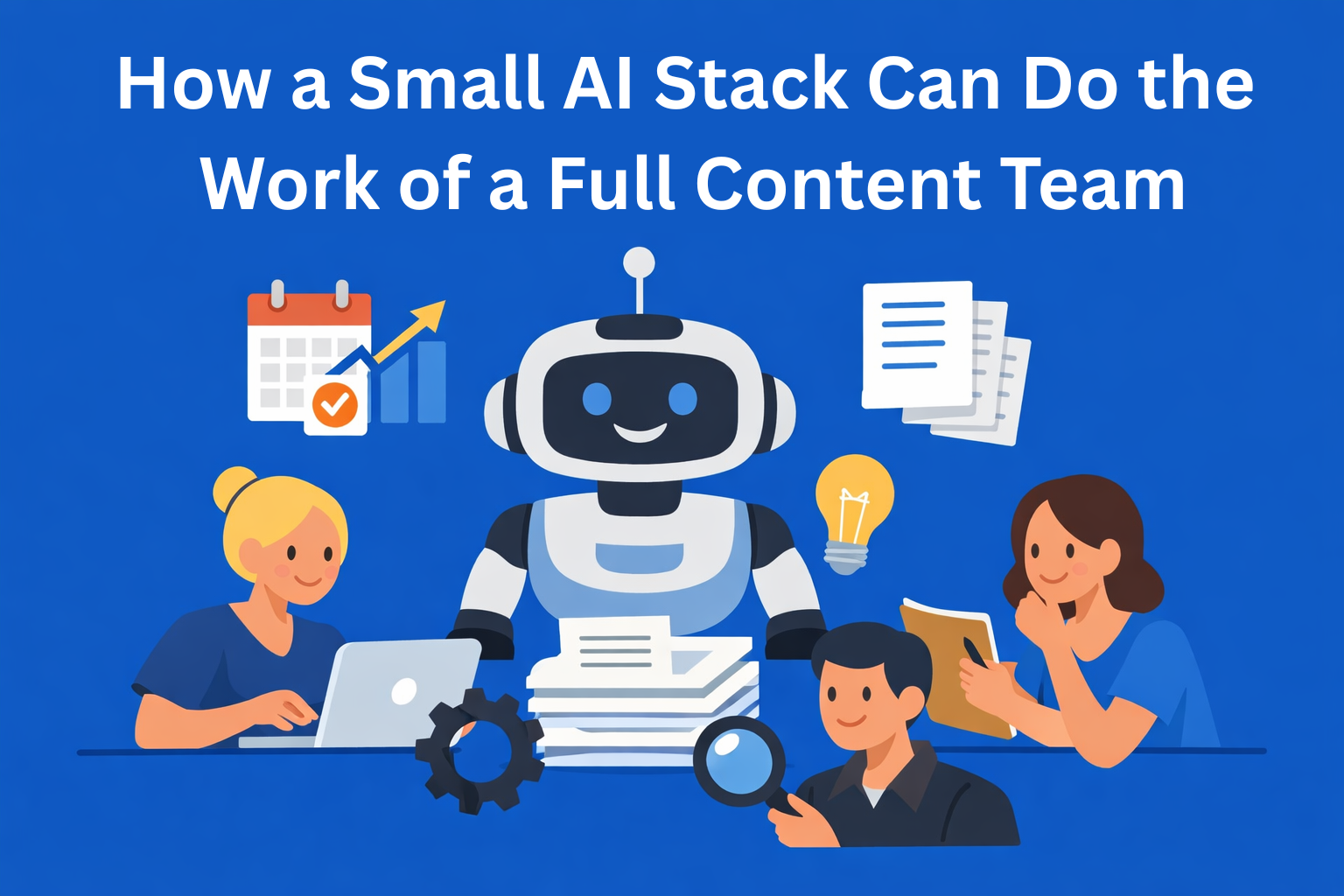
In 2026, the way content teams work looks completely different than it did just a few years ago. Not long ago, growth usually meant hiring more people and adding more tools to everyday work. Today, more and more teams are facing the opposite problem: too many tools, too many processes, and too many steps that slow everything down.
That is why one simple question is being asked more often: how can a small AI stack do the work that once required a full content team? In this blog, I will explain why the solution is not about replacing people, but about building a work system where AI tools handle the operational side of the work, while people focus on strategy, quality, and decision-making.
Key Takeaways
- More people and tools don’t equal speed - large teams and bloated stacks often slow content down through coordination and waiting.
- A small AI stack is about system design - the value comes from tools working together, not from how many you use.
- AI handles operations, humans handle decisions - routine tasks move to AI so people can focus on strategy, quality, and judgment.
- Writing alone isn’t enough - planning, optimization, and content operations must be part of the same AI-supported workflow.
- Tools can’t fix broken processes - a small AI stack only works when roles, priorities, and workflows are clearly defined.
The Myth of Large Content Teams and Massive Tool Stacks
For a long time, there was an unwritten rule that good content required a large team.
- Strategist
- Writer
- Editor
- SEO specialist
- Project manager
- Designer
Everyone had their own role. On top of that, different tools were used for each stage of the process:
- One tool for planning
- Another for writing
- A third for comments
- A fourth for tracking status
The problem is that this way of working today often slows things down more than it helps. A large content team means more communication, more coordination, and more waiting. When a large tool stack is added on top of that, information gets lost easily, and people waste time jumping from one tool to another.
For example, an idea exists but is waiting for approval. The text is written but is waiting for editing. The edit is done but is waiting for SEO review. In the end, no one has a clear overview of where the content actually is. That is why more and more teams realize they do not need another tool or another person, but a simpler system.
What “Small AI Stack” Really Means
When we talk about a small AI stack, we do not mean using as few tools as possible at all costs. We mean a small, carefully chosen set of AI tools that work together as one system. Each tool has a clear role and fits into the rest of the workflow.
The difference between tool collecting and system building is key.
Tool collecting means adding tools because they are popular or because everyone else is using them.
System building means choosing tools that solve real problems in the work process.
In a small AI stack, AI tools exist to make work easier. With their help, people no longer have to deal with routine and repetitive tasks, and can instead focus on thinking and making decisions. That is why a small AI tool stack is becoming the foundation of modern content operations.
Key Functions a Small AI Stack Must Cover
For a small AI stack to truly replace the work of a full content team, it needs to cover several key areas. It is not enough for it to only help with writing. It must support the entire content process, from idea to publication.
Content Planning and Ideation
Every content process starts with planning. In this phase, AI tools can suggest many ideas in just a few seconds and propose a basic structure for the text. This gives the team a clear starting point right away.
AI does not make decisions instead of people during planning. It simply helps options become visible faster and easier to compare. In this way, a small AI stack helps connect planning with goals, priorities, and audience, without a lot of manual work.
Writing and Content Production
Writing is the part of the job where most people first think of AI. In a small AI stack, AI does not replace writers, but helps content get written faster.
AI can help with:
- creating drafts
- adjusting tone and structure
- writing different content formats
This saves time and allows people to focus on the message and clarity.
When writing is part of a system, the team no longer asks who is writing, but where the content is and what the next step is.
Optimization and Editing
After writing comes optimization. In traditional teams, this is often a separate step that requires additional tools and people. In a small AI stack, optimization is part of the same process.
AI helps make the text clearer and easier to read. It points out where something should be explained better or shortened. This way, the content improves without adding extra work for the team.
Content Operations and Coordination
One of the most important, yet often overlooked areas is content operations. This includes:
- tracking status
- approving content
- coordinating between people
A small AI stack makes it possible to see the entire process in one place. Everyone knows what is in progress, what is waiting for approval, and what is ready to be published. If you want to see what this looks like in practice, you can try EasyContent. In a single tool, you can create your own workflow, track content status, assign roles so everyone knows their responsibility in the process, and communicate in real time. These are just some of the options that speed up work, and there are many more.
When a Small AI Stack Is Not Enough
It is important to understand that a small AI stack is not a magic solution to every problem. If processes are not clearly defined, no tool will help. In those situations, adding more tools only creates more confusion.
If you constantly struggle with responsibilities and priorities, the problem is not the size of the AI stack, but a poor process. Before adding a new tool, it is necessary to simplify the way work is done.
Conclusion
In 2026, successful content teams will not be the ones with the largest number of people or tools. They will be teams with a clearly defined system and a small AI stack that supports how they work.
Because the future of content work is not about more people and more tools, but about a simple system that helps people work better.