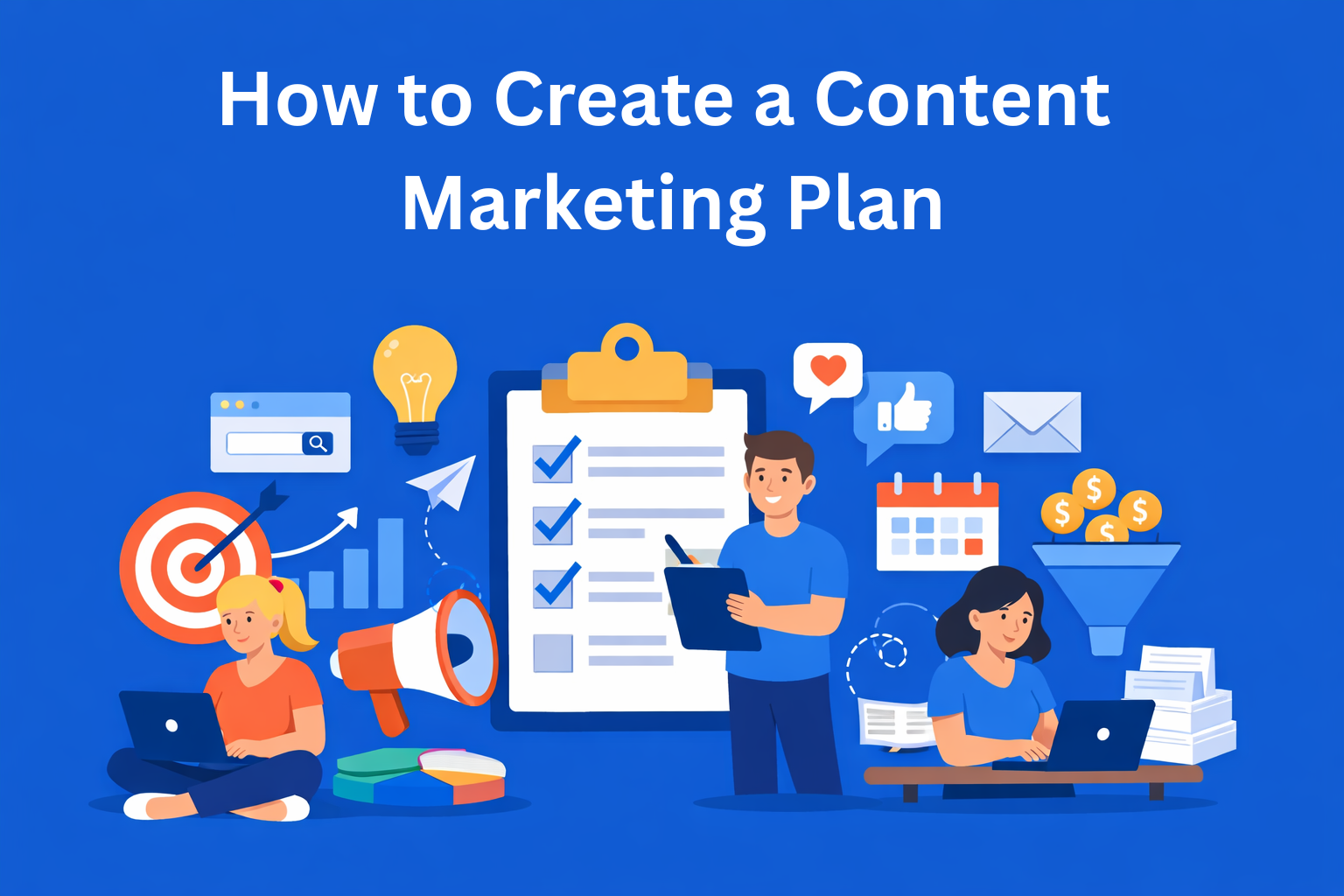
How to Create a Content Marketing Plan
Learn how to create a clear, practical content marketing plan that actually works. This step-by-step guide covers goals, audience, channels, topics, metrics, and includes a ready-to-use template with real examples for teams, SaaS, and B2B.

Many teams create content today, but very few have a clear content marketing plan. Posts are written when there’s time, ideas live in different documents, and results are mostly judged “by feel.” The problem isn’t lack of effort - it’s the lack of a system.
A content marketing plan exists to connect content with business goals and bring structure into everyday work. Without it, content gets published randomly, without clear direction, making it hard to stay consistent and understand what actually drives results.
In this blog, you’ll learn how to build a content marketing plan step by step - one that is simple, realistic, and practical, even if you don’t have much experience or a large team.
Key Takeaways
- A content marketing plan is a system, not a calendar - it connects business goals, audience needs, channels, and metrics into one clear framework.
- Clear goals come before content ideas - without defined business objectives, content becomes random and impossible to measure.
- Audience understanding doesn’t require complex personas - knowing who you help, what problem they have, and where they are in decision-making is enough.
- Focus beats volume in content planning - fewer core topics, channels, and formats deliver more consistent and sustainable results.
- Measurement gives the plan real value - tracking the right metrics (traffic, engagement, conversions) turns content into a growth tool.
What a Content Marketing Plan Is
A content marketing plan is a document that clearly shows:
- why you create content
- who it’s for
- where you publish it
- which topics you cover
- how you measure success
It’s important to understand that it’s not just a posting calendar, a list of ideas without priorities, or a document you create once and never look at again.
A good content marketing plan is a central source of truth that guides the entire process and helps the team make decisions without confusion.
Step 1: Define the Business Goals Your Content Should Support
The first step in any content marketing plan is understanding your business goals. Content doesn’t exist on its own - it should support specific goals of a company or project.
Common business goals include:
- increasing brand awareness
- generating leads
- educating users about a product or service
- long‑term organic growth through SEO
When the goal is clear, it’s much easier to build a meaningful content marketing strategy. For example, if your goal is user education, your focus should be on guides and explanations - not promotional posts.
Step 2: Understand Your Audience (Without Overcomplicating It)
A common mistake is describing the audience too broadly. Instead of complex personas, it’s enough to answer a few simple questions:
- Who is reading my content? Think about who you’re actually talking to. Are you writing for beginners or people with experience? Marketers, founders, or business owners? You don’t need a perfect persona, but you do need to know who you’re helping.
- What problem are they trying to solve? People read content because they have a real problem or question - lack of knowledge, lack of time, or lack of a clear process. For example, a small SaaS team may publish blog posts regularly but see no leads and feel unsure whether content is helping the business at all. In that case, they don’t need more topic ideas - they need a clear plan that shows how content supports the business. A good content marketing plan always starts from real problems like this.
- What stage of decision‑making are they in? Some people are just trying to understand the topic and need basic explanations, while others already know the problem and want a concrete solution. If you know their stage, it’s easier to decide whether to write a simple educational article, a comparison, or a practical step‑by‑step guide.
A good content marketing plan always considers real audience needs. When you understand what people actually need, choosing topics, tone, and formats becomes much easier.
Step 3: Choose the Right Channels and Content Formats
You don’t need to be everywhere. A content marketing strategy works best when you focus on a few channels that truly make sense for your audience.
Common channels include:
- blog (for SEO and education)
- LinkedIn (for B2B and thought leadership)
- email (for direct communication)
- video or social media (for visibility)
Each channel supports different content formats: blog posts, guides, case studies, short posts, or newsletters. A good content marketing plan clearly connects goals, audience, and channels.
Step 4: Planning Topics (Main Content Areas)
These are the main topics you consistently write about. They help organize ideas and prevent your content from going in too many directions.
For example, a content marketing plan might include 3-5 core topics that repeat and evolve over time. This prevents idea overload and keeps the content focused.
It’s also important to distinguish between:
- Evergreen content (always relevant) - Content that can be read today, in six months, or in a year and still make sense. It’s not tied to dates, seasons, or campaigns. Examples include guides, foundational explanations, how‑to articles, and educational blog posts that solve ongoing audience problems.
- Campaign content (time‑based) - Content that only makes sense in a specific time frame. It’s usually tied to product launches, promotions, events, seasons, or specific initiatives. Once the campaign ends, this content becomes less relevant or is used far less often.
This balance helps keep a content marketing strategy sustainable in the long term.
Step 5: Organize Ideas and Set Priorities
One of the biggest content planning problems is having too many ideas and not enough focus. That’s why clear prioritization matters.
The easiest way is to ask yourself:
- Can this topic realistically drive results?
- Do we have the time and resources to do it properly?
- Is this important right now, or can it wait?
A good content marketing plan doesn’t try to do everything at once. It helps you focus on what makes the most sense at a given moment.
Step 6: Resources, Ownership, and Realistic Expectations
Content planning must be realistic. A content marketing plan should reflect team size, available time, and budget.
It’s important to clearly define:
- who comes up with ideas
- who writes the content
- who reviews and approves it
- who publishes it and tracks results
Without this clarity, even the best content marketing strategy can fall apart in practice. Tools like EasyContent can help here by keeping all these steps in one place - defining workflows, assigning roles, managing templates, collaborating in real time, tracking changes, and making the entire process easier to manage.
Step 7: Metrics That Actually Matter
Measuring success is a core part of any content marketing plan - but not all metrics are equally important.
Depending on your goals, you might track:
- Traffic and organic visits - This shows how many people reach your content, especially from Google. If you’re publishing blog posts and focusing on SEO, this is a foundational metric.
- Example: a blog post that solves a clear problem starts gaining more search traffic over time.
- How to track: Google Analytics or Google Search Console (users, sessions, organic traffic per page).
- Time on page - This shows whether people actually read your content or leave quickly.
- Example: if someone spends 3–5 minutes on a guide, there’s a good chance the content is useful.
- How to track: average time on page in Google Analytics, compared across articles.
- Engagement - This shows how people interact with your content.
- Example: blog comments, LinkedIn shares, or link clicks within the article.
- How to track: LinkedIn analytics, email marketing tools, or basic engagement data in Google Analytics.
- Conversions and leads - This measures whether content drives real business outcomes.
- Example: template downloads, newsletter sign‑ups, or contact form submissions.
- How to track: goals or events in Google Analytics, plus data from your CRM or email platform.
The goal isn’t to track everything - it’s to track what directly supports your content marketing strategy.
Content Marketing Plan Template (Ready to Use)
A solid template makes planning much easier. A basic content marketing plan template should include:
- business and content goals (more organic traffic, more leads, user education)
- audience description (B2B SaaS founders, marketing managers, small teams)
- main channels (blog, LinkedIn, email newsletter)
- core topics / content pillars (content strategy, SEO, team workflows, tools)
- content formats (blog posts, guides, templates, case studies)
- success metrics (organic traffic, time on page, sign‑ups, leads)
This template can easily be adapted for solo marketers, small teams, or SaaS and B2B companies.
Common Content Marketing Planning Mistakes
The most common mistakes include:
- A plan that’s never used - The plan exists “on paper,” but not in day‑to‑day work. If the team doesn’t actually follow it, the plan has no real value.
- Too many topics with no focus - Trying to write about everything leads to scattered, unclear content. Fewer topics tied to clear goals work much better.
- Unclear goals - If it’s not clear why content is created or what it should achieve (traffic, leads, education), it’s impossible to judge success.
- Ignoring real resources - Plans often assume more time, people, or budget than actually exists, which leads to quick burnout and abandonment.
Recognizing these mistakes helps build a more effective content marketing strategy.
Conclusion
A content marketing plan isn’t a static document - it’s a system that helps teams work more clearly and consistently. When the plan is clear, content stops being stressful and becomes a real growth tool.
If you want to stop publishing randomly, a content marketing plan is a strong first step. It helps you work with purpose, stay organized, and see tangible results over time.