Where’s the Line Between Friendly Tone and Trying Too Hard?
This blog breaks down the thin line between a warm, friendly tone and a try-hard style that feels forced. Learn how to avoid slang overload, fake enthusiasm, and “acting human,” and find a simple, natural tone that feels real and builds trust.

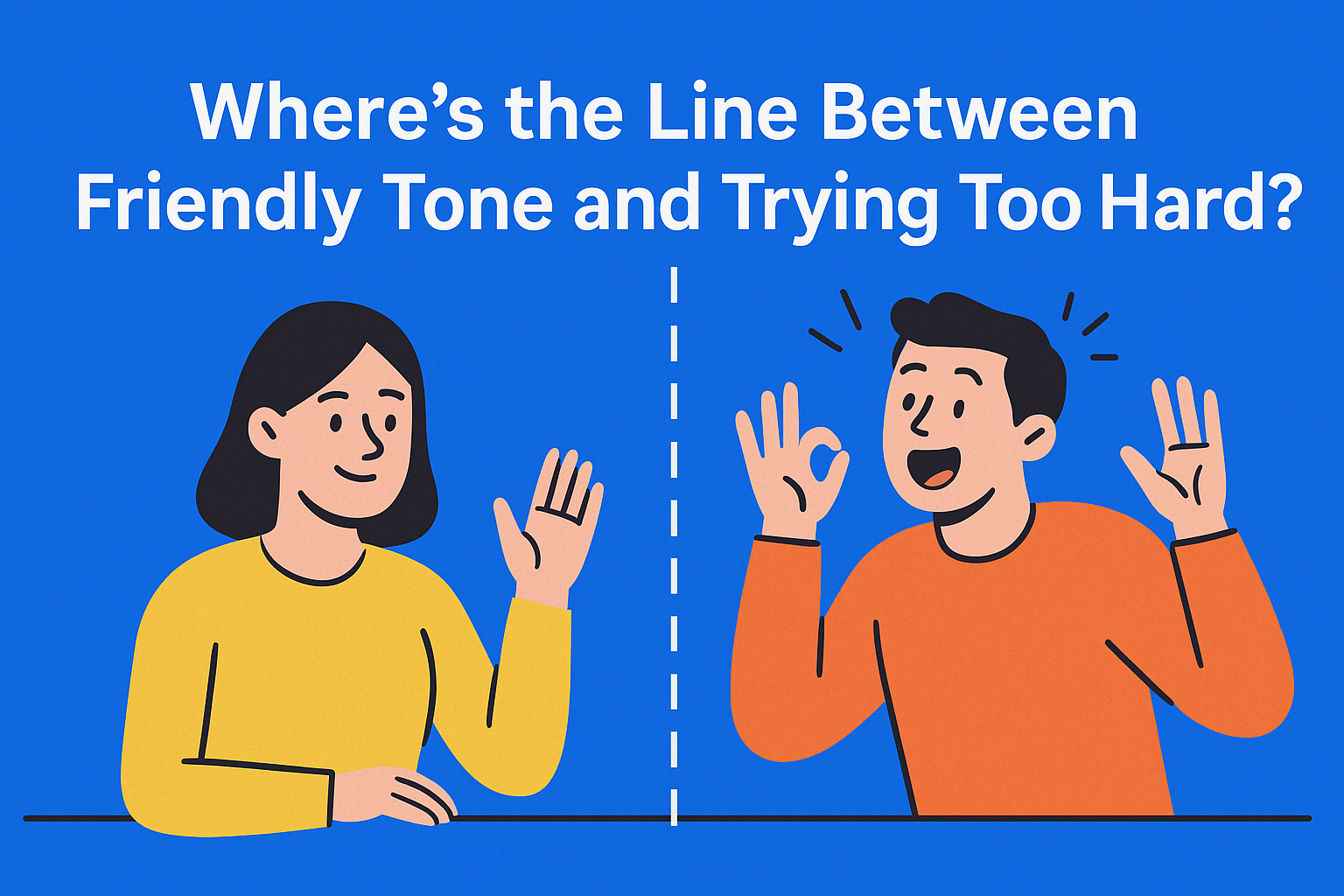
If you’ve ever read a brand’s text and thought, “Okay… this feels like a bit too much,” then you probably know how thin the line is between a friendly tone and forced casualness. Brands want to sound human, warm, and approachable. But if they push it too far, the text stops feeling genuine and can easily damage trust.
In this blog, we’ll walk through where the problem starts, why it happens, and how to find the right balance.
Key Takeaways
- Friendly doesn’t mean childish - a warm tone is good, but when brands overdo it with slang and hype, the voice becomes forced instead of genuine.
- Try-hard tone appears when voice and brand don’t match - exaggerated friendliness or trendy phrases quickly break trust because they feel unnatural for the audience.
- Clarity beats exaggerated casualness every time - the most effective conversational tone is calm, simple, confident, and easy to read.
- Overfriendly tone weakens the message - when tone becomes a performance, readers lose focus, take you less seriously, and trust drops.
- Consistency keeps tone authentic - clear tone guidelines and tools like EasyContent help teams avoid drifting into forced casualness and maintain a natural, brand-aligned voice.
Why Does Everyone Want to Sound Friendly?
Today, people expect brands to sound “human.” They want to read content that feels like it was written by a real person, not a robot. That’s where the idea of a friendly tone comes in, simple, warm, and clear.
The problem appears when a brand decides that “friendly” means: more relaxed, more slang, more casual. That’s when we step into what’s often called a try-hard tone, meaning a tone that’s trying too much.
When a brand goes too far, the text loses focus. Instead of being clear, it becomes a performance. And performances rarely feel genuine.
Friendly is good. Forced is never good.
A Friendly Tone Is Not the Same as Being “Overly Casual”
A friendly tone means writing like a normal person: simple, warm, and clear. But it doesn’t mean sounding like you’re trying to imitate a TikTok influencer or acting like you’re someone’s childhood friend.
Here’s the easiest way to understand the difference:
- Natural: “Let’s walk through this together.”
- Try-hard: “Let’s gooo peopleee, we’re doing this, woohoo!”
See the difference? The first one feels human. The second one feels like it’s trying way too hard to be cool.
The essence of a friendly tone isn’t in slang, flashy expressions, or hype. It’s in simplicity, clarity, and warmth. That’s why it’s important for the tone to feel natural.
How People Instantly Recognize When a Brand Is “Trying Too Hard”
Readers aren’t naive. People instinctively feel when a tone doesn’t match the brand, audience, or topic. Even if they can’t explain why, they’ll sense that something is “off.”
The most common signs of a try-hard tone are:
Too much slang - If a brand never used slang before and suddenly throws it in, it feels unnatural. Slang itself isn’t the problem; the problem is when it’s used without purpose.
Trendy expressions that don’t fit the brand - Attempts to sound “modern” often come across as copying someone else’s style.
Exaggerated enthusiasm - Phrases like “the craziest thing ever” or “this will change your life” sound like outdated advertising.
Acting like the brand is the user’s best friend - People don’t want brands to sound like someone who knows them better than they should. They want authenticity.
These signals slowly weaken trust because the brand starts sounding like it’s acting. And readers respond negatively to anything that feels unnatural.
When Overusing a “Friendly” Tone Actually Hurts the Message
If tone becomes more important than the message, communication loses its purpose. When a brand tries so hard to sound relaxed that it forgets to be clear, a problem appears.
Here are a few common ways an overly friendly tone harms the message:
1. The focus gets lost
Instead of clarity, you get a performance.
2. Professionalism disappears
People want to hear from someone who is both knowledgeable and normal, not someone imitating meme culture.
3. The audience loses trust
If it sounds like you’re “acting,” people automatically trust the message less.
Good communication is warm but clear. Friendly but professional. Natural but not watered down.
How to Find the Right Balance
Balancing a friendly tone with clarity isn’t a formula, but there are simple rules that almost always work.
Clarity always comes first If you must choose between “sounds cool” and “sounds clear,” always choose clear.
Warmth over exaggeration People love warmth, but they dislike acting.
Natural over trendy Trends fade faster than your content ages.
Talk like you’re speaking to an adult you respect Not too formal, but nowhere near “hey hey friends!”
Think of it this way:
Your goal isn’t to sound like an influencer, it’s to sound like a normal person who knows what they’re talking about.
A Practical Checklist: Is Your Tone Natural or Forced?
If you’re unsure whether your tone is too casual (or too “cool”), ask yourself:
- Would I say this out loud in real life? If not, it’s probably try-hard.
- Would I write this to a colleague? Real, simple communication is the best indicator.
- Does this fit our brand and industry? Tone must match identity.
- Do the sentences work without slang or extra “decorations”? If they don’t, those decorations are actually getting in the way.
- Does it sound like a performance? If it feels like an imitation of someone else’s style, soften it.
This short checklist helps you spot the difference between natural and forced tone, especially when working in a team with multiple writers.
How Teams Can Keep a Consistent but Natural Tone
When many people work on content, it’s very easy to lose the balance between natural and exaggerated tone. That’s why having simple rules is helpful, not to limit creativity but to keep things consistent.
1. Create tone guidelines
Short documents that explain:
- how we sound
- how we don’t sound
- what fits the brand
- what crosses the line
2. Identify “off-limits” tones
For example:
- too much slang
- too much enthusiasm
- too many memes
3. Use tools that help maintain consistency
A tool like EasyContent can help teams prepare briefs that include tone expectations, allowed and not-allowed examples, and editor comments that guide writers.
It doesn’t have to be complicated; what matters is that everyone understands what our tone is and where the line is.
Conclusion
There’s nothing wrong with a brand being warm, approachable, and human. That should actually be the standard. But there’s a line. Once content crosses that line and becomes a performance, people notice it immediately.
Be natural. Be clear. Be warm. But don’t act.
If your tone feels like it comes from a real person, you’ve already succeeded. A friendly tone works best when it’s genuine. And genuineness can’t be faked.