The Problem With Chasing Every New Platform
Every new platform promises reach, but chasing them all can scatter your focus. This guide explains why spreading content across too many channels weakens your content marketing strategy, and why focusing on a few platforms often leads to stronger, more consistent results.

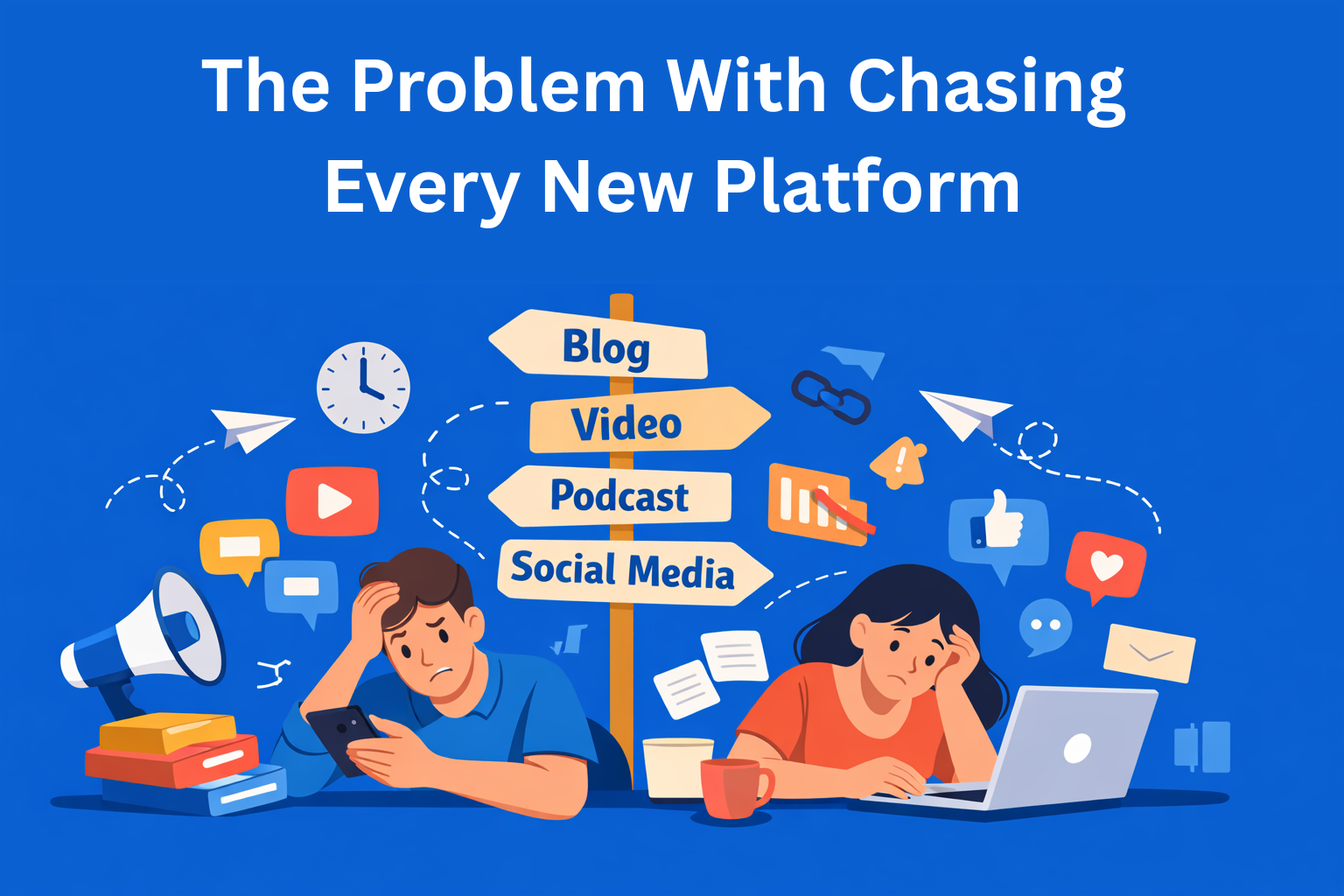
Every year, a new platform appears that everyone claims is the next big opportunity for brands and marketing teams. Some people say you can quickly get huge organic reach there. Others say you need to start publishing content immediately or you will miss a big opportunity.
In content marketing and digital marketing, these kinds of stories keep repeating. One year everyone is talking about one platform, and the very next year everyone moves to another and claims that it is the next big thing.
Because of this, many teams try to be present everywhere.
At first glance, this strategy can seem smart. If content is published across multiple channels, the results might also be bigger.
But in reality, the opposite often happens.
In this blog, we will explain why chasing every new platform often creates more problems than benefits, and why in content marketing it is often better to focus on a smaller number of carefully chosen channels.
Key Takeaways
- New platforms create constant FOMO - early reach and viral success stories make every new channel feel like a must-have opportunity for marketing teams.
- Chasing every platform destroys focus - adapting content for different algorithms, formats, and audiences quickly spreads teams too thin.
- Platform hopping weakens brand authority - constantly moving between channels prevents consistent publishing and slows the process of building recognition and trust.
- Fewer channels often deliver better results - focusing on a small number of platforms improves content quality, consistency, and the ability to measure what actually works.
- Evaluate new platforms strategically - before investing time, check audience presence, content fit, team capacity, and whether the platform supports long-term goals.
Why New Platforms Always Look Attractive
When a new platform appears, the story is almost always the same: huge reach, a new algorithm, and an audience that is not yet overwhelmed with content. It sounds like an easy opportunity to reach a lot of people quickly.
For marketing teams, this can sound like the perfect opportunity.
One of the main reasons new social networks look attractive is the so‑called "early reach." In the beginning, algorithms often favor new creators and brands. This means content can get a lot of visibility even if the brand does not yet have a large audience.
In the world of content marketing, this quickly creates the feeling that you need to react immediately. When competitors start using a new platform, teams immediately begin thinking: wait, do we now have to jump in there as well?
This feeling often comes from the fear that the brand might miss an opportunity. In digital marketing, this is often called FOMO — fear of missing out.
On top of that, social media is full of success stories. Someone writes about gaining thousands of followers in just a few weeks, or how one video suddenly exploded and went viral.
At first glance, these examples sound very convincing. But what people usually do not see is how much work, time, and experimentation actually went into those results before things started working.
The Real Cost of Chasing Every Platform
At first glance, a new platform can look like a big opportunity. But when a team tries to chase every new platform that appears, it eventually comes with a cost.
The biggest problem is that focus gets scattered.
When a marketing team tries to be present on too many platforms, attention gets stretched in too many directions. Every platform has its own publishing style, its own algorithm, and its own audience.
That means the team has to adapt content for each platform separately.
For example:
- LinkedIn often requires educational and professional content
- Instagram favors visual content
- YouTube requires video production
- A newsletter requires detailed written content
If a team tries to do everything at once, the workload quickly piles up.
In that situation, content quality often starts to drop. Content begins to be created quickly just to fill the publishing calendar, instead of being produced with a clear plan.
Another problem is that the strategy starts being driven by trends instead of a plan.
Instead of following a clear content strategy, the marketing team begins jumping from one idea to another as soon as a new trend appears. A new platform shows up, plans immediately change, resources are redirected, and the focus moves somewhere else again.
This can create a constant feeling of urgency without any clear direction.
Platform Hopping Dilutes Your Brand
Another important problem with constantly changing platforms is the impact it has on a brand.
When a brand keeps moving from one platform to another, it becomes difficult to build a real presence anywhere.
Each platform has its own audience. For example, people on LinkedIn usually look for business topics and professional insights. On other social networks, people often prefer more entertaining and relaxed content.
If a marketing team tries to be everywhere, the brand message can easily become unclear.
In content marketing, consistency is very important. When a brand keeps publishing in the same place, people gradually start recognizing the style, the tone, and the value of the content it shares.
If platforms constantly change, this process becomes much slower because the audience never really has the time to remember the brand.
Another issue is authority.
Authority on a platform does not happen overnight. It takes time, regular publishing, and communication with the audience. If a marketing team gives up after a few months and moves to a new platform, much of the effort invested up to that point often disappears.
Why Fewer Platforms Often Work Better
In practice, it often turns out that focusing on a smaller number of platforms is a much more effective strategy.
Instead of trying to be everywhere, a marketing team can choose a few channels where it has the best chance to succeed.
This approach brings several important advantages.
- First, the team can focus much more. When you work on fewer platforms, you have more time to create high‑quality content.
- Second, it becomes much easier to stay consistent. Regular publishing is one of the most important things in content marketing. When a team focuses on a few channels, it is easier to maintain a rhythm and the audience gradually starts expecting new content.
- Third, it becomes easier to understand what actually works. When you are present on ten platforms at the same time, it is difficult to understand where results are actually coming from. When you focus on a few channels, it becomes much clearer what works and what does not.
When you focus on a few channels, it is much easier to see the results and understand what is actually driving them.
How to Choose the Right Platforms
How do you choose the right platforms?
The first step is understanding your audience.
Content marketing makes the most sense when you publish content where people already spend their time. If your audience already uses a certain social network or platform, that is a good sign that it is worth trying to build a presence there.
The second factor is the type of content a team can produce.
Some teams are simply better at writing. For them, a blog or a newsletter is often the most natural place to provide value.
Other teams are more focused on video. If that is where their strengths are, platforms like YouTube make much more sense.
The third factor is resources.
Every platform requires time, planning, and ongoing maintenance. If a marketing team does not have enough people or time, trying to stay active on too many platforms quickly becomes too heavy of a burden.
That is why it is often smarter to start with a smaller number of channels and gradually expand once the process becomes stable.
A Simple Way to Evaluate New Platforms
This does not mean that marketing teams should completely ignore new platforms.
New opportunities can be valuable.
But before a team decides to invest time and resources into a new channel, it is useful to first check a few things.
It is important to understand where the audience already is, whether the team has the capacity to publish content regularly, and whether that channel fits into the existing content strategy.
It is also important to estimate whether the team can maintain a presence on that platform for a longer period of time, for example over the next 6 to 12 months.
If the answers to most of these points are unclear or negative, it may be better to wait.
In digital marketing, there is no need to rush to be the first on every new platform. It is much smarter to stay focused on channels that already work and remain consistent there.
Conclusion
New platforms will continue to appear. Digital marketing keeps changing and new trends will always emerge.
But chasing every new platform almost never leads to stable results.
A much smarter approach is to focus on a few channels that actually make sense for your brand.
When a team invests time in understanding the audience, creating high‑quality content, and publishing consistently, results gradually become more stable and much clearer.
In content marketing, success rarely comes from being present everywhere. Much more often, it comes from doing a few things really well and sticking with them over a longer period of time.