The End of Manual Content Operations
Manual content operations slow teams down with constant coordination, status tracking, and file juggling. This post explains why that model no longer works, how automation and AI reduce operational work, and what modern content operations look like today.

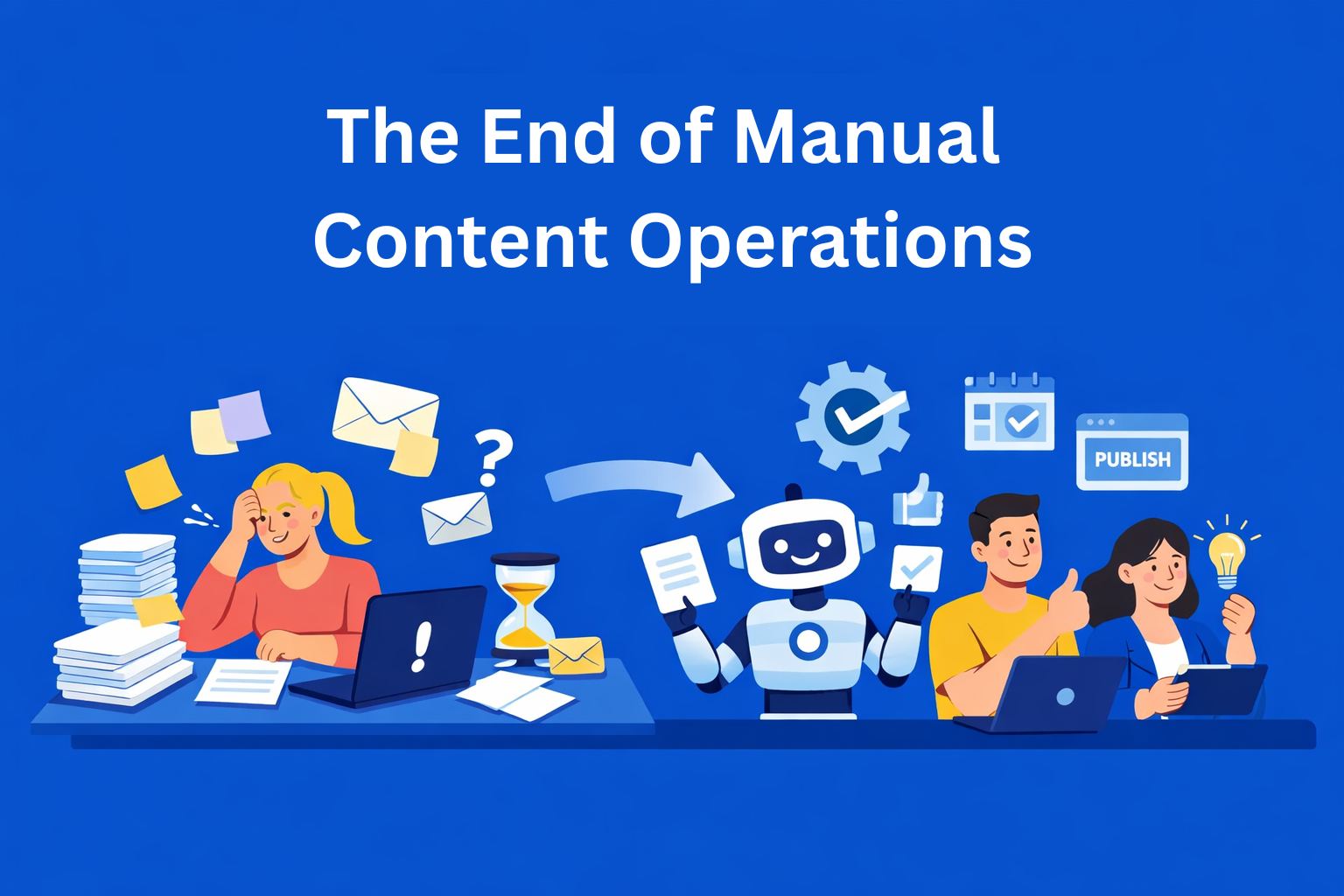
For a long time, content teams relied on manual work and the goodwill of people inside the team. When someone finished a piece of content, they sent it by email. When changes were needed, someone left a comment in a document. When approval was required, a message was sent on Slack. At first glance, all of this feels normal and familiar.
However, as content operations grew, this way of working started to show serious cracks. More and more time is spent on coordination, and less and less on the content itself. People are no longer writing and editing; instead, they are tracking statuses, reminding each other, and trying to figure out what the next step is.
In this blog, we’ll explain why manual content operations no longer work, how automation and AI are changing everyday work, and why the future of content teams lies in systems that run quietly in the background.
Key Takeaways
- Manual content operations don’t scale - relying on people to track steps, statuses, and handoffs creates friction as teams grow.
- The biggest cost of manual work is hidden - delays, stress, and burnout accumulate quietly over time.
- Modern content teams need systems, not reminders - workflows should clearly show what’s next without constant follow-ups.
- Automation removes operational noise - statuses, notifications, and handoffs should run in the background.
- AI works best inside a defined process - it supports writing and organization, while people stay in control of decisions.
What we actually mean by manual content operations
When we talk about manual content operations, we don’t just mean writing without AI. We’re talking about a way of working where people manually connect every step of the process.
This includes:
- Manually tracking content status in spreadsheets
- Constantly moving files between different tools
- Sending messages just to check whether something is done
- Relying on individuals to remember what comes next
In this kind of setup, people are the ones holding the process together.
At the beginning, this way of working can feel fine. Everything runs smoothly while the workload is small and everyone is available. But as soon as the volume grows or someone drops out of the process, things start to slow down very quickly.
Why this model is breaking down today
The reason manual content operations no longer work isn’t because of people, but because the way we work has changed. Today, more content is being produced than ever before. There are more channels, more formats, and more teams involved.
Content is no longer created by just one team. Marketing, product, sales, legal, and often external collaborators are all part of the process. When everything is handled manually, every additional person makes things more complicated.
Instead of supporting the team, content operations often start to slow the work down. People spend time tracking the process instead of working on the content itself.
The hidden costs of manual work teams often don’t see
One of the biggest problems with manual work is that its costs aren’t immediately visible. Delays become normal. Mistakes are accepted as part of the process. Stress is expected.
Content teams often think they need more people or more meetings. In reality, the problem is that the system depends on too many manual steps. Every manual step is a potential point of failure.
Over time, this way of working leads to burnout. People aren’t tired of writing or editing; they’re tired of constantly having to keep everything under control.
Moving from people who remember to systems that run the process
The key shift in modern content operations is moving from people to systems. Instead of relying on someone to know what the next step is, the process should be clear on its own.
A system that runs the process clearly shows:
- where the content currently is
- who is responsible for the next step
- what needs to happen for the content to move forward
There’s no need for constant checking or reminding.
This doesn’t mean less freedom in how people work. It means more clarity and simplicity. People still make decisions, while the system handles the technical and operational parts of the work.
The role of automation in modern content operations
Automation in content operations doesn’t exist to replace people. Its purpose is to remove repetitive and tiring tasks.
For example, automatically changing statuses, sending notifications, or moving content to the next stage of the process. These tasks aren’t difficult, but they take up a lot of time every day.
When automation takes over these tasks, the team gains more space to think, plan, and improve content quality. This is exactly the kind of automation EasyContent provides.
It allows you to:
- Build your own workflows
- Assign clear roles so everyone knows what they’re responsible for
- Create templates for every type of content you work on
- Communicate in real time
- Receive email notifications when content moves from one stage to another
And much more.
Where AI fits in (and where it doesn’t)
AI can be very helpful in content work, but only if it’s used in a thoughtful way. When it’s used without clear structure, it often creates more problems than benefits.
When AI is part of a defined process, it helps with first drafts, small edits, and organizing information. It usually works in the background and takes some of the everyday workload off the team.
It’s important to understand one thing: AI only supports the work. People still make the decisions.
What happens to team roles when manual work is reduced
When manual work is reduced, roles in the content team change.
- The content manager no longer chases people and statuses, but instead sets up a clear way of working for the whole team.
- Editors have more space to focus on quality and consistency.
- Writers have more focus and fewer interruptions.
Everyone works in a calmer environment, with less stress and fewer surprises. This is a natural next step, not something to be afraid of.
Why the future belongs to “quiet” infrastructure
The best systems are the ones we barely notice because they don’t drain our attention or energy. Like electricity or the internet, you don’t think about them while they work. The same applies to content operations.
When content operations work properly, the team doesn’t waste time on questions like: “Where is the document?”, “Who’s next?”, “Is this approved?”, or “Who needs this file?” Instead, it’s clear to everyone:
- where the content currently is (draft, review, approval, publish)
- who’s next in line
- what needs to happen for the content to move to the next stage
This means fewer messages, less manual reminding, and fewer version-related mistakes. People have more time to focus on the content itself, and less on organizing everything around it.
In the future, content teams will increasingly work with systems like this, systems that run in the background and keep the process under control. Manual work won’t disappear completely, but it will no longer be the main way of working.
Conclusion
Manual content operations helped teams grow in the past. But today, they can no longer keep up with the pace of modern work.
Automation and AI don’t take control away from people; they give it back to where it belongs. When the system takes over the operational work, the team can focus on what matters most: creating good, high-quality content.