The Shift From Tool Collecting to System Building
Content teams have spent years adding more tools to fix workflow problems. By 2026, that approach is breaking down. This article explains why teams are shifting from tool collecting to system building, and how connected workflows help content move smoothly from idea to publishing.

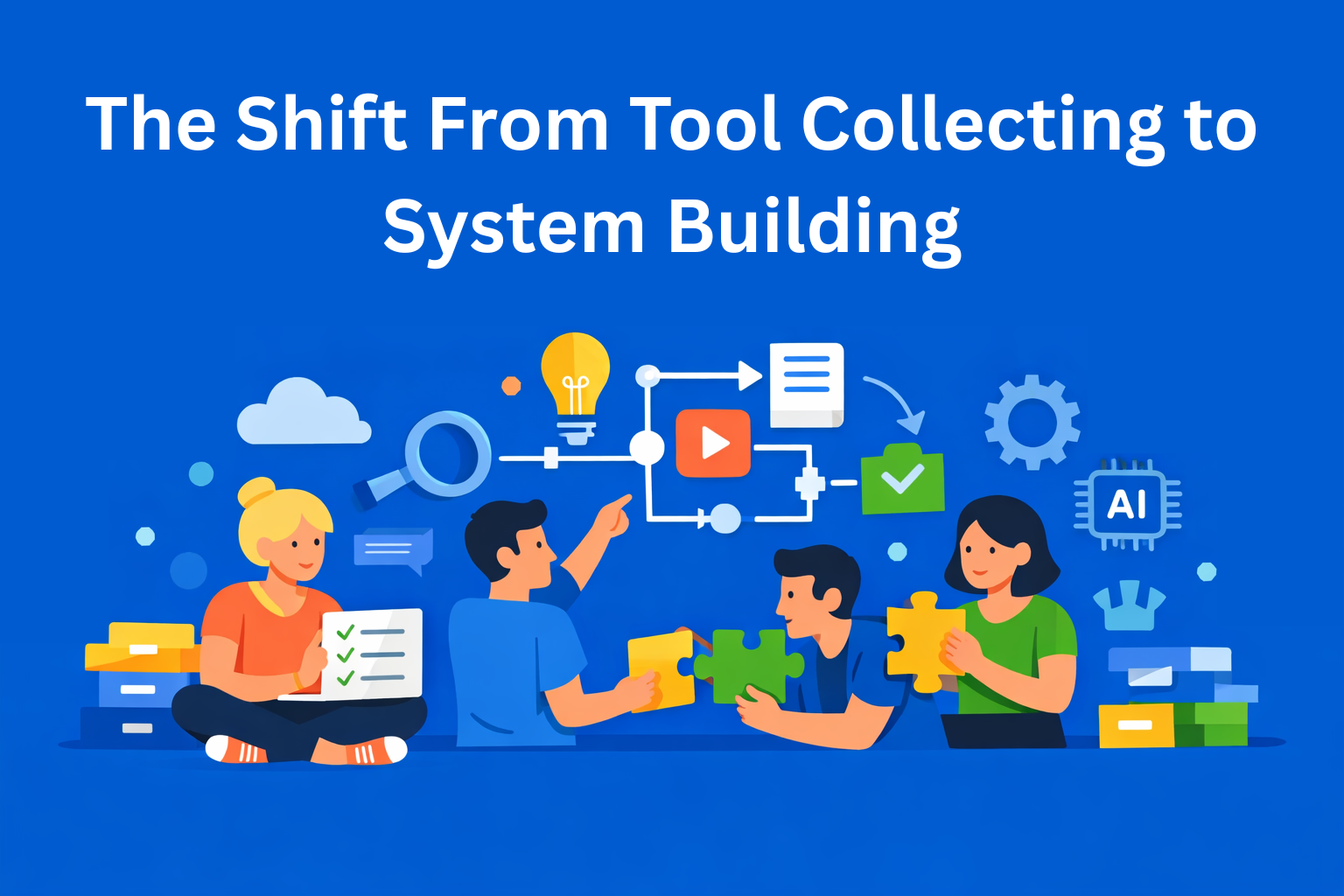
Content teams have so far tried to improve their content workflow by adding one more tool. If planning doesn’t work, they adopt a new tool. If writing feels slow, they add an AI tool. If the review process is not clearly defined, they introduce another app for comments and approvals.
At first, this approach seems logical. Each tool solves one specific problem. However, as the team grows and the amount of content increases, the content workflow becomes harder and harder to follow. Instead of making work easier, teams start getting lost between tools.
By 2026, it becomes clear that this model no longer delivers results. Not because the tools are bad, but because they don’t solve the whole problem on their own. The focus is slowly shifting from collecting tools to a system building approach, where the entire process is connected and easy to understand.
Key Takeaways
- Tool collecting creates hidden complexity - adding tools solves isolated problems but makes the overall workflow harder to follow.
- Disconnected tools shift control away from the team - when context is scattered, the process starts managing people instead of the other way around.
- AI only works inside a clear system - without defined steps and context, automation and AI can’t meaningfully improve work.
- System building focuses on flow, not features - clear stages, ownership, and visibility matter more than individual tool capabilities.
- Structured workflows reduce stress and burnout - when work is predictable, teams spend less energy coordinating and more on creating.
How the culture of “tool collecting” emerged
Most content teams did not consciously decide to collect tools. It happened gradually. Each new challenge in the content workflow was handled along the way, without a clear plan.
For example:
- Topic planning in one tool
- Writing in another
- AI assistance in a third
- Review and approval in a fourth
- Communication on Slack or via email
Each tool makes sense on its own. The problem starts when all these tools are not connected to each other. At that point, tool collecting stops being a decision and becomes a habit.
In that moment, the team is no longer managing the process. The process starts managing the team.
When too many tools start causing problems
At some point, adding new tools stops being helpful. The problem is no longer price or onboarding, but the loss of the bigger picture.
- No one knows where the latest version of the content is
- Statuses are unclear
- People constantly ask, “Where is this at?”
- Reviews are delayed because no one knows they are needed
At this stage, the content workflow becomes unclear. There is no single place where you can see what is happening with the content. Instead, information is scattered across different tools.
Because of this, the team spends more energy on coordination than on actual writing and editing. And tool collecting only makes this problem worse.
Why this approach stops working right now
Until a few years ago, content teams could still function with partially connected, semi-manual processes. But this year brings a different context.
First, the amount of content has grown dramatically.
Second, AI in content creation further complicates the way teams work.
Third, expectations are higher than ever.
In these conditions, a fragmented content workflow only slows the team down. AI cannot help if it is not part of the entire process. Automation has no effect if the steps are not clearly defined.
That is why 2026 naturally pushes teams toward a system building approach, where structure matters more than individual tools.
What “system building” actually means in content work
It is important to clarify that system building does not mean fewer tools. It means smarter, better-connected tools.
A system in content work includes:
- Clear work steps - everyone knows in advance what comes first, what comes next, and who is responsible for what.
- One place for all context - all information about the content (briefs, comments, edits, status) lives in one place, so no one has to search through emails or different tools.
- A clear path from idea to publishing - content follows a defined flow, from idea, through writing and review, to publishing, without skipping steps or unnecessary delays.
In a good content workflow system, every stage has its role. An idea knows when it moves into a draft. A draft knows when it goes to review. A review knows when approval is needed.
In such a system, people don’t think about tools. They think about the content. Tools work quietly in the background. This is exactly the kind of system EasyContent provides, where in addition to everything mentioned above, you also get features such as customizable templates, real-time collaboration, change tracking, visibility into all content versions, and many other options that make the entire content creation process easier.
From scattered tools to a structured workflow
The shift from tool collecting to a system does not happen overnight. It is a change in mindset.
The first step is to define what your content workflow should look like:
- Where ideas come from
- Who writes the content
- Who handles reviews
- Who gives final approval
- When and where content is published
When these steps are clear, tools start to make sense and become part of the system.
A structured workflow means fewer interruptions, no guessing, and no manual tracking of every single step.
How structured systems reduce team burnout
One of the often overlooked effects of a poor content workflow is burnout. Not because of writing itself, but because of constant confusion.
When there is no system:
- People are always in “react” mode - instead of working with a plan, they constantly respond to messages, urgent requests, and unexpected situations.
- Everything feels urgent - without clear priorities, every task seems like it must be done immediately, even when that is not really the case.
- Mistakes keep repeating - because there is no clear process, the same issues are fixed over and over again, and problems are never fully resolved.
With a system building approach, automation removes unnecessary manual tasks.
The result is calmer work and a workflow the team can sustain in the long run.
How content teams should think in 2026
In 2026, the question is no longer which tool is missing, but where the process is not working properly.
Instead of adding new applications, teams should focus on:
- Connecting existing tools
- Removing unnecessary steps
- Making responsibilities clear
A good content workflow system allows a team to grow without added complexity.
Conclusion
The tool collecting phase is a normal stage that most content teams go through. But it should not be the final stop.
In 2026, the advantage belongs to teams that have embraced a system building approach. Instead of constantly adding new tools, they put processes in place that make work easier.
When the content workflow is clear, people know what their next step is. Content moves naturally, from idea to publishing.
That is the essence of the shift that is already happening.