The Untapped Content Channel: Your Leadership Team’s LinkedIn
Leadership LinkedIn profiles are often an untapped content channel. Even when leaders post rarely, their insights build trust, extend brand reach, and add credibility. This guide shows how to use leadership LinkedIn content strategically, without adding extra work.

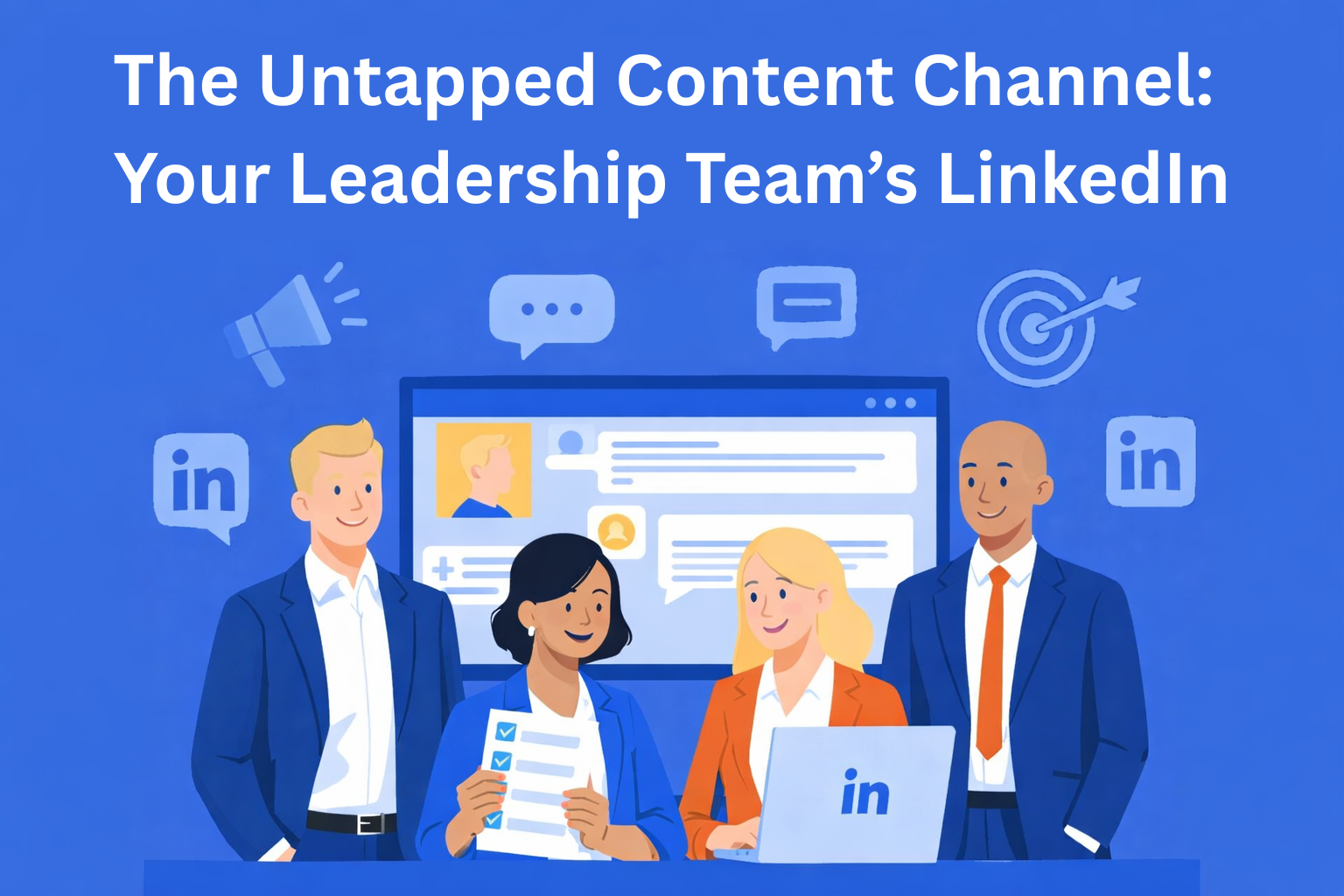
When companies think about content on LinkedIn, they almost always focus on the company page. Posts about new blogs, products, company news, or open roles. And that makes sense. But that’s usually where the story ends.
Many companies don’t realize that they already have another powerful content channel, their leadership team’s profiles. The CEO, founder, marketing director, product lead, or sales lead are already on LinkedIn. Even if they post rarely, their profiles have potential that is almost always overlooked.
In this blog, we’ll talk about how to use leadership LinkedIn profiles as a content channel in a simple and sustainable way, without adding extra pressure to people who already have more than enough on their plates.
Key Takeaways
- Leadership profiles are an untapped channel - your CEO and leadership team can often get more reach and trust than the company page.
- People trust people, not logos - the same content performs differently when it’s shared with a personal angle and real context.
- Leaders don’t need “more content” - they can repurpose existing blogs, notes, and insights; their job is context, not creation.
- Simple formats work best - personal insights, reactions to industry changes, decision context, and light amplification beat polished PR posts.
- Build a system, not extra work - define ownership, connect to your content plan, and minimize leader effort to a short input + approval.
Why leadership LinkedIn profiles are so powerful
People don’t follow brands on LinkedIn for the same reasons they follow people. They follow brands to stay informed. They follow people to understand them, connect with them, and build trust.
When a company leader posts something on their LinkedIn profile, it doesn’t feel like marketing. It feels like experience, an opinion, or a personal insight. That’s why leadership LinkedIn content often gets more reach and more engagement than posts published on a company page.
Even more importantly, leaders carry authority. Their words have weight because they come from people who make decisions. Even a short comment can often have a bigger impact than a perfectly polished marketing post.
That’s why a leader’s LinkedIn profile is not just a personal profile. It becomes an extension of the company’s communication.
People trust people, not logos
One of the main reasons LinkedIn marketing through leaders works is trust. People naturally trust other people more than they trust brands.
When a company page publishes a post, it’s clear that it’s marketing. When a leader shares the same thing from a personal perspective, the message feels more natural and more human.
For example:
- A company publishes a blog about a new strategy
- A leader shares the same blog and briefly explains why that decision was difficult
The content is the same, but the way people experience it is different. That’s exactly where the power of leadership LinkedIn profiles as a content channel comes from.
The biggest myth: “Our leaders don’t have time for LinkedIn”
This is the most common blocker. And honestly, it’s often valid. Leaders really don’t have time to write posts, follow trends, and think about content formats.
The problem starts when we assume that a leader has to come up with topics, write posts, publish regularly, and track results.
In reality, that’s not necessary at all.
It’s important to distinguish between creating new content and using what already exists. Most companies already have blogs, internal documents, meeting notes, Slack messages, and emails full of valuable insights.
A leader’s role is not to create new content, but to simply explain and put existing content into the right context.
What type of content works best for LinkedIn leaders
Not every post needs to be deep, long, or “smarter” than the rest. In fact, simple formats usually perform the best.
Here are the types of content that work well for leadership LinkedIn profiles:
1. Personal insights
These are short, honest thoughts from a leader’s day-to-day work. They don’t need to be perfect stories, but real situations. For example, something that didn’t work, a mistake that was made, or a lesson learned while working with the team. People want to know what happens behind the scenes and what you would do differently today.
2. Reactions to industry changes
There’s no need for long analysis or expert-level explanations here. It’s enough for a leader to share a simple opinion about something they’re noticing in the industry. For example, a new practice, tool, or trend that keeps coming up, and why they think it matters or could be a problem.
3. Context behind decisions
People like to understand the reasons behind decisions. Instead of just announcing that something has changed, a leader can explain why the decision was made. What the problem was, what they were trying to fix, and what outcome they expect. This builds trust and gives the message more weight.
4. Amplifying company content
When a company publishes a blog, research, or case study, a leader can simply share that content with a few personal sentences. In that comment, they can explain why the content matters or what real problem led to its creation. This makes the content feel more personal and helps it reach more people.
5. Short, informal posts
On LinkedIn, not everything has to be perfectly written. A short, clear, and honest thought is often more than enough. One sentence or a short paragraph that gets the point across can have a bigger impact than a long, polished post.
How to build a system instead of extra work
For leadership LinkedIn as a content channel to work long-term, you need a simple and clear system.
Step 1: Define who talks about what
Not everyone needs to talk about the same things. Each leader can focus on the area they know best, strategy, product, people, or culture. This reduces pressure and makes everything sound more natural.
Step 2: Connect LinkedIn to your existing content plan
If your company already has a blog or content calendar, leadership LinkedIn should build on top of that. One blog can become:
- a post on the company page
- one or two posts from leaders
Without any additional writing.
Step 3: Minimize the leader’s involvement
A leader should only provide:
- a short input
- a comment
- approval
Everything else can be handled by the marketing team.
What this looks like in practice
Let’s imagine a simple scenario.
A company publishes a blog about how it uses internal content to improve team collaboration. Marketing prepares a LinkedIn post for the company page.
At the same time, a leader publishes a short post:
“This article came from a real problem we had as a team. We didn’t have a clear overview of our content, and it slowed us down. Here we share what we learned from that experience.”
That’s it. No selling. No pushing a product. Just context.
This is how leadership LinkedIn content feels natural and authentic.
Mistakes to avoid
There are a few common mistakes that can completely undermine this approach.
Writing like a PR statement
If a post sounds like marketing, people ignore it. On LinkedIn, people are looking for honest experiences and opinions, not another promotional message that feels like an ad.
Posting too often
One to two posts per month are more than enough for most leaders. That’s frequent enough to stay visible and relevant, without creating pressure to constantly post.
Using leaders only to share links
Without a personal comment, a post loses its meaning. People don’t see why the content should matter to them or how it connects to the leader’s experience or point of view.
Chasing virality
The goal isn’t virality, but trust and consistency. The idea is for people to gradually recognize the leader as someone whose opinion makes sense and can be trusted, even if they don’t post often.
How to measure whether leadership LinkedIn is working
Don’t focus only on likes.
Pay attention to comments and the quality of discussion (are people asking questions, is a real conversation happening, are the right people from your industry engaging). Then look at inbox messages, someone might reach out to continue the conversation, book a call, or ask for advice. Finally, notice whether people start to recognize the leader as a relevant voice in the industry over time (for example, tagging them in comments, asking for their opinion, or reaching out when they face a similar problem).
Very often, the real impact of LinkedIn marketing through leaders shows up indirectly, through new connections, partnerships, or inbound interest.
Conclusion
Leadership LinkedIn profiles already exist. They don’t require new tools, new channels, or bigger budgets.
All you need is a clear focus, a simple system, and consistency.
Companies that understand this don’t use LinkedIn only as a promotional channel, but as a space to build trust.
In the end, leadership LinkedIn content isn’t a trend. It’s a natural extension of how people want to connect with brands, through the people behind them.