What Is Content Governance? Everything You Need to Know
Content governance is the system behind how content gets created, reviewed, and published. Without it, things get messy fast. Learn how to set clear roles, workflows, and rules so your team can move faster and create consistent, high-quality content.

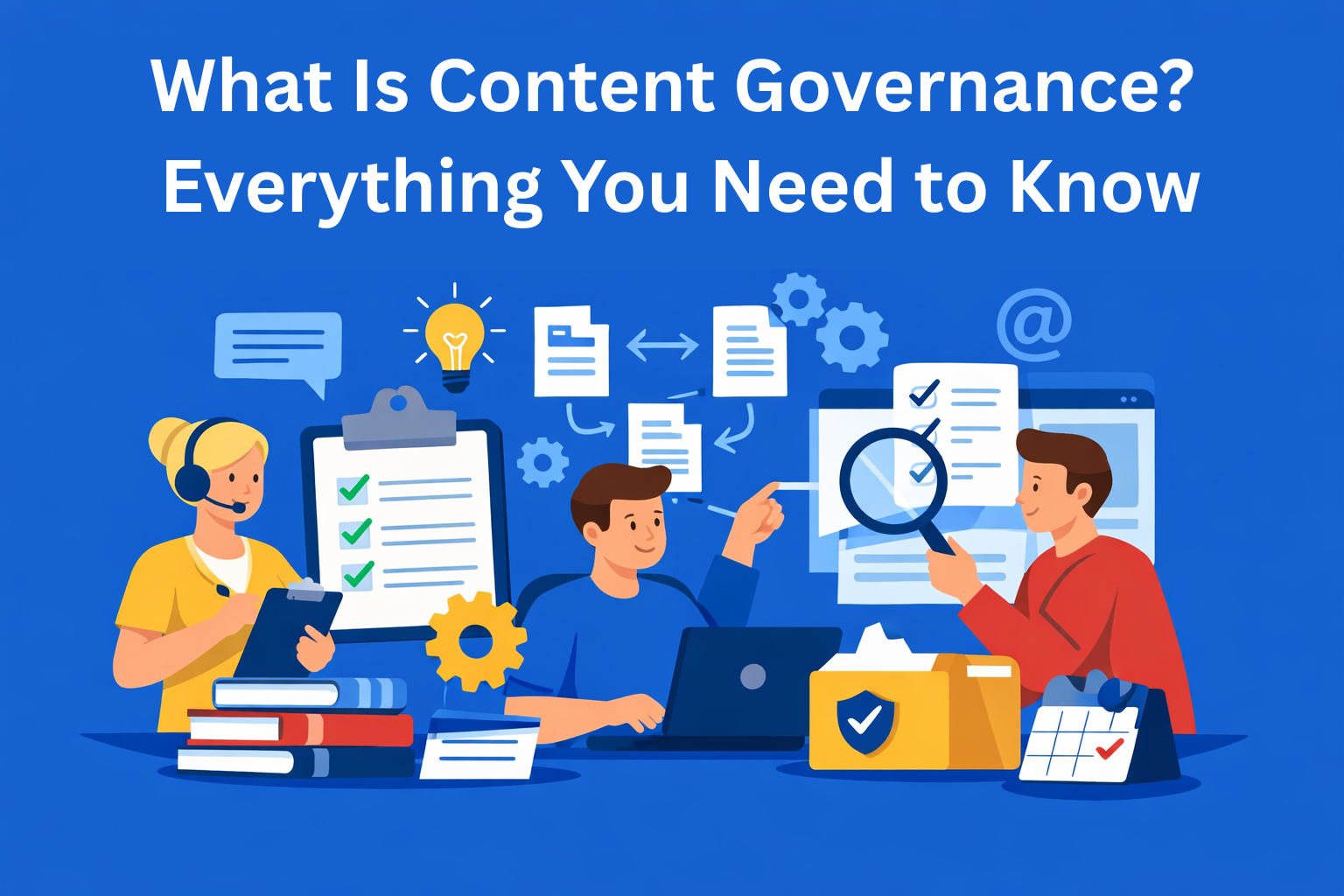
If you’ve ever worked on content, you know that at the beginning everything feels simple. You have a topic, you have an idea, and you just start working.
But later on, things usually get complicated.
Someone is waiting for feedback. Someone doesn’t know exactly what they’re supposed to write. Someone edits the text, but no one else sees it. And suddenly, something that should have been simple becomes slow and frustrating.
At that point, most people think the problem is the team. That someone is late or not doing their job properly.
But the real problem is much simpler.
There’s no clear way of how content is created.
And that’s exactly where one important thing comes in - content governance.
Key Takeaways
- Content governance creates structure for content teams - it defines roles, workflows, and rules so content moves clearly from idea to publishing without confusion or delays.
- Clear roles and responsibilities prevent bottlenecks - when everyone knows who writes, reviews, and approves content, the process becomes faster and more organized.
- Standardized workflows improve consistency - a defined process ensures every piece of content follows the same steps, reducing chaos and unnecessary revisions.
- Guidelines keep content aligned and high quality - rules for tone, structure, and SEO help ensure all content feels consistent and delivers value to the audience.
- Governance is the foundation for scaling content - without a clear system, teams struggle to grow, but with governance in place, content production becomes more efficient and predictable.
What is content governance, really?
Content governance is a set of rules, processes, and responsibilities that define:
- who does what
- when they do it
- what the content should look like
- and how it moves from idea to publishing
In other words, it’s the way you organize content. It’s not a strategy. It’s not a content plan. It’s simply how your team creates content.
Without content governance, everything relies on random, ad-hoc decisions. With content governance, everything has structure.
Key parts of content governance
For content governance to actually work, you need to cover a few things.
1. Roles and responsibilities
First and most important - who does what.
It sounds obvious, but this is where most problems happen.
For example:
- a writer writes the content
- an editor improves and refines it
- a content manager runs the process
- a client or stakeholder approves it
If this isn’t clear, you’ll start hearing things like:
"I thought someone else was going to do that"
Content governance solves this by clearly defining:
- who is responsible
- who gives feedback
- who has the final say
2. Processes and workflow
The second thing is - how content moves through the team.
A typical workflow looks like this:
- idea
- brief
- writing
- review
- edits
- approval
- publishing
Without content governance, everything is messy and unclear.
When you have content governance, you always know where the content is, who is working on it, and what the next step is.
And there’s no pointless waiting.
3. Rules and standards
The third thing - what your content should look like.
If there are no rules, every piece of content goes in a different direction.
One sounds too formal. Another too casual. A third one is messy and hard to follow.
Content governance introduces rules such as:
- tone of voice - how your brand “speaks,” whether it’s serious, casual, or something in between, so everything sounds consistent
- writing style - how sentences and text are structured so everything is clear and easy to read, not short in one place and overly complicated in another
- SEO guidelines - basic rules that help your content show up on Google so people can actually find it
- content structure - how the text is organized (headings, paragraphs, lists) so readers can follow it easily
This way, everything you publish feels like it comes from one place, not from ten different directions.
4. Tools and system
If you use too many different tools:
- Google Docs for writing
- Slack for communication
- email for approvals
… things quickly become confusing.
To avoid that, everything should be in one place.
So at any moment, you can see where the content is, who is working on it, and what comes next.
And that’s exactly what a tool like EasyContent helps you do. In the “how to set up content governance” section below, every step mentioned can be done inside EasyContent.
Why content governance matters
Without content governance:
- content gets delayed
- quality is inconsistent
- the team gets frustrated
- communication breaks down
And worst of all - you can’t grow and scale without everything starting to fall apart.
With content governance:
- content moves faster
- there are fewer revisions
- everyone knows what they’re doing
- it’s easier to onboard new people
That’s the difference between a bad process and a solid system.
How to know you don’t have content governance
If you’re working with content, you’ll probably recognize this.
- you constantly chase people for feedback and have to remind everyone because no one knows when it’s their turn
- you don’t know where the content is stuck - it’s somewhere, but no one knows with whom or what’s happening
- there are too many revisions because things weren’t clear from the start
- approvals take too long because no one knows who has the final say
- everyone works in their own way because there are no clear rules
If you have two or more of these problems - you need content governance.
How to set up content governance (step by step)
You don’t have to overcomplicate it.
1. Define roles
Who writes? Who reviews? Who approves?
Write it down. Don’t keep it in your head.
2. Create a workflow
Map out the entire process.
From idea to publishing.
If you can draw it - even better.
3. Standardize your brief
Every piece of content should start the same way.
Your brief should include:
- topic
- goal
- audience
- key messages
This way, the writer doesn’t have to guess what to do - everything is clear from the start.
4. Set rules
Define:
- how content is written
- what it should look like
- what it must include
This saves hours later.
5. Set deadlines
Without deadlines, there is no system.
Every step needs a clear deadline.
And there needs to be accountability.
Common mistakes
When people introduce content governance, they often make these mistakes:
- they create overly complicated processes - so many steps and rules that people get lost and stop following anything
- they involve too many people in approvals - everyone adds something, and you keep going in circles without finishing
- they don’t document anything - everything stays in someone’s head or messages, so next time you start from scratch
- they rely on "we agreed on this" - assuming everyone will remember, but in reality everyone remembers something different
And in the end, everything falls apart again.
The point of content governance is to make your work easier - not more complicated.
Content governance vs content operations
People often mix these up.
Content governance is what you set up in advance - how things work.
- rules - what’s allowed and how content should look
- structure - how everything is organized so it’s not chaotic
- system - the overall way of working that keeps everything together
Content operations is what happens every day.
- day-to-day work - writing, editing, communication
- execution - actually finishing the work and publishing content
You need both.
If you have operations without governance - you get chaos. If you have governance without operations - you get theory.
Conclusion
Content governance isn’t something that’s just “nice to have” - it’s the foundation.
If you don’t have a system, you’ll constantly chase people, fix things, and deal with delays. With a system, everything becomes easier and smoother.
You don’t need a perfect process from day one.
Start with the basics: define who does what, how the process works from idea to publishing, and what the rules are. Once you set that up, you’re already ahead of most teams.
Because at the end of the day, the problem isn’t the content.
The problem is how you create it.