Why AI Will Become Invisible in Content Work (And That’s a Good Thing)
In 2026, AI won’t feel like a separate tool anymore. It becomes part of the content workflow - supporting writing, editing, and organization in the background, while people stay in control of ideas, decisions, and creativity.

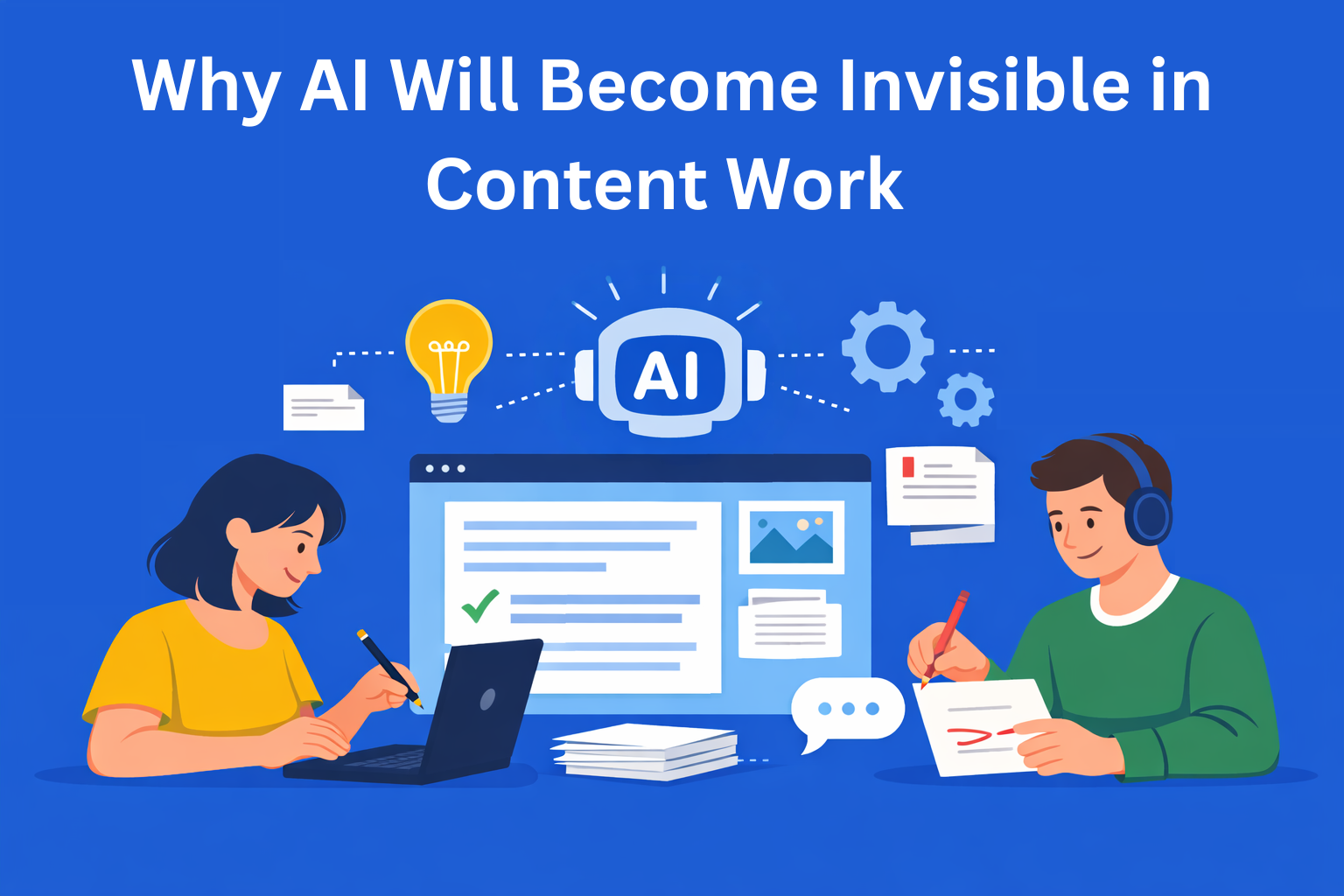
Over the past few years, AI has been everywhere. Tools for writing, generating ideas, rewriting text, and optimizing content have appeared almost every month. Teams talked about AI, tested it, compared tools, and tried to figure out how to “fit it” into their everyday work.
In 2026, an important change happens. AI no longer feels like a special tool. It doesn’t look like something new or separate from daily work. Instead, it becomes a natural part of how content is written, edited, and organized.
In this blog, we’ll explain why this is a good thing, what it means for AI to become “invisible” in the content workflow, and how teams can prepare for this change.
Key Takeaways
- Invisible AI is a sign of maturity - when AI fades into the background, it means it’s properly integrated into everyday content work.
- AI delivers the most value when it supports flow - not as a separate tool, but as a natural part of writing, editing, and organizing content.
- Good workflows matter more than AI tools - teams with clear processes benefit from AI, while unclear workflows only become faster chaos.
- AI reduces mental load, not human control - it handles small, repetitive tasks so people can focus on meaning, decisions, and direction.
- Human judgment remains central - people still define goals, context, quality, and final approval, while AI quietly assists.
When technology stops being noticeable
Every new technology goes through a similar phase. At first, it’s in the spotlight. People talk about it, learn how to use it, and wonder whether they really need it. The same thing happened with email, the internet, cloud documents, and collaboration tools.
At the beginning, people focus on the tool. Later, the focus shifts to the work itself, and the tool becomes something that’s used without thinking about it.
The same thing is now happening with artificial intelligence in content work. In 2026, AI is no longer something that’s consciously “used.” It’s simply there, as part of the process. That’s a sign that the technology has matured.
When AI stops being the main topic, it means it’s been properly integrated into the workflow.
What AI looked like when it was a “special tool”
In the early stages, AI worked as an extra step in content creation. The process often looked like this:
Someone writes a brief. Then they open a separate AI tool. They copy the text. Ask for a suggestion or a draft. Go back to the document. And then manually edit the result.
This way of working came with several problems:
- First, it interrupted the flow of work. Instead of staying focused on the content, the team had to constantly switch context.
- Second, it created the feeling that AI was something separate, something used occasionally rather than all the time.
- Third, it often felt more like an experiment than a reliable part of the process.
Because of this, many teams felt that AI helped, but also made things more complicated.
What changes in 2026
In 2026, AI isn’t something you need to start or turn on. It’s always present and works in the background, as a natural part of the process.
- While someone is writing the first draft, AI helps ideas come together more easily.
- During editing, it helps make the text clearer and more consistent.
- When content is being organized, it helps keep everything in the right place.
It’s important to point out that AI should only support the process, not lead it or take it over completely.
This is the key difference between the experimental phase and the mature phase of using AI in the content workflow.
What it means for AI to be “invisible” in practice
When we say that AI is becoming invisible, it doesn’t mean it’s gone. It’s still there and working all the time, it just doesn’t demand attention.
This means that AI:
- Helps you get started with writing more easily.
- Helps the text have a clear flow as it’s being created.
- Helps content sound consistent, even when multiple people are working on it.
- Helps catch small mistakes and unclear parts earlier.
When AI is invisible, it doesn’t slow work down, it speeds it up.
Why this is a good thing for content teams
One of the biggest problems for modern content teams is mental overload. Too many decisions, too many tools, and too many interruptions during the day.
When AI is properly integrated into the workflow, it removes part of that burden. It doesn’t make big decisions, but it helps with small, repetitive tasks that come up every day.
This includes rephrasing sentences, checking clarity, aligning structure, and making small improvements that take time but don’t add creative value.
This allows people to focus on what they want to say, and why they want to say it.
AI doesn’t replace creativity. It protects it.
Human control still matters
People often worry that AI will take away control. In a well‑designed workflow, that control still stays with people.
People still decide what gets written, who it’s written for, why it’s published, and when the content is ready.
AI doesn’t have context, responsibility, or an understanding of goals in the same way humans do. That’s why it can’t, and shouldn’t, make final decisions.
In 2026, AI works like an experienced assistant that helps, but never takes the lead.
The difference between teams that are ready, and those that aren’t
Not all teams will experience this shift in the same way. The difference won’t be the tool they use, but how they work.
Teams with a clear process integrate AI more easily. They know the stages of their work, who’s responsible for what, and what a finished piece of content looks like.
Teams without a clear process often expect AI to solve their problems. In reality, things just move faster, and become more chaotic.
AI only speeds up what already exists. If the workflow is bad, AI will just make it faster, not better.
How to prepare for invisible AI
Before focusing on tools, it’s important to get the basics right.
That means:
- Having clear briefs. Everyone knows from the start what’s being created, for whom, and with what goal, no guessing.
- Defined stages of work. Everyone knows what stage the content is in and what comes next, so work doesn’t bounce back unnecessarily.
- Clear approval rules. It’s clear who gives the final sign‑off and when, which prevents endless revisions and confusion.
- Agreed quality standards. The team knows in advance what “good content” looks like, so there’s no debate over the basics.
When these things are in place, AI naturally fits into the process. Especially if you use tools that let you organize all of this in one central hub, like EasyContent. That way, AI doesn’t change how you work, it supports it.
Conclusion
When we look at all the changes coming in 2026, it’s clear that AI isn’t disappearing from content work. It’s just no longer in the spotlight.
AI becomes something that’s taken for granted. Like electricity or the internet. We don’t think about it every day, but without it, work immediately becomes harder.
When AI stays in the background, people still lead the entire process. Ideas, decisions, and creativity remain human, while technology quietly helps.
That’s why this shift is actually a good thing.