Why Content Gets Harder as Your Company Grows
As companies grow, creating content often becomes slower and more complicated. More teams, more approvals, and more opinions enter the process. This article explains why content gets harder at scale and how content teams can adapt their workflows to stay fast and efficient.


At the beginning, while a company is still small, creating content usually feels quite easy.
A small team writes blog posts, social media posts, landing pages, and emails. Usually only a few people are involved in making decisions, so content can move quickly from idea to publication.
Since the team is small, people agree on things quickly. Everyone knows what the company does, who it speaks to, and what it wants to say, so the messages are clear and simple.
But as the company grows, things start to become a bit more complicated.
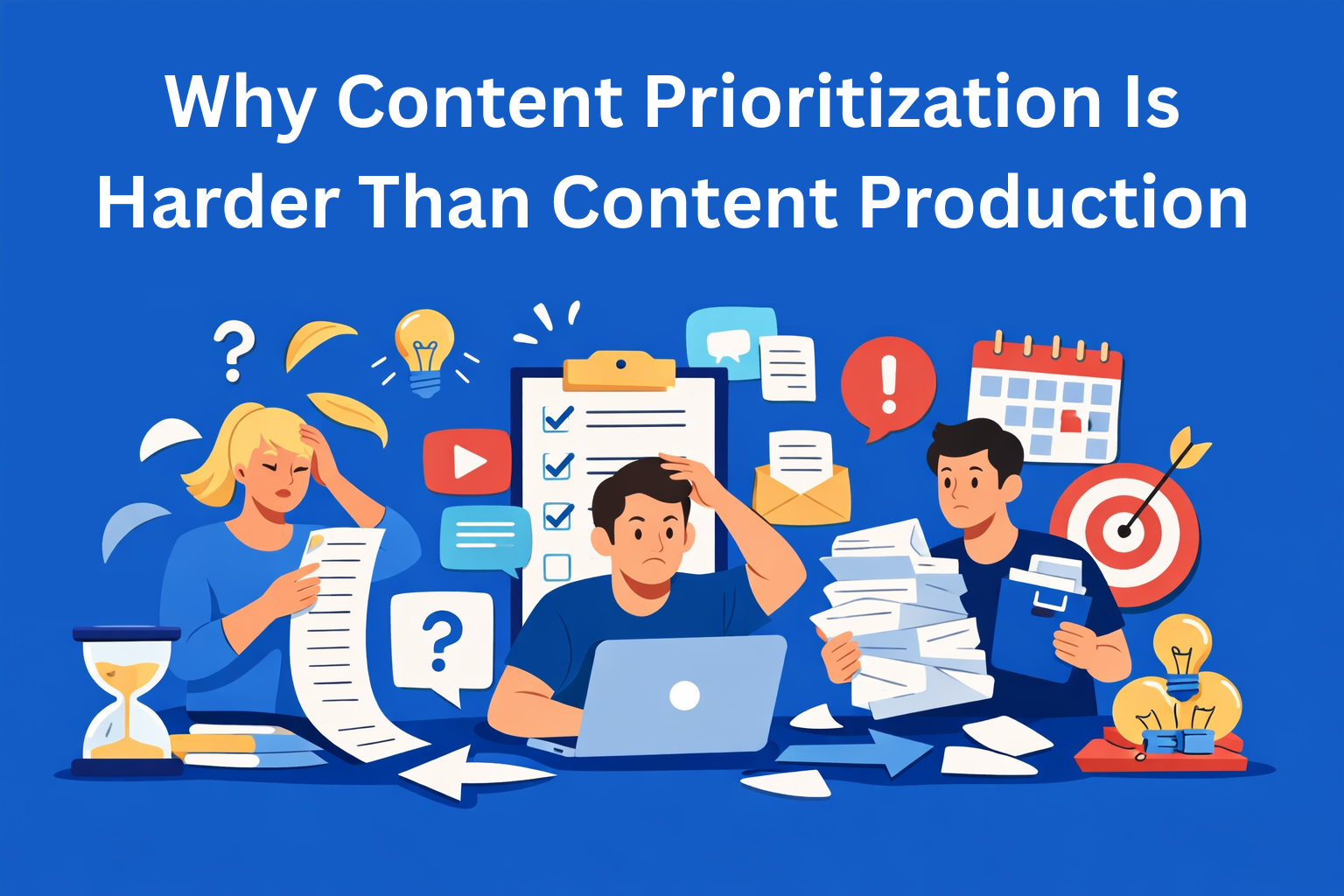
New teams appear, more people get involved, and everyone has their own expectations. What used to move quickly and simply at the beginning now becomes much slower and more complicated.
Over time, many companies realize that creating content becomes harder as they grow. What used to take a few hours can now take several days or even weeks.
In this blog, I will explain why this happens, why things around content start to become more complicated as a company grows, and how content teams can adapt the way they work so they can continue working quickly and efficiently.
Key Takeaways
- Content creation is easier in small companies - with fewer people and simpler messaging, ideas move quickly from concept to publication.
- Growth introduces complexity - as companies scale, more teams, approvals, and perspectives enter the process, which naturally slows content production.
- Decision-making and ownership often become unclear - without defined responsibilities, content can get stuck between teams and go through unnecessary revisions.
- Structured workflows keep growing teams efficient - clear steps for planning, writing, reviewing, approving, and publishing help maintain speed and consistency.
- Content operations help companies scale content - well-designed systems, tools, and defined roles allow teams to produce more content without losing clarity or control.
Why Content Feels Easier in the Early Stage of a Company
In small companies, content usually moves faster because everything is simpler.
Fewer people are involved in the process, and content does not have to go through many steps before it gets published.
Small Teams Move Faster
When a company is small, there are often only one or two people responsible for content.
Because of that, decisions are made quickly. Writers do not need to wait for approval from several different teams. If something needs to change, feedback arrives quickly and directly.
Because of this, content teams can publish ideas faster and experiment with different formats and topics.
A simple content workflow might look like this:
- Someone proposes an idea
- A writer creates the content
- One person reviews it
- The content gets published
Messaging Is Still Simple
In the early stage, companies usually have only a few products or services, so it is much easier to explain what they do and what they offer.
The team clearly understands what problem the product solves and who the target audience is.
Because of this, writing is also easier. The content being created can stick to one main idea.
Speed Matters More Than Perfection
In the early stage, companies care more about moving fast than making everything perfect.
The goal is to learn as quickly as possible what works and what does not.
Content is used to test ideas, reach new people, and understand which messages work best with the audience.
That is why it is more important to publish something on time than to spend hours polishing every small detail.
But as the company grows, priorities begin to change.
What Changes as a Company Grows
As the company grows, things naturally become more complicated.
More people join the company, new teams are formed, and new products or services appear. All of this also affects how content is created.
More People Enter the Process
In larger companies, content often involves several different teams.
The marketing team collaborates with the product team, the sales team, the customer success team, and sometimes even the legal team.
Each of these teams has its own perspective and priorities.
For example:
- The product team wants content to clearly explain how the product works
- The sales team wants messages that help make selling easier
- The marketing team wants content that attracts new people
All of these perspectives can be useful, but they also make the content creation process more complicated.
More people give feedback, which means more revisions and more time spent on decisions.
Processes Become More Formal
As a company grows, it usually starts introducing more rules and steps into the process to avoid mistakes and maintain quality.
Because of that, content often has to go through several approvals before it can be published.
A single blog post may sometimes have to go through several people, for example:
- an editor
- a marketing manager
- someone from the product team
- and sometimes even legal review
Each of these steps means the content will wait a bit longer before it goes live.
These steps can help make sure everything is accurate and reviewed, but if they are not well organized, they can easily slow down the entire process.
Brand Risk Becomes Higher
As the company becomes bigger, every mistake in content can have larger consequences.
The brand is already known and more people follow it, so companies start paying much more attention to what they publish.
Because of that, more reviews and approvals are introduced before publishing.
This helps prevent mistakes, but at the same time it can slow down the entire content creation process.
Small Frictions That Appear as a Company Grows
As the company grows, it is not only more people and more rules entering the process. Small frictions also start to appear in the way work gets done.
These frictions usually appear slowly, so teams often do not notice them at first.
Slower Decision-Making
When many people are involved in content decisions, everything starts moving more slowly.
More people review the text, so feedback takes longer.
It also happens that opinions do not match. One person says more details should be added, while another suggests everything should be shortened and simplified.
In the end, the writer has to combine all those opinions, which often leads to the text being revised several times.
Unclear Ownership
As the company grows, it is often no longer completely clear who is responsible for what.
In small teams, everyone knows who is responsible for publishing content. But in larger teams, it can easily become unclear who actually leads the content and who makes the final decision.
Without clear ownership, content can get stuck between teams.
Too Many Revisions
Another common problem in growing companies is that content has to go through too many revisions.
Everyone involved in the process tries to adjust the message according to what is important to them.
In the end, the content can become less clear and lose its focus.
Instead of saying one clear thing, the content becomes a mix of many different opinions.
How Content Teams Can Adapt as the Company Grows
Just because a company grows does not mean content creation has to become inefficient.
But larger companies need better systems to keep everything under control.
Define Clear Ownership
It is important to clearly know who leads the content.
Every piece of content should have one person responsible for it from start to finish.
That person gathers all the feedback and makes the final decision about what moves forward.
Create Structured Workflows
A clear workflow helps teams keep the whole process under control.
Instead of everyone working however they think is best, teams can agree on clear steps in the process, for example:
- content planning
- writing
- editing
- review
- approval
- publishing
Limit the Number of Approvals
Not every stakeholder needs to review every piece of content.
One of the common reasons content moves slowly is that it has to go through too many approvals.
That is why it is important for companies to clearly decide which types of content actually need approval and which ones can move faster.
For example, a regular blog post usually does not require as many approvals as an important product announcement.
Document the Content Strategy
It is useful to have all important things related to content written down so that everyone on the team understands the messages in the same way.
A documented content strategy can include:
- the target audience
- brand tone guidelines
- key messages
- content goals
When these guidelines are clear, writers can create content more easily and confidently without constantly waiting for someone to tell them what to change.
The Role of Content Operations in Scaling Content
As companies grow, many of them start introducing a content operations approach.
Content operations focuses on how the entire content creation process is organized, which tools are used, how teams collaborate, and what the workflow looks like.
In other words, the focus is not only on writing content, but on making sure the entire process runs more smoothly, faster, and without unnecessary complications.
This can include:
- organizing content workflows
- managing collaboration between teams
- tracking content progress
- improving approval systems
When content operations is set up well, teams can produce much more content without losing clarity or speed. Tools like EasyContent can help with this, where you can create your own workflow, assign roles to each team member, create custom templates for every type of content you produce, communicate with team members in real time, track content changes, include content guidelines in briefs, and access many other features that make content operations easier.
Conclusion
When a company is small, creating content usually feels easy.
But as the company grows, things start to become more complicated.
However, just because a company grows does not mean content has to become worse.
By defining clear ownership, creating structured workflows, limiting unnecessary approvals, and developing strong content operations systems, companies can successfully scale their content creation.
The goal is not to remove all complexity completely.
The goal is to build good systems that help content teams keep everything under control while still working quickly and keeping their messages clear.