Why So Many Teams Confuse “Busy” With “Effective” in Content Work
Many content teams confuse being busy with being effective. This blog explains why full calendars and constant activity don’t equal progress, and how shifting to real priorities, clear processes, and quality leads to meaningful results.

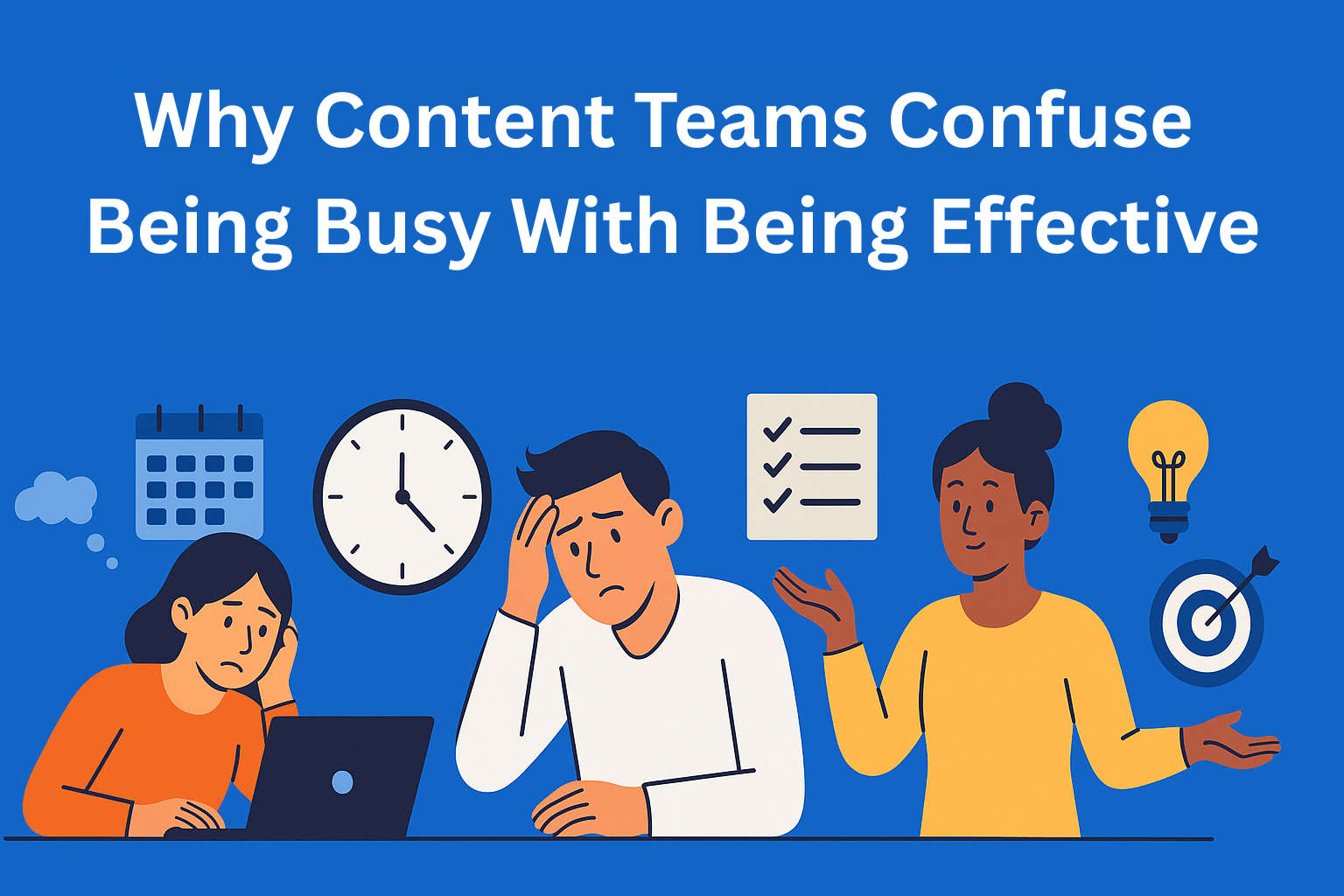
Most content teams today work at a pace that feels like they're always in a race. The calendar is packed, tasks keep piling up, and a new idea arrives before the previous one is even finished. At first glance, all of this looks like progress. When a team is constantly active, it's easy to believe the work is moving forward. But "being busy" often creates nothing more than the illusion of efficiency.
In reality, many teams work a lot, but not on what actually matters. The focus shifts from outcomes to activities. That is the moment when "busy" replaces "effective," and the quality of content and the results begin to decline. This is why it's important to understand how teams fall into this situation and what they need to do to get out of it.
Key Takeaways
- Busyness creates a false sense of progress - a packed calendar feels productive, but without clear purpose, teams waste energy on tasks that don’t drive real results.
- Reactivity kills effectiveness - constantly responding to “urgent” tasks turns content teams into service centers instead of strategic contributors.
- Lack of prioritization is the real bottleneck - when everything is labeled important, nothing moves forward with clarity, focus, or quality.
- High activity leads to burnout and shallow output - juggling too many tasks drains creativity, weakens execution, and slows down meaningful progress.
- Systems turn activity into actual progress - structured workflows, clear priorities, and tools like EasyContent help teams shift from being busy to delivering meaningful, outcome-driven content.
Why Busyness Is So Easily Mistaken for Progress
For a long time, there was a belief that more content is always better. More posts mean greater visibility. More campaigns mean more opportunities. More projects mean the team is "trying." While this sounds logical on paper, in practice it's often the opposite.
Packed calendars create a false sense of control. When everything is filled in, it feels like we have a plan. When we're constantly doing something, it feels like we’re moving toward the goal. But when we look closer, many of those tasks don’t actually contribute to anything important. They simply take up space.
This is where the real problem begins: when the focus is on quantity instead of purpose, teams start producing content just to publish something. And that’s when both time and energy are wasted.
The Most Common Traps That Lead to Fake Productivity
1. A Full Calendar, but With No Real Purpose
Today it’s common to see a content calendar filled just for the sake of looking active. There’s no clear connection between posts and business goals. Everything seems important, so everything gets stuffed in one place. But a full calendar isn’t proof of a good strategy, often it’s a sign that there is no strategy at all.
2. Reacting Instead of Planning
Many teams work by handling whatever is “urgent” instead of what is truly important. Someone sends a message, someone requests a quick edit, someone wants another post. And regardless of whether it’s actually necessary, the team reacts instantly. When this rhythm repeats every day, the team becomes a service center, not a strategic part of the company.
3. Everything Is a Priority, Which Means Nothing Is
When there is no clear task hierarchy, when everything must be done “right now,” focus disappears quickly. The team works on too many tasks at once. Quality drops. Deadlines collide. Stress rises. And the most important projects keep getting postponed because someone is always dealing with something “more urgent.”
4. Focus on Output Instead of Outcome
Teams often think they can solve the problem simply by working faster. By publishing another blog. Another campaign. Another video. But more content does not automatically mean more value. What matters isn’t how much we create, but what we create and why.
What Happens When a Team Confuses Activity With Effectiveness
When teams start pushing huge amounts of work without a clear reason, consequences quickly appear, and they are never small.
- First comes burnout, when people constantly work under pressure, without pause and without clear priorities, their focus drops, creativity weakens, and motivation disappears. Even the most talented team members eventually switch to “just getting it done,” which directly affects content quality.
- Then comes scattered focus, the team works on too many things at once, so nothing gets full attention. This leads to shallow posts, half-finished campaigns, and projects that never reach their potential.
- And finally, the business stagnates, despite all the effort, results hardly move because energy is spent in the wrong places.
How to Move From Activity to Effectiveness
For a team to work smarter, it doesn’t need to work more. It needs to work differently.
1. Slow Down to Speed Up
This sounds contradictory, but it’s one of the most important principles. When the team is always rushing, there’s no time to think. And without thinking, it’s not possible to make good decisions. Slowing down creates space for planning, adjustments, and a better approach.
2. Set Clear Priorities
An effective team always knows which tasks are the most important this week. Not thirty, but three or four. This reduces stress, improves focus, and leads to results that actually matter.
3. Set Metrics That Make Sense
Instead of measuring the number of posts, teams should measure what those posts actually achieve:
- Did they improve sales?
- Did they increase visibility?
- Did they solve a user problem?
Only then does content gain real value.
4. Create Processes That Support the Team Instead of Overloading It
A good process doesn’t complicate work, it makes it easier. When you define clear steps, templates, checklists, and standardize the workflow, the time savings are huge. Tools like EasyContent make this even simpler, allowing teams to define workflows, create templates, build briefs, manage a content calendar, collaborate in real time, and much more. All of this saves valuable hours and gives teams more space for creativity and strategy, which is ultimately what drives strong results.
5. Focus on Quality, Not Quantity
One strong piece of content is worth more than five average ones. When teams stop chasing numbers, they finally start creating content with long-term value.
Mini-Checklist for Teams: Are We Busy or Effective?
Here’s a short list of questions a team can ask itself:
- Do we know which tasks are the most important this week?
- Is our content calendar full because it’s truly needed, or just to look good from the outside?
- Are we working on things that genuinely move the business forward, or just filling time without real impact?
- Do we have clear priorities?
- Are we constantly fixing small urgent things instead of major ones?
- Do we finish important projects on time, or are we always late?
If most answers are negative, the team is likely stuck in “busy mode”, and it’s time for a reset.
Conclusion
In today’s world, it’s easy to fall into the trap of thinking that constant activity equals progress. But real progress comes only when we work on the right things, not just many things.
Effective teams have clear priorities, clear goals, and clear processes. They don’t chase quantity, but meaning. Their work looks simpler, but delivers more impact. And every piece of content they create moves the business forward.
It’s time to stop treating busyness as something special. What truly matters is how effective we are.