Why Every Content Team Eventually Outgrows Google Docs
Content teams quickly realize that Google Docs isn’t built for a serious content workflow. As projects grow, version chaos, slow feedback, and poor visibility start to show. That’s why teams move to content platforms that provide structure, clarity, and faster delivery.

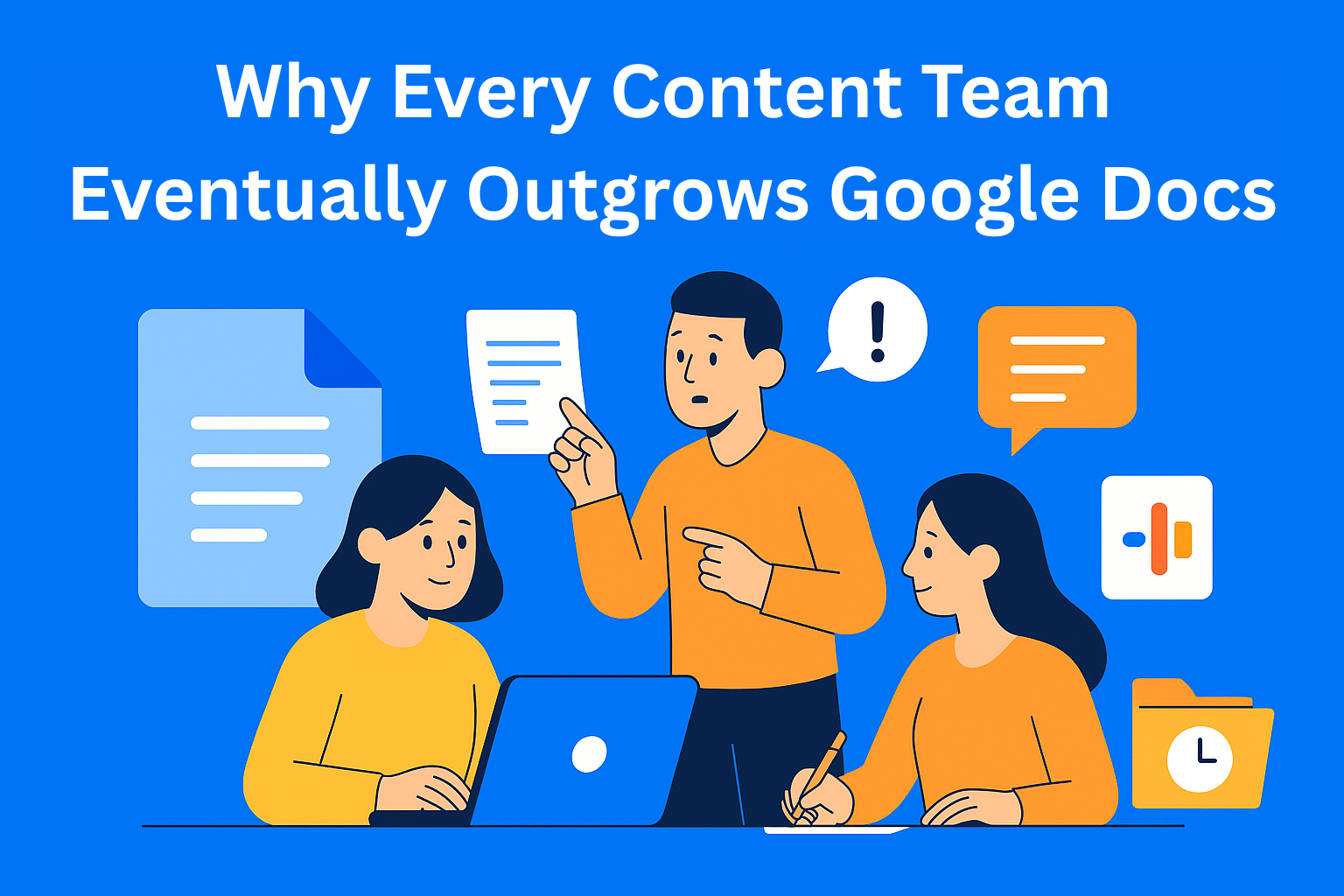
Google Docs is a great starting point for any content team. It’s easy to use, simple, and most people already know how it works. But as the team grows, content becomes more complex and workflows become longer. At that point, many realize that Google Docs is not built for a serious content workflow, and that they need a specialized platform designed for content. In this text, we explain why that happens and what changes when a team switches to specialized content management tools.
Key Takeaways
- Google Docs breaks at scale - once content volume grows, versions multiply, files scatter, and it becomes impossible to track the latest draft.
- Comments aren’t real workflows - feedback inside Docs lacks structure, ownership, deadlines, and clear next steps, slowing the entire review process.
- Content teams need visibility - strategic work requires status tracking, timelines, roles, and calendars that Docs simply doesn’t offer.
- Complex content requires systems - briefs, approvals, templates, asset libraries, and structured processes become essential as the team scales.
- EasyContent replaces scattered files with one source of truth - workflows, roles, reviews, and assets all live in one place, creating clarity and faster delivery.
When Google Docs Stops Being Enough
In the beginning, everything is simple: one document, a few comments, and clear edits. However, as the number of projects grows, duplicates appear, draft versions mix, and the team no longer knows which document is the latest one. Files often end up in private folders, in chat messages, or in random Drive links, and no one is sure which version should be used.
Google Docs simply wasn’t built to keep an entire content cycle under control.
The Problem of Versions and Too Many Files
One of the first issues that starts causing trouble is the existence of multiple document versions. When there’s no clear structure or central place where everything is stored, both the team and the content slow down because no one is fully sure what is the most recent version or where it is. The content workflow loses rhythm, and discussing who made the last change becomes exhausting and time-consuming.
It also happens that important comments go unnoticed or parts of the work get lost simply because they’re not connected to everything else.
In the end, people realize that Docs serves as a space for writing text, but not as a system that guides the whole process from idea to the final approval and publication.
Comments Are Not a Process
Google Docs comments can help when multiple people are reviewing a text, but when there are many of them, communication becomes messy. Comments pile up, it’s hard to track who said what and what needs to be done, and responsibilities become unclear. Comments are not real tasks, they have no status or phase, which means that no one knows if something is finished or still pending.
This type of workflow slows down the team, complicates decision-making, and wastes time on additional clarification. At that moment, it becomes clear that a tool like EasyContent is needed, one that provides clear steps, workflow visibility, and content project management features, where a comment can easily turn into a task with a clearly defined next step.
Lack of Visibility and Organization
At some point, everyone realizes that they don’t need another document, they need a system. A content team must see what’s in progress, what’s delayed, what is under review, when something is being published, and who is responsible for what. Google Docs doesn’t provide that, because it’s based on individual files, not on processes.
That’s why it becomes difficult to plan campaigns, detect issues that slow down work, and understand exactly where and how specific content will be used. This leads to slower decisions and wasted time searching for information that should be visible immediately.
When content, files, and people are not connected in one place, mistakes multiply and deadlines move.
When It’s Clear That Docs Has Been Outgrown
There are clear signs:
- when you constantly open 10 tabs just to find the right file
- when a stakeholder insists on an outdated version
- when feedback is late because it got lost in comments
- when the content calendar is made manually, outside of the space where content is actually being created
That’s when it becomes obvious that the team needs a real content management system, not just a document.
What Google Docs Is Missing
Google Docs was not designed as a tool for content teams. It lacks many things, such as:
- a centralized content base
- roles and permission control
- a calendar timeline
- an asset library
- structured briefs
- checklists
- approval flows
All of this becomes important the moment the team needs to work faster, simpler, and without constant confusion. When clear rules and good organization exist, it becomes easier to maintain quality and deliver work on time.
Why EasyContent Changes the Game
With platforms like EasyContent, everything related to content is in one place. From the idea and first draft, through reviews and edits, all the way to approval and publication, everything follows a clear order. With the ability to create custom workflows, templates, briefs, assign roles and permissions, track project status, and more, teams finally have structure.
All these features make content creation easier because instead of piles of documents and confusing communication, the team gets a clearer and faster way of working. And that’s when it becomes obvious how big the difference is between a standard document and a tool made specifically for content teams.
Conclusion
Google Docs is great as a starting point, simple, practical, and familiar. But when a team grows, everyone realizes that documents are only the beginning, and that serious content work requires a system. Teams that want quality, speed, and clear processes eventually look for a platform built specifically for content. Content platforms enable smarter work, fewer mistakes, better organization, and faster delivery.
And that’s why every content team eventually outgrows Google Docs.