Why Outline Approval Is the Highest-ROI AI Feature Most Teams Ignore
Most teams use AI to write faster, but still struggle with endless revisions. Outline approval is the highest-ROI AI feature because it aligns everyone before writing starts, reduces rework, and turns AI content workflows into something calm, predictable, and efficient.


Most teams today use AI to write faster. Blog posts, email campaigns, landing pages, and social media posts are created in an hour or two instead of taking several days. At first glance, this feels like huge progress.
But even with AI, content teams are still tired, frustrated, and buried in revisions. Texts keep coming back for rework. Feedback repeats itself. The direction changes in the middle of writing. Deadlines slip.
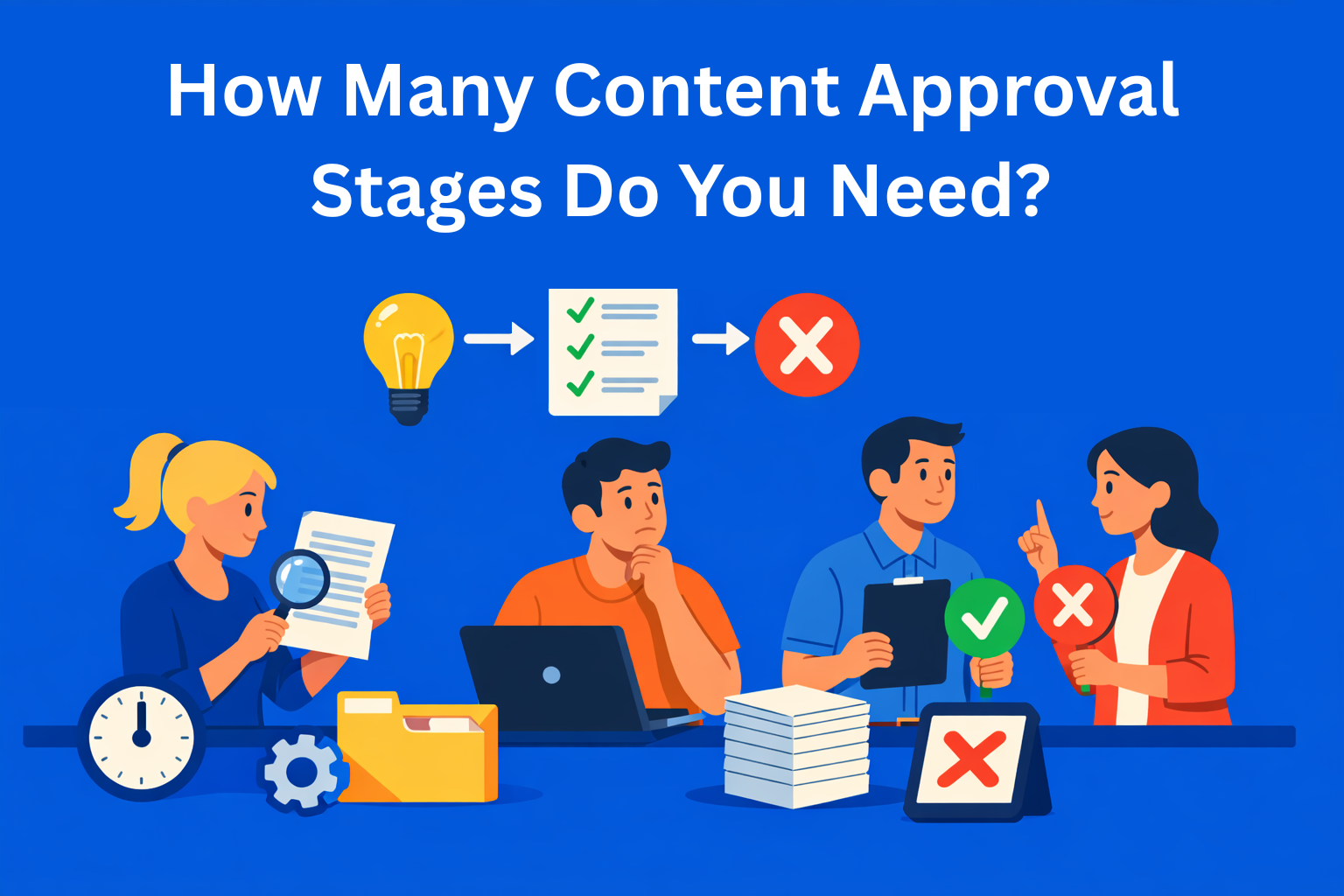
However, the problem is not writing speed. The real problem is that most teams skip outline approval.
In this blog post, we’ll explain why outline approval is the highest-ROI AI feature, why most teams ignore it, and how it can completely change the way you work with AI.
Key Takeaways
- Most AI content problems come from misalignment, not writing speed - endless revisions happen because teams skip agreement on direction before writing starts.
- Outline approval is the cheapest correction point - changing structure early takes minutes, while fixing direction after drafting takes hours.
- AI amplifies clarity-or chaos - without an approved outline, AI produces fast but misaligned content instead of useful drafts.
- Approved outlines dramatically reduce revisions - teams move from multiple rewrite cycles to small, focused improvements.
- The real ROI is clarity and trust - writers work with confidence, approvers stop “rescuing” content, and publishing becomes predictable.
The problem isn’t slow writing, it’s endless revisions
When people talk about AI in content workflows, the focus is almost always on writing. How fast AI can produce a text. How good the first draft is. How many words it can generate in a short time.
But in reality, writing rarely takes the most time. The real problem starts after the first draft.
The text is sent for review. One person says the focus isn’t right. Another asks to add a new section. A third says it’s “not exactly what they had in mind.” The writer makes changes. Then another round of comments arrives. And the cycle continues.
In this situation, AI only speeds up the wrong part of the process. Instead of fixing the problem, it makes it worse. More drafts are written faster, but confusion also grows faster. That’s why an AI content workflow without clear alignment at the start almost always leads to more revisions, whether you’re using a standalone AI tool or AI built directly into a content workflow platform.
How most teams use AI today
If you look at real, day-to-day work, you’ll see the same pattern in most teams.
AI is used as a “quick first draft” tool. It’s often triggered directly inside a content tool, without any prior agreement on structure or message. Someone writes a short, usually very general brief. They paste it into an AI tool and get a text. That text is then sent into the approval process.
Very often, an outline doesn’t exist at all. And when it does, it’s usually very shallow. In practice, everything comes down to a title and a few rough ideas that exist only in the head of the person who assigned the task.
This means stakeholders see the direction of the content for the first time only after the full text is already written.
That’s when problems start.
Comments are no longer about structure or message, but about details. Style. Tone. Examples. But underneath all of that, there’s one real issue: the text is going in the wrong direction.
In this kind of AI content process, AI is not the problem. The problem is that there was never a clear agreement on what exactly was supposed to be written.
Why outline approval changes everything
An outline is the structure of the text before a single sentence is written.
It answers basic questions:
- What is this text about?
- What is the main message?
- Which topics are included, and which are not?
- In what order does the story flow?
When an outline is sent for approval, all key decisions are made before writing begins.
That’s the crucial difference.
Instead of debating later whether a text is good or bad, the team first aligns on direction. Once the outline is approved, writing becomes a technical task.
At that point, AI content creation finally makes sense. For example, in EasyContent, AI can first suggest an outline, which the team then reviews and approves before the full text is generated. AI gets clear context and can write exactly what was agreed on.
Outline approval is a simple step that prevents wrong decisions before they waste time and energy.
The hidden costs of skipping outline approval
When outline approval is skipped, the costs don’t show up immediately. They quietly pile up.
The first cost is time. Every revision requires rereading, rethinking, and fresh energy. Rewrites often happen multiple times, without anyone being fully sure why.
The second cost is decision fatigue. People keep making the same decisions over and over.
- Should this be done differently?
- Should we change the angle?
- Should we add another example?
The third cost is frustration. Writers feel like they’re constantly guessing something invisible. Approvers feel like the text is never quite “right.”
In a bad AI content workflow, everyone works more, but the result is worse.
The most common comment is: “This isn’t what I had in mind.”
Outline approval stops that sentence from ever appearing.
Why AI makes outline approval even more important
There’s a paradox when it comes to AI.
The better AI gets at writing, the more important it becomes to give it clear direction.
AI doesn’t ask follow-up questions. It doesn’t doubt the brief. It doesn’t think about whether the direction is right. It simply writes what it’s given.
If the outline is weak or doesn’t exist, AI will produce a perfectly structured but completely wrong text, even when it uses advanced models and research, like those behind EasyContent’s AI features.
That’s why outline approval is the cheapest correction point in the entire process. Changing structure at the beginning takes minutes. Changing a finished text takes hours.
In an AI content approval process, one rule always applies: the later you make changes, the more they cost.
What good outline approval looks like in practice
A good outline doesn’t have to be complicated.
It usually includes:
- Clear H2 and H3 headings
- A short explanation of the main message
- A note on what the text is not about
- Clarity on who approves the outline and what they’re approving
AI can help by suggesting an outline, what comes first, what follows, and how the story should flow logically. In tools like EasyContent, that outline is always reviewed and approved by people before AI starts writing the full text. This way, everyone can see early on whether the direction is right, and big changes later are avoided.
But the final decision must stay with humans.
Once the outline is approved, writing becomes calm and predictable. Feedback focuses on small improvements, not on changing direction.
At that point, the AI content workflow becomes stable and reliable, because AI is used in the right place, inside defined workflows, approval steps, and clear rules.
The ROI no one measures, but everyone feels
Outline approval rarely shows up in reports. It’s not measured by word count. You won’t see a chart saying, “Outline approval increased productivity by 23%.”
But its impact is felt every single day, because it affects what actually wastes time: going backward and constantly reworking content.
Here’s what that looks like in simple terms:
- When the outline is approved, everyone has already agreed on direction. That means fewer comments like “change the angle” or “add another topic” later.
- Instead of three or four revision rounds, you often have one round of small tweaks. That immediately means less feedback.
- Fewer rounds mean less stress. Writers don’t feel like they’re being sent in circles, and approvers don’t feel like they constantly need to fix things. That means less tension.
- Without big last-minute changes, content is finished faster and ready to publish sooner.
- Most importantly, trust builds over time. Writers know they have clear direction. Approvers know they won’t have to rescue the content at the end.
Because of this, content teams feel calmer even while producing more. Not because they’re working harder, but because they’re not doing the same work twice.
That’s why the biggest ROI of outline approval is clarity. When everyone knows what’s being written and why, everything that follows becomes easier.
In a well-designed AI content process, outline approval is like a quick “yes, this is it” before writing begins. And that small step prevents the biggest losses later.
Conclusion
In the end, it’s important to understand that AI is not the problem. AI only speeds up what already exists.
If the process is unclear, AI will make it more chaotic. If the process is solid, AI will make it more powerful.
Outline approval is a small step that creates a huge difference.
Teams that adopt it work faster, quieter, and smarter, and finally use AI in a way that delivers real value.