How to Use Year-End Downtime to Strengthen Next Year’s Content Strategy
Use the quiet end-of-year period to reset your content workflow, review what worked, clean up processes, refresh documentation, and plan smarter. A few simple December steps can set up a stronger, clearer content strategy for the year ahead.

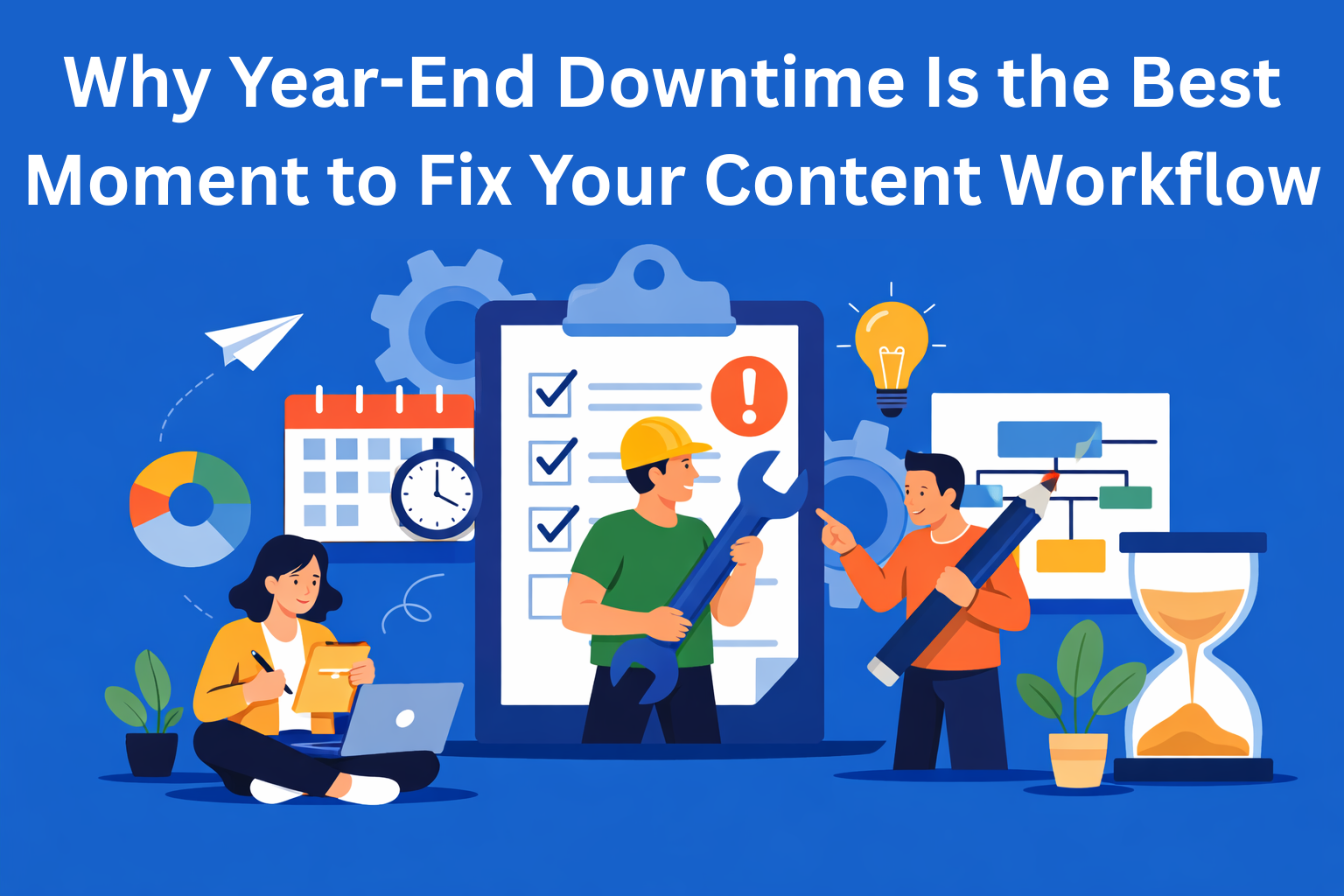
The end of the year feels like a moment when everything slows down. There are fewer meetings, fewer emails, and less pressure. But that’s exactly why this period can be incredibly useful for any content team. When things are calm, it’s easier to see what needs improvement, what’s worth keeping, and how to set up a healthier content strategy for next year. That’s the real power of a short December reset.
Key Takeaways
- Year-end downtime creates space for clarity - with fewer meetings and less noise, teams finally have room to reflect, review, and reset.
- A quick performance review reveals next year’s priorities - looking at what worked (and what didn’t) guides smarter topic and format decisions.
- Cleaning up your systems removes hidden friction - organizing files, deleting duplicates, and fixing naming helps the team start January faster.
- Simplifying workflows boosts speed immediately - tighter roles, fewer steps, and clearer templates reduce delays and confusion.
- A realistic early plan sets the pace for the entire year - mapping priorities, capacity, and campaigns in December leads to a smoother Q1.
Why the End of the Year Is Perfect for a Strategic Reset
During the year, work moves fast, and teams often keep going without a break, rarely having time to step back and see the bigger picture. Year‑end downtime gives you space for clear thinking and planning. The quieter period helps you improve your content workflow, review what works and what doesn’t, and set the foundation for a fresh start.
December is the moment to finally do the things you’ve been postponing all year, cleaning folders, improving processes, updating documentation. All of this leads to faster work and a more stable content strategy later.
Looking Back: What Actually Worked This Year
Before moving forward, take a quick look back. Which posts, formats, and channels performed best? Which content sparked the most reactions? This helps you see where to invest more time next year.
You don’t need deep analytics. It’s enough to notice what had steady growth, what was downloaded, what was shared, and which pieces completely missed the mark. This small audit helps you set priority topics and start the year with a clearer direction for your content strategy.
Clean Up Your Processes Before January Arrives
You probably have a bunch of things you planned to "clean up when you have time." Well, the time is now.
- delete duplicates,
- organize your folders,
- create clear document names,
- archive anything you no longer use.
When you do this now, you won’t waste time in January searching for files, digging through old versions, or trying to remember where something is. It also becomes much easier to improve your content workflow when there is no clutter around you.
Tighten Your Workflow: Less Complication, More Focus
Teams often get stuck in long approval cycles, unclear roles, too much feedback, or small steps that slow everything down. Year‑end downtime is the perfect moment to fix this.
You don’t need to redesign the entire process. It’s enough to:
- shorten approval steps,
- define who does what,
- create new templates,
- remove anything that complicates work for no reason.
Or, if you haven’t yet, start using a tool like EasyContent, where you can build your own workflow, assign roles and permissions to every team member, create custom templates, produce briefs, categorize content, and access many other options that speed up and simplify the entire content creation process.
Refresh Your Documentation and Bring Order
Documentation may seem boring, but it’s incredibly valuable. When it’s good, it saves time and reduces confusion inside the team. That’s why December is the perfect moment to update it.
Check:
- if your guidelines are up to date,
- if your tone‑of‑voice rules are clear,
- if your documentation and processes still reflect how the team actually works.
Build a Smarter Plan for the New Year
Planning shouldn’t start in January. In fact, December is a much better moment.
Focus on three things:
- The topics that matter most,
- How much content you can realistically produce each month,
- Which campaigns and goals you want to achieve.
When you create a realistic roadmap, your team enters the new year more prepared, with a clear focus and a smoother content workflow rhythm.
Conclusion
The end of the year truly is an opportunity, but most teams never use it. If you take just a few simple steps in December, review your results, clean up processes, refresh documentation, and plan the start of the year, your content strategy will already be stronger, clearer, and more confident by January.
December is calm. Use it wisely.