Why a Change of Scenery Is the Creative Reset Your Brain Needs
Changing your environment helps your brain reset, unlock fresh ideas, and improve focus. Even small shifts-like working from a café, balcony, or a different room, wake up the senses and spark more original, creative work.

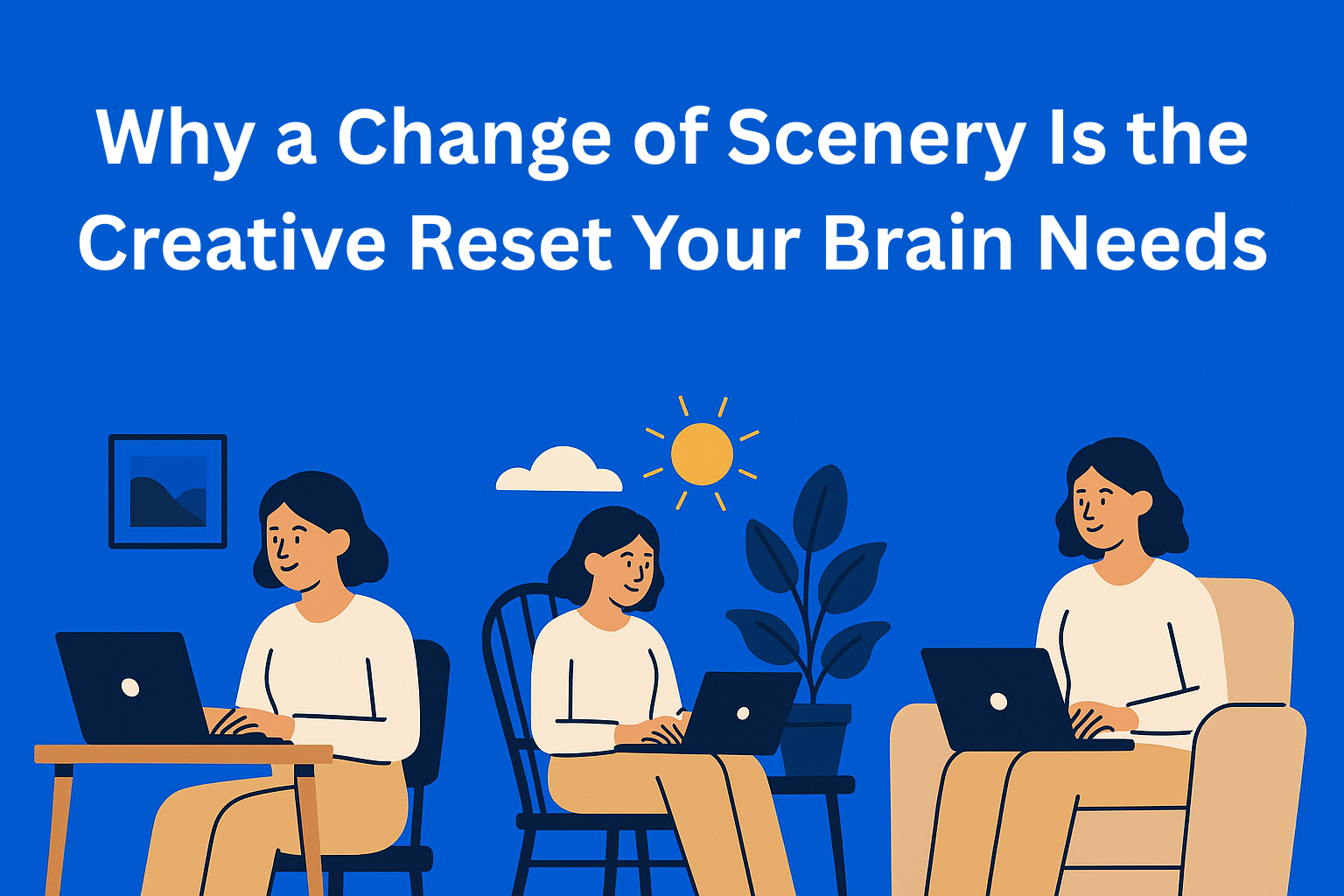
When you work in the same place every day, everything becomes too familiar. The desk, the chair, and the wall turn into background that your brain no longer notices. Without new signals, it reacts the same way as yesterday, so creative ideas feel slow and stuck.
A change of environment breaks that routine. It wakes the brain up, makes it notice new things, and form new connections. It’s enough to move to the couch, go to a cafe, sit in a coworking space, or take a short walk - and you already get a small creative reset. The brain naturally reacts to new signals from the environment - sounds, colors, light, and movement - and this change often wakes up fresh ideas.
Many people and teams notice that as soon as they leave their usual workspace, creativity comes back. Thoughts flow easier, focus is stronger, and work becomes simpler.
Key Takeaways
- Familiar spaces dull creativity - when you work in the same place every day, your brain stops noticing the environment, which slows idea flow.
- Small shifts reset focus - moving to a different room, switching posture, or working from a café instantly refreshes attention and thinking.
- Movement unlocks creative flow - walking, standing, stretching, or changing location stimulates new thoughts far better than passive breaks.
- New sensory input sparks insights - light, sounds, textures, and motion give the brain new signals that lead to original ideas.
- Make environment shifts a habit - treat movement as part of the creative routine, not an emergency fix, to keep inspiration active over time.
The Brain Works Better With Novelty
The brain likes familiar things, but it also needs change. When we stay in the same space for too long, thoughts follow the same path. Ideas weaken because nothing new pushes the brain to think differently.
This is where the idea of environmental change matters. As soon as your surroundings shift - even in small ways - the brain starts “reading” the environment again. It receives new signals, connects them, and forms new ideas. That’s why we often get completely new thoughts.
If you’ve ever gone for a walk and suddenly found a solution to a problem, that’s exactly why. Fresh air, new sounds, light, and movement break the mental block. Even the smallest change in space helps the mind reset.
Why Creativity Returns When You Switch Locations
Different spaces affect how you feel and think. A quiet office may help you focus, but it can also make you feel stiff. A soft couch relaxes you, while the lively energy of a café easily sparks ideas.
For example:
- coworking spaces give you a feeling of belonging to a creative community,
- cafés provide gentle background noise that stimulates ideas,
- libraries slow down your rhythm and help you think deeper,
- being outdoors relaxes you and often brings the best solutions.
When the brain receives something new from the environment, it starts searching for meaning and forms new connections between information, and that’s where ideas are born.
This is why many creators say that their best thoughts came outside the office. Creativity grows fastest where the senses are active and awake.
Leaving Routine Improves Focus
Changing your environment doesn’t help only with creativity, it also improves focus. When you sit in the same place too long, everything starts to feel dull. The same walls, the same light, and the same atmosphere create passivity, so the brain easily slips into routine and “autopilot.”
When you change your space, even just a little, attention resets. The new surroundings feel fresh and sharper, which naturally improves concentration. Tasks, reviewing content, brainstorming, or writing from scratch become easier.
That’s why many people feel more productive outside their usual workspace. They’re not running from responsibilities. They’re simply moving their brain into a more alert state. And that alertness often brings faster, clearer, and higher-quality work.
Small Changes, Big Effect
You don’t need to move offices to spark ideas. Even small changes can mean a lot. For example:
- move from your desk to the window,
- switch chairs while working,
- sit on the floor with your laptop for a short while,
- finish one task on the balcony,
- work in different places throughout the week.
These small shifts bring fresh sensory input, and that alone is enough to refresh how ideas form. Many teams do this intentionally during brainstorming: they change rooms, sit outside, or book a café table. The goal is not comfort - it’s stimulation. A small change activates thinking.
So if you’re stuck while writing, designing, planning a campaign, or solving a block, try changing your environment before assuming you’re out of ideas. Most of the time, the ideas are there. They’re just trapped in a static space.
How Sensory Novelty Leads to Creative Breakthroughs
Most creative ideas don’t come from routine, they appear when something around us becomes new. Different sounds, light, movement, or perspective activate the brain and wake it up from familiar patterns. In that moment, the brain doesn’t see the space as a habit, but as a chance to explore something different.
That’s why the “aha moment” often happens outdoors, in a café, while traveling, or even in another corner of your home. A new environment easily shifts thoughts from old patterns to new ones.
Research shows that spending time in new surroundings increases mental flexibility, you shift from one idea to another more quickly. This helps creators have clearer thoughts, fresh approaches, and simpler storytelling.
We also become more open to bold ideas. When the senses wake up, the mind sees more possibilities.
Simple Tips for Individuals
You don’t need travel, fancy spaces, or special equipment. Small routine changes are enough:
1. Add daily micro-movements
At least one shift in space per day: morning at the desk, editing on the couch, brainstorming outside.
2. Short “thinking walks”
Even five minutes is enough for refreshed focus and new idea flow.
3. Always have a small work setup
A laptop or notebook can turn any place into a creative one.
4. Weekly space rotation
Try a café, library, coworking space, hotel lobby, or park bench.
5. Change something in your workspace
A new angle, different layout, new chair - anything that breaks visual routine.
Small intentional movements push the brain from execution mode into exploration mode. And that shift often leads to more original ideas.
Practical Advice for Teams
When a team works together, space becomes even more important. Shared environments create shared thinking habits. If meetings are always in the same room, the team easily falls into repetitive patterns and ideas.
Here’s how teams can use environment as a creative tool:
Brainstorm outside the office - a different room, café, or library can refresh ideas.
Offsite sessions - even half a day outside the office boosts energy.
Change meeting locations - a new space changes conversation dynamics.
“Idea walk” sessions - short walks reduce tension and open better communication.
Desk rotation - a new layout encourages new forms of collaboration.
Teams that move think differently. Leaving routine brings clearer ideas, shorter revision cycles, and fresher creative directions. A new environment gently disrupts old assumptions, which often leads to breakthroughs.
It’s Not About Working Faster - But More Originally
The goal of changing your environment isn’t to do more tasks in less time. The point is to make the work you do more meaningful and creative.
Many people measure productivity only by speed: how quickly something is written, reviewed, or published. But creative work doesn’t function that way. Ideas don’t come from rushing, they come from clarity, a rested mind, and new impressions from the environment.
When you change your surroundings, you give your brain more new impressions. Views, people, sounds, and light become new material for thinking. This changes how you write, explain, or look at a topic, so content feels fresher and more original.
Teams that consciously switch work environments often discover better campaign ideas, clearer messages, stronger content structure, and more natural storytelling. Space influences thinking much more than it seems at first.
Conclusion
Changing your environment shouldn’t be a last-minute solution when you’re stuck, it should be a normal part of creative work. Instead of waiting for inspiration to find you, move and give it a chance to wake up.
Tomorrow, try starting your draft at the desk, and then move to the couch, balcony, or a café to edit. Notice how your thoughts and number of ideas change.
Over time, this small practice can become your quiet superpower. Whenever you feel blocked, you’ll know that maybe the problem isn’t you or the topic, but the space that simply became “too old” for your mind.
When the environment changes, your thinking changes with it. And often, that’s all it takes for ideas to come back.