How Content Systems Fail Silently
Content systems rarely fail overnight, they slowly break down through unclear steps, outdated rules, and ignored tools. This blog explains how these small issues quietly grow and what teams can do to fix the system before it becomes a burden.

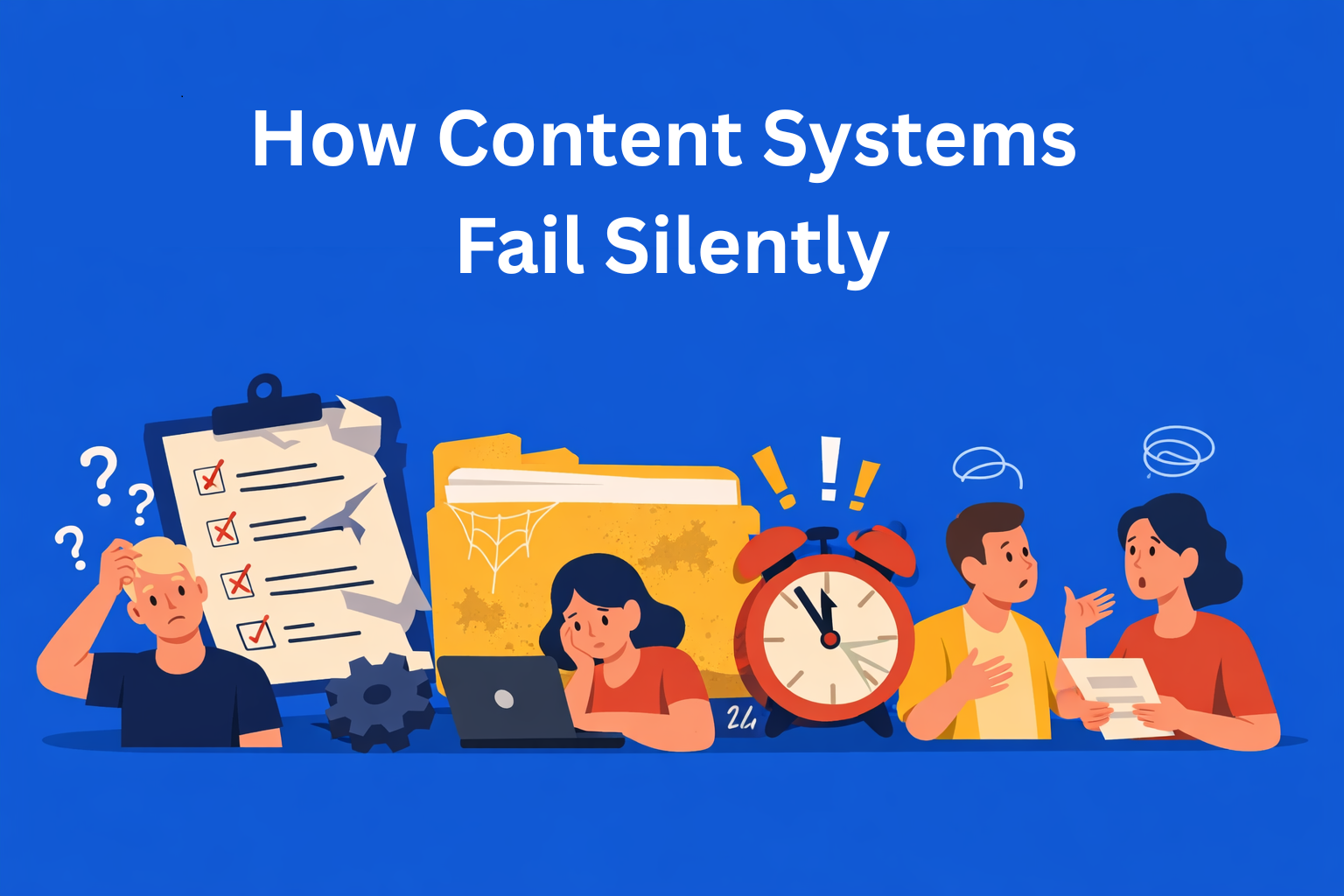
Content management systems rarely fail all at once. They usually break down slowly through small issues: unclear steps, outdated rules, tools no one uses properly, and habits that slowly become "normal." In this text, we’ll talk about how and why content systems start falling apart, which warning signs teams often overlook, and what you can do to make your system easy to use again.
Key Takeaways
- Content systems rarely collapse overnight - they slowly weaken through unclear steps, outdated rules, tool overload, and habits that quietly become inefficient.
- Small inefficiencies turn into structural problems - duplicated work, manual processes, missing ownership, and scattered files gradually make the system harder to use.
- Warning signs are visible-but often ignored - people can’t find documents, rules exist only on paper, feedback is chaotic, and content becomes outdated faster than it’s updated.
- Centralization and clarity restore stability - defined roles, structured workflows, one source of truth, and automated steps prevent silent breakdown.
- Fixing early is easier than rebuilding later - small adjustments in process and ownership can prevent chaos and protect long-term content quality.
Why Systems Break Down Slowly, Not Suddenly
Most teams think that if something “breaks,” it will be obvious. But content systems rarely cause a big problem overnight. Everything starts slowly and quietly. The issue grows step by step, which is why it’s easy to miss. People get used to small annoyances like too many approvals, long message threads, manually searching for files, and waiting for feedback. At first, it seems harmless, but over time it builds up.
In this stage, a major cause appears: lack of clear processes. Without them, it’s hard to know who does what and when. Over time, a content system that was meant to make work easier starts making it harder.
How the Silent Breakdown Begins
The quiet collapse usually starts with small things teams don’t see as problems. For example:
- rules no one follows anymore - because people forget about them or assume they’re not important, so everyone does whatever they think is best.
- tools that are used "partially" or only sometimes - meaning the team never gets full value from them and constantly switches between solutions.
- duplicated work because there’s no single source of truth - so two or three people do the same thing without realizing someone already finished it.
- shortcuts that turn into "the standard" - people come up with quick fixes to finish work faster, and over time those fixes become the “new rule,” even though they create chaos.
- content no one updates because no one knows whose job it is - old information stays online, and no one feels responsible for fixing it.
All of this together makes the system a burden instead of support. At this stage, many teams realize that their content process is not working the way it should, but they still don’t know where the real problem comes from.
Warning Signs Most Teams Ignore
There are clear signals that a content system is breaking, but most companies notice them only when it’s already too late. The most common signs are:
1. People don’t know where anything is
If employees have to search ten different places to find one document, the system is already in trouble. Without a centralized place for information, quality and speed start dropping. That central place can be something like EasyContent, where you can create all types of content in one tool and always know where everything is stored.
2. Rules exist only “on paper”
Maybe you defined the steps long ago, but no one follows them anymore. This means the content process is not alive and isn’t serving its purpose - in simple terms, the rules exist, but no one uses them, so everything is done randomly and without clear structure. EasyContent can help here too - you can write down your rules and add them to templates to ensure every piece of content follows the right guidelines.
3. Too much manual work
If everything must be done manually - reminders, copying text, tracking deadlines - the system is inefficient. Manual work always leads to mistakes.
Automatic notifications when content moves through stages?
Alerts when someone leaves feedback or comments?
Real-time communication inside the content itself?
Sounds good, right? All of this is available in EasyContent and makes content creation and teamwork much easier.
4. Content becomes outdated faster than the team can update it
When the team can’t keep up with maintaining content, it’s a clear sign the content system is no longer sustainable - simply put, content piles up faster than people can fix it, and everything starts falling behind and creating extra mess.
Why Teams Don’t Notice Problems Immediately
The reason is simple: people get used to things. When the problem appears slowly, teams continue working and don’t see it as urgent. The focus stays on daily tasks and deadlines, while “system” issues get pushed aside because they seem like something that can wait - even though they shouldn’t.
Many people also think it’s normal for content work to take a lot of time, require many revisions, and involve constant back-and-forth. But that’s not the nature of the job - it’s a sign that your content management process isn’t working well and is making everything harder than it needs to be.
How to Fix a Content System (Before It Breaks)
Fixing a system doesn’t have to be hard. You can solve most issues with a few simple, clear steps:
1. Clarify steps and responsibilities
Write down who does what, in what order, and what the ideal workflow looks like. Without this, there is no stable system. Or simply assign roles to each team member and place them inside the workflow you create in EasyContent - problem solved.
2. Simplify the tools you use
Instead of using five different tools for one job, choose one that truly works. The less manual work, the fewer mistakes.
3. Create a central place for information
One source of truth - one document, one tool, or one system where everything lives. This is the foundation of any healthy content system.
4. Review content regularly
Content changes fast. Without regular reviews and updates, every system starts falling apart.
5. Don’t wait for a big problem
It’s always easier to fix a system while the problems are still small. If you wait until everything is urgent, fixing it will take more time and energy.
Conclusion
When a content system works well, the job feels simple. People know what they’re doing, where to find things, and how long tasks will take. But when the system starts falling apart, everything suddenly feels harder than it should.
The good news is that most problems can be solved with small, simple steps - you just need to notice the issues early and act before they grow.
If you take care of your system regularly, it becomes your strongest support for creating clear, consistent, and long-lasting quality content.