Stuck on a Draft? Try Moving - Literally.
When writing stalls, the problem isn’t always the idea, sometimes it’s the space you’re in. This blog explores how movement and changing your environment can break a creative block, refresh focus, and restart your writing flow by simply shifting where and how you work.

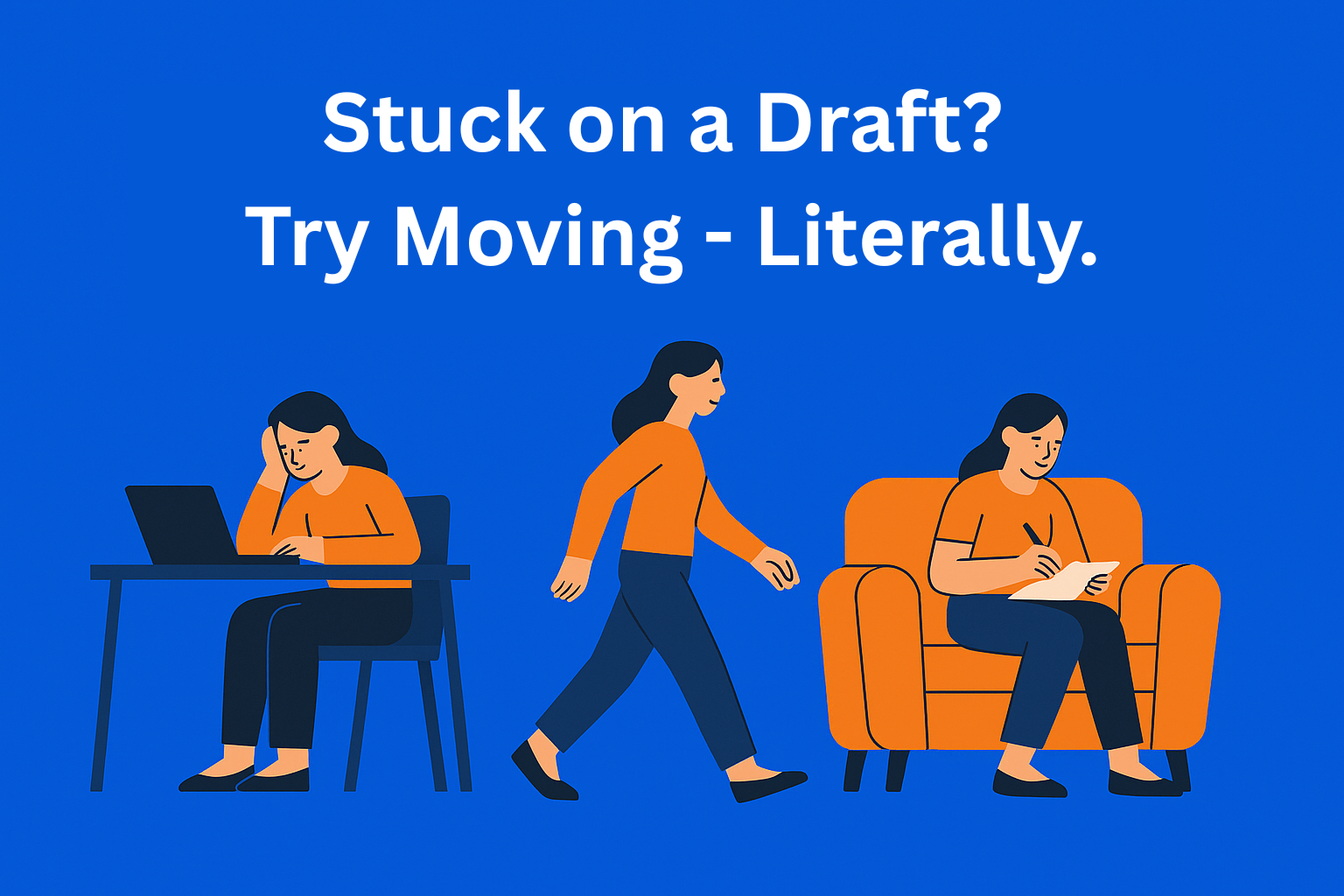
If you’ve ever stared at a screen, knowing exactly what you want to write but the words just won’t come out, then you know the feeling. Many assume the problem is in the idea, topic, or inspiration. However, the real reason for a creative block is often not in the content itself, but in the physical environment. Writing flows more easily when you change your surroundings. If you sit in the same spot for too long, thoughts can slow down. Sometimes all it takes is to stand up, take a short walk, or sit somewhere else, and ideas start moving on their own.
Changing your space and adding even a bit of movement isn’t an excuse to avoid work, but a way to wake up your mind and break the block. This matters especially when you’re working on tasks that demand focus, like writing or creating content. Even the smallest physical change can improve concentration and make work feel lighter.
Key Takeaways
- Creative blocks are often environmental, not mental - staying in the same spot too long dulls inspiration and slows thinking.
- Movement reactivates focus and ideas - even small physical changes refresh the brain and restart creative flow.
- Changing location acts as a mental reset - a new seat, lighting, or view can shift perspective and unlock clearer writing.
- Movement isn’t a break - it’s a tool - walking, stretching, or switching work spots keeps the mind engaged with the task.
- Treat movement as part of the writing process - build small rituals that help you move when stuck, instead of forcing ideas at the desk.
Why Your Desk Slowly Kills Inspiration
When you constantly sit at the same desk, in the same position, surrounded by the same objects, your brain slips into routine. Everything becomes familiar and predictable, leaving no fresh signals to spark creativity. Even though your desk is practical, over time, it becomes a place where mental fatigue piles up, especially when you’re writing or working on content, because that requires freshness.
The desk often reminds you of deadlines and tasks, so the place that once inspired you begins to block you. In a familiar environment, the brain easily switches to autopilot, killing inspiration because nothing around you shifts your perspective. Without new signals, fresh ideas struggle to appear.
But when you physically step away from that space, your senses wake up, you see new shapes, hear different sounds, feel different textures, notice a change in lighting. That alone activates creativity and helps your writing move off dead center.
How Movement Activates the Brain and Creative Flow
Movement has a strong impact on creativity. Even the simplest physical motion stimulates thinking and opens space for new ideas.
Writing requires energy, focus, and a clear head. When you’re stuck, many people just sit and wait for inspiration to magically appear. But often, all you need is to change location and break the routine, your brain receives new signals and begins releasing fresh ideas.
So the real solution isn’t a break, but a change of place and angle. As soon as you change your surroundings, stand up from the desk or step outside for a moment, the brain refreshes itself. Movement breaks mental blocks and gives your writing new clarity. Sometimes a single step is enough to restart the flow.
A Physical Change of Space as a Focus Reset
You don’t need a big shift. Just sit in a different room, change your posture, or work with your laptop in your lap. The brain links places to emotions, so if your desk is tied to pressure, changing the location naturally changes your internal state, too.
From a small walk around the apartment to stepping outside for a minute, perspective shifts as soon as you change space. Even while doing the same task, your view of it changes. This is especially true for writing and content work. A new environment brings new thoughts and fresh ideas.
So look at movement as a way to refresh your focus, not as an escape from the task. When you stop forcing ideas while sitting only at your desk, you give the creative process room to grow more naturally.
The Difference Between a Break and Movement
People often confuse a break with movement. A break means you stop working and distance yourself from the task, usually shifting attention to scrolling TikTok or Instagram, listening to music, resting, and similar distractions. Sometimes that quiets the mind, but it doesn’t always help creativity.
Movement wakes the brain up. When you change position, walk, or simply move, your mind continues working on what you’re creating. You might not sit down to write immediately, but as soon as you change space and angle, creativity begins to move.
That’s the key difference: the goal isn’t to rest from the task, but to look at it from another angle. Movement isn’t a break, it’s a tool to find a new perspective.
Small Physical Changes That Trigger Big Creative Breakthroughs
You don’t need to change cities, offices, or homes. Sometimes, just one small tweak is enough:
- Move from a chair to the floor.
- Sit on the opposite side of the room.
- Rest your laptop on your knees.
- Stand up and stretch.
- Take a walk without headphones.
Every bit of movement wakes up the brain. New sounds, light, smells, and surroundings refresh your thoughts. When you change space, you change your approach to writing. Even a short walk can loosen your thoughts and create room for stronger ideas.
When you return to your desk, the mind is rested and ready to focus again. A block that felt huge often disappears after just a few minutes of movement.
Experiments You Can Try Right Away
If you want to test how movement affects inspiration, here are simple things you can try today:
- A 5-minute walk without headphones. Notice sounds, light, and surroundings.
- Change where you sit. Move your laptop to another desk, an armchair, or a couch.
- Write your first paragraph away from your usual spot. A terrace, a café, a garden, anything works.
- Create a “fresh corner.” A place you use only when you’re stuck.
These ideas seem simple, but they work. When you change position, notice how you change, too. Creative work in writing and content creation often needs not more effort, but a different angle.
Even if you think it “won’t help,” try it. See the change of setting as a way to free your mind and open space for new ideas.
Movement as Part of the Process, Not an Emergency Fix
Don’t wait until the block becomes a major problem. Movement shouldn’t be a last-minute solution, it should be part of your routine.
When you add a short walk, stand up, or switch where you sit, it changes the way you write. If you try these small shifts each time you get stuck, the brain wakes up immediately. It doesn’t like routine, and creativity needs movement.
So create a small movement ritual. When you feel stuck, activate the body before forcing the idea. You’ll see how your view of the task instantly changes.
Conclusion
If your writing feels stalled, the issue may not be the topic, inspiration, or ideas, it might literally be the place where you’re sitting. Our surroundings influence our thoughts far more than we expect. When you change space, you change your perspective. Movement wakes up the brain, unlocks creativity, and gives you control over your text again.
So instead of forcing words while sitting still, simply stand up and move. Each step can shift your way of thinking. Notice how writing that once felt heavy begins to flow more easily.
Creativity and writing move together. When you’re stuck, don’t give up on the text, change your space, angle, or body position. Let movement unlock the ideas that your words couldn’t.