Content Workflow Best Practices: Lessons from High-Output Teams
Learn how high-output teams use a clear content workflow to plan, create, review, and publish content faster, with fewer mistakes and less stress. Simple content workflow best practices for solo creators and growing teams.


Anyone can create content. But only a small number of teams manage to create it regularly, with good quality, and without stress. The secret is not that everyone works longer hours, but that they have organized their content workflow well.
Content workflow is simply the path that one piece of content goes through from idea to publication. When that path is clear and smooth, a team can create more good content with fewer mistakes and fewer disagreements.
In this blog, we will explain what teams that constantly publish large amounts of quality content are doing - and how you can apply the same approach yourself, even if you work alone or in a small team.
Key Takeaways
- A clear content workflow enables consistent and scalable production - defined steps from idea to publishing reduce confusion and delays.
- Planning in batches improves efficiency - creating multiple ideas and content pieces at once saves time and keeps production steady.
- Clear roles and briefs reduce back-and-forth - assigning responsibilities and using structured briefs ensures smoother collaboration.
- Streamlined review processes prevent bottlenecks - limiting approvers, using async feedback, and setting deadlines speeds up approvals.
- Continuous measurement and iteration improve results - tracking performance and adjusting content helps teams get better over time.
What is a content workflow, really?
Content workflow is the order of steps that one piece of content goes through. Everything starts with an idea, then comes writing, review, approval, and finally publication. This can be a blog post, video, newsletter, or social media post.
The problem starts when this process is not clear. Then people do not know who does what, when something needs to be finished, and who needs to approve the content. Because of that, work slows down, deadlines are missed, and the team loses time. Teams that create a lot of content have a simple process that everyone understands and follows.
Proper planning - the foundation of everything
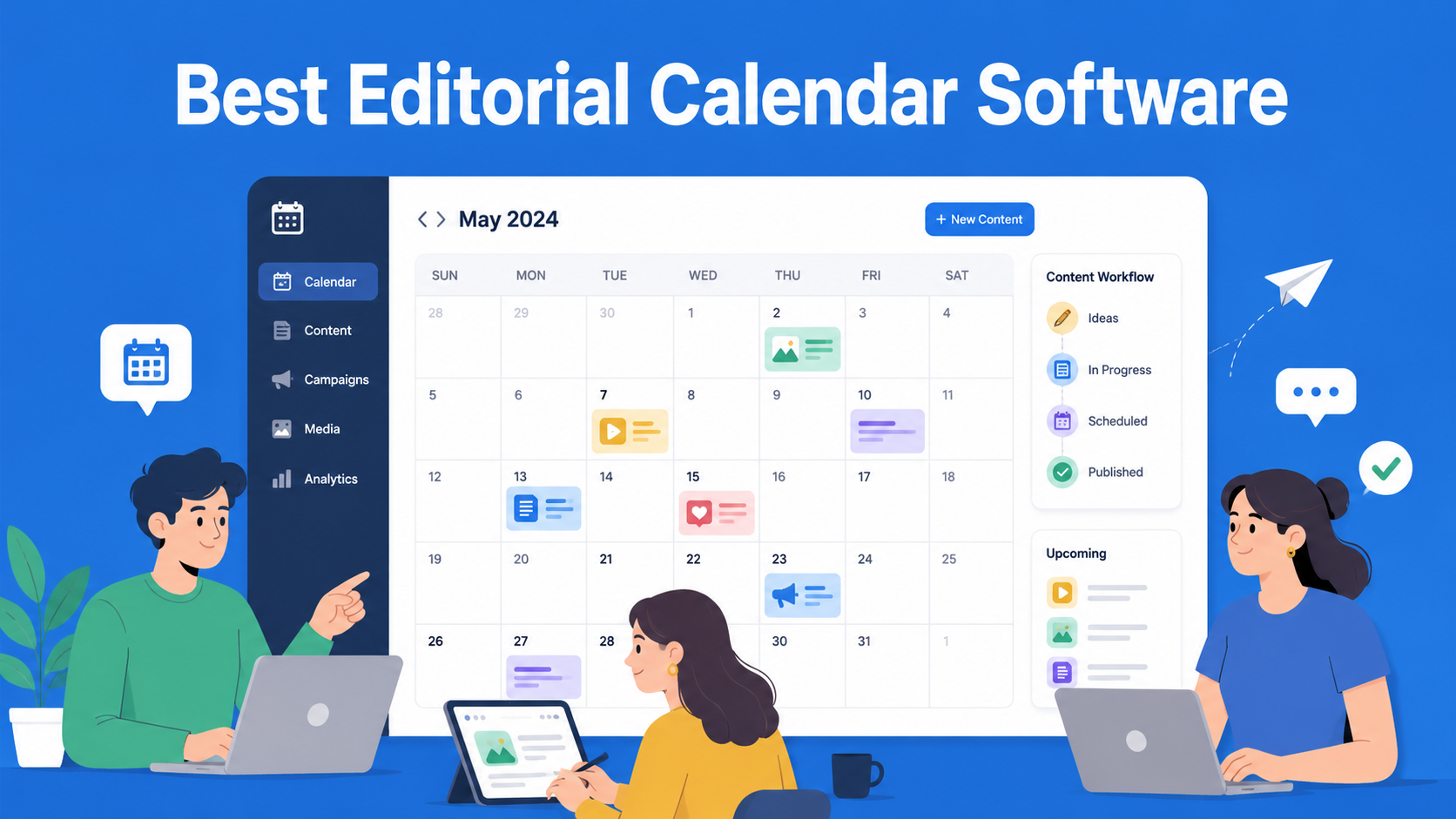
The best teams do not wait for inspiration. They plan ahead. Usually, once a month, they sit down and create a plan for the next 30 or 60 days. They use a simple content calendar - it can be in EasyContent, Google Sheets, or ClickUp. The important thing is that everyone can see the same calendar.
They choose the main topics, or content pillars, around which everything revolves. For example, if you sell marketing software, your main topics can be: how to attract clients, how to measure results, and how to use AI in marketing. Around those topics, they create groups of connected articles.
The key thing with content workflow best practices is that planning should be done in batches - you work on several things at once. Instead of looking for a new idea every day, you find 15-20 ideas at once.
How to create content efficiently
When content creation starts, a good content workflow divides the work into clear roles. Someone does the research, someone writes, someone edits, and someone handles the design. That way, everyone does what they are best at.
High-output teams use simple briefs. A brief is a short document created before writing that explains who the text is for, what it needs to achieve, which key messages it must include, and how long it should be. When the brief is good, the writer does not have to ask ten times what is expected.
AI tools are there to help, but not to replace people. They can create a first draft, suggest titles, or find data. But someone from the team should always check the content and add a human touch. The best teams work in batches - one day they write 4-5 texts, and the next day they edit all of them.
Review and approval - the biggest problem for most teams
This is where most teams get stuck. You send a text for review and wait three days. Then you get ten different comments from five people. After that, you make changes, send it again, and the process repeats.
Successful teams solve this in several ways:
- They use async review - everyone comments in the document when they have time, instead of doing it in a meeting.
- They have clear rules about who gives the final approval, which is usually one person, not everyone.
- They use a checklist: whether the text matches the brand, whether the links are correct, and whether it is easy to read on a phone.
- They set deadlines - for example, the reviewer has 48 hours to give feedback.
Publishing and sharing content
When the text is finished, the work does not end with publishing it on the blog. High-output teams immediately think about how to use the same content in more places. One good article can become:
- 5-6 shorter posts on LinkedIn and X
- Parts of a newsletter
- A script for a video or Reel
- An infographic
This is called repurposing, and it saves a lot of time. These teams also have prepared templates for publishing on different platforms and use tools that automatically schedule posts.
Measuring results and improving
If you do not measure, you do not know whether you are doing a good job. The best teams track simple things: how many people read the text, how much time they spend on it, whether they click on links, and whether they sign up for the newsletter.
Every week or month, they have a short meeting where they look at what worked and what did not. They quickly stop pushing content that performs poorly, and when something performs well, they create more similar content. This step closes the content workflow loop and makes the next month even better.
The most common mistakes to avoid
- Using too many tools at once, also known as tool overload - it is better to have 2-4 good tools that everyone uses than 15 different ones.
- Chasing perfection - it is better to publish a text that is 80% good on time than to wait a whole month for it to be perfect.
- Having no one responsible for the whole process - there should always be one person who manages the workflow.
- Ignoring people’s fatigue - even the best system falls apart if the team is overloaded.
Conclusion
A good content workflow does not have to be complicated. You do not need a large team, expensive tools, or a perfect plan to get started. It is enough to know what needs to be done first, who is responsible for what, and how content moves from idea to publication.
If you work alone, start simply. Create a small content calendar, choose a few main topics, and prepare a basic brief for every text. That way, you will not have to start from zero every time.
If you work in a team, the most important thing is that everyone understands the process. Agree on who writes, who reviews, who approves, and by when each person needs to finish their part. This reduces waiting, confusion, and unnecessary changes.
Content workflow best practices are actually simple rules that help you create content more easily, faster, and with less stress. When you have a clear system, you do not have to rely only on motivation. You know the next step and you can keep going even when the day is not ideal.
EasyContent keeps volunteer and contractor contributions organized
- Contributors submit their work through structured briefs
- Roles keep a contributor's access limited to what they're assigned
- Mentions route feedback to the right person automatically
- A mailbox keeps in-app messages separate from your regular inbox