The Difference Between a Content Calendar and an Editorial Calendar (and Why It Matters)
Learn the difference between a content calendar and an editorial calendar, why both matter, and how to use them together to plan content, stay consistent, and get better results.

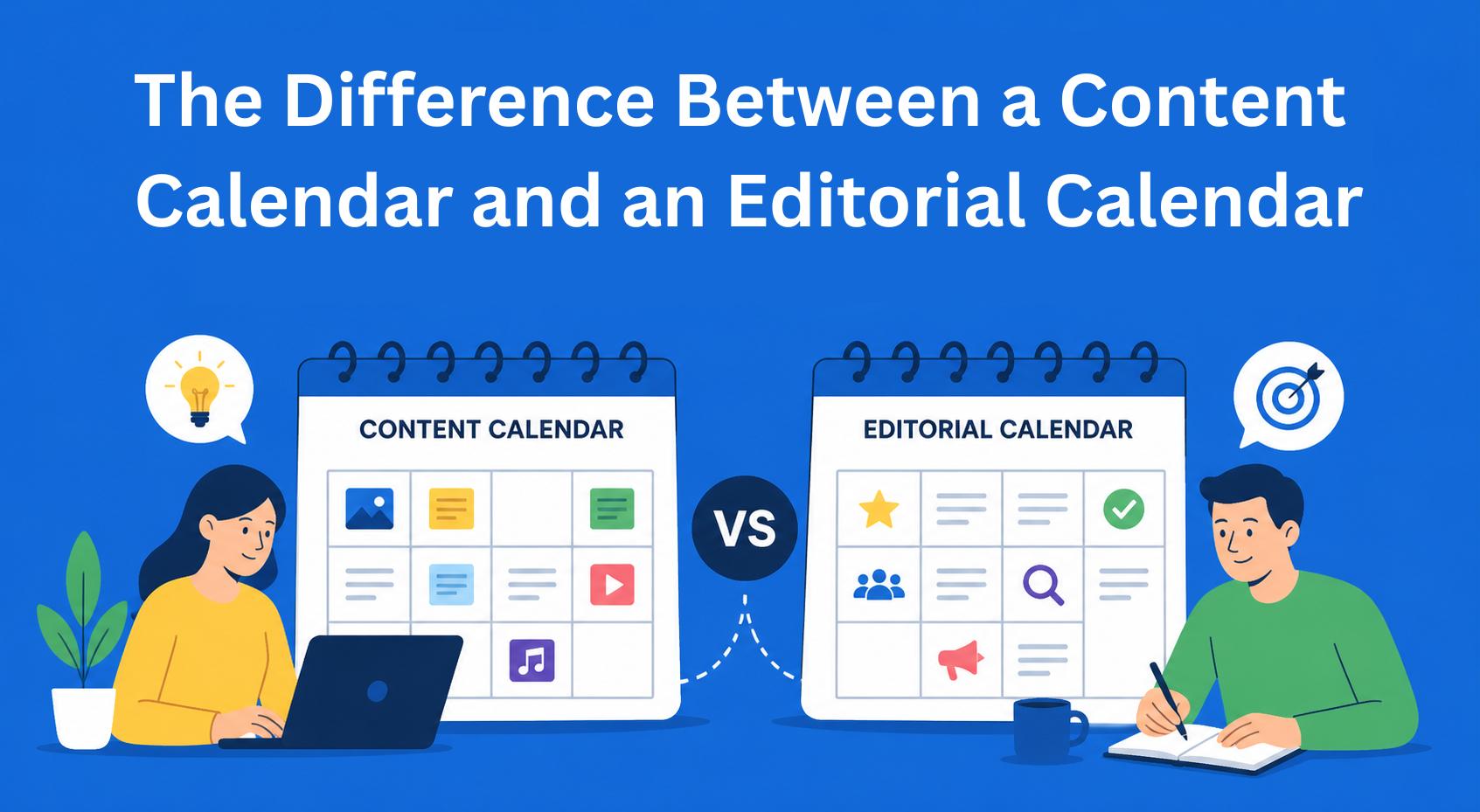
Everyone who creates content online will sooner or later come across two terms: content calendar and editorial calendar. Many people mix them up or use them as if they are the same thing. But they are not. The difference between them is big.
In this blog, I will explain what a content calendar is, what an editorial calendar is, how they are different, and why you should use both if you want your content to be consistent and successful.
Key Takeaways
- Editorial and content calendars serve different purposes - one defines long-term direction, the other manages daily execution.
- Editorial calendars focus on strategy - they define topics, messages, and goals over a longer time period.
- Content calendars focus on execution - they track dates, formats, responsibilities, and publishing status.
- Using both creates a complete system - strategy ensures consistency, while execution ensures regular publishing.
- Planning reduces stress and improves results - clear direction and structure make content easier to produce and more effective.
What is an editorial calendar?
An editorial calendar is a plan for your content over a longer period of time. This is where you decide which topics you want to cover and what messages you want to share with your audience in the coming months.
Imagine you run a small business that sells sports shoes. In your editorial calendar, you would write down your main topics and messages:
- How shoes help with running
- Stories about everyday people who changed their lives through sports
- Seasonal campaigns (spring running, preparing for winter...)
Here, you do not write exact dates or titles for each post. You focus on the bigger picture, what you want to talk about, which problems you are solving for people, and how that supports your business.
An editorial calendar is usually created for 3 to 12 months. It is used by business owners, marketing managers, and editors. It helps keep your content consistent and moving in one clear direction, building your brand.
What is a content calendar?
A content calendar is a simple plan for your day-to-day content.
In a content calendar, you write:
- The exact date and time of each post
- The title of the post or video
- Where it will be published (Instagram, blog, TikTok, email…)
- Which team member is responsible for writing, design, or recording
- The status (in progress, approved, published)
If we go back to the shoe example, your content calendar for next week might look like this:
- Monday 9 AM - Instagram Reel: “5 exercises for stronger ankles”
- Wednesday 10 AM - Blog post: “How to choose the right shoes for beginners”
- Friday 6 PM - Stories + link in bio
A content calendar is usually created for a week or a month in advance. It is an operational tool used by copywriters, designers, and social media managers to keep everything running smoothly.
Main differences between a content calendar and an editorial calendar
To make it even clearer, here are the key differences:
An editorial calendar is strategic, it focuses on what you are doing and why you are doing it. A content calendar is tactical, it focuses on how and when things will be done.
An editorial calendar is like an architect who designs the plan for a house. A content calendar is like the workers who build, paint, and install everything day by day based on that plan.
An editorial calendar looks at the bigger picture and a longer time frame. A content calendar focuses on details and a shorter time frame.
Because of that, a content calendar can change from week to week (for example, if a trending topic appears), while an editorial calendar rarely changes because it holds your core brand messages.
Many beginners use only a content calendar, they focus only on what they will post next week. The problem is that without an editorial calendar, the content has no clear direction.
Why is this difference important?
Understanding the difference between a content calendar and an editorial calendar helps you avoid common problems:
- Less chaos in the team - everyone knows what they are doing and when.
- Stronger brand -your messages stay consistent, so people recognize you more easily.
- Less stress - you already know your topics, so you don’t have to think every time.
- Better results - your content makes sense, people trust you more, and they are more likely to buy.
This is especially important if you work alone or have a small team. It is easy to just post whatever comes to mind. With these two calendars, you have a plan and know what you are doing instead of working randomly.
How to use them together?
First, create an editorial calendar for the next 3–6 months. Define your main topics, campaigns, and messages.
Then, turn that big plan into a content calendar for the next 30 days. Every post in your content calendar should support one of the topics from your editorial calendar.
For example:
- Editorial theme for April: “How small teams can organize content without chaos”
- Content calendar: 8 specific posts that support this theme (how to create a posting plan, content calendar examples, mistakes to avoid, tools for organizing content…)
In this way, the editorial calendar gives direction, and the content calendar ensures consistent execution.
Practical tips to get started
You don’t need to buy expensive software right away. Start with simple tools like Google Sheets or Notion.
For an editorial calendar, it is enough to have columns such as: Month, Main topic, Key messages, Campaigns, Goals.
For a content calendar, add: Date, Title, Channel, Format (post, video, story), Assignee, Status, Link (once published).
As you get used to it, you can move to tools like EasyContent, Notion, or ClickUp that let you connect everything in one place.
The important thing is not to create these calendars and forget about them. Review and update them every week or two. It takes 15-20 minutes but saves you hours later.
Conclusion
A content calendar and an editorial calendar are not the same tool, even though they work together. One gives you the big picture and strategy, while the other helps you turn that plan into real posts on time.
If you want your content to deliver results, don’t skip the planning part. First, create an editorial calendar for the next few months, then turn it into a content calendar for the upcoming period. This way, you know exactly what you are doing, and everything becomes much easier.
EasyContent lets an agency scale its team without renegotiating its plan
- Unlimited users on Team and Business, at one flat monthly price
- Storage, projects, and templates scale with the plan you choose
- Guest users never count against your seat limit
- Upgrading takes effect immediately, with no sales conversation required