Why You Need a Multi-Channel Content Strategy in 2026
Mastering multi-channel content is key to growth in 2026. This guide shows how to plan, tailor, and optimize your strategy for each platform, boosting engagement, streamlining workflows, and ensuring brand consistency across all channels.

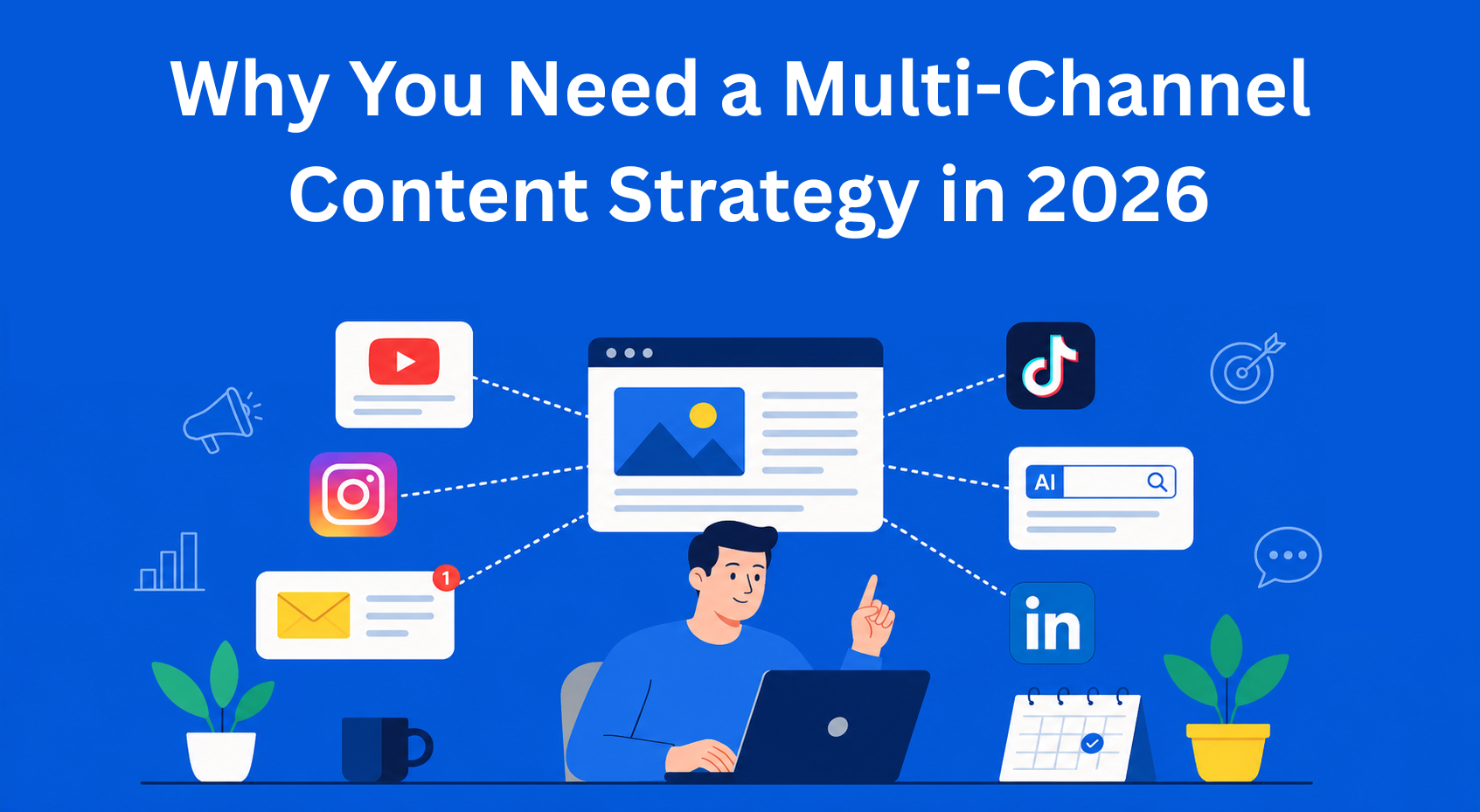
Do you remember when having only a Facebook page was enough? Or when a blog on your website was all you needed to attract customers? Those days are gone. Today, people spend time in dozens of different places online — some scroll through TikTok, some read newsletters, some ask AI assistants instead of using Google, while others still enjoy reading a good article on a website.
If your business or brand exists in only one place, there is a big chance that a large part of your potential audience does not even know you exist. A multi-channel content strategy is no longer something only big companies with huge budgets do. In 2026, it is the foundation without which it is difficult to survive.
In this blog, I will explain why that is the case.
Key Takeaways
- Multi-channel presence is essential in 2026 - audiences are spread across platforms, so relying on one channel limits your reach and growth.
- Customer journeys are no longer linear - people interact with content across multiple platforms before making a decision.
- Each channel has a specific role - blogs drive SEO, social media builds awareness, email nurtures relationships, and video deepens engagement.
- Repurposing content makes multi-channel scalable - one core piece of content can be adapted into multiple formats across platforms.
- Focus and consistency matter more than being everywhere - choosing the right channels and building a system leads to better results than spreading too thin.
The Internet Has Changed, and So Have People’s Habits
About ten years ago, the journey of a customer was relatively predictable. They would see an ad, visit a website, maybe call, or make a purchase. Today, that journey looks completely different.
Someone might first see your video on Instagram. Later, they search for more information on Google. After that, they may get a recommendation from a friend or see another piece of your content on a different platform. Only after all of that do they decide to buy something from you. This entire process often does not last just one day, it can take weeks or even months.
This is important to understand, your customers are not on just one platform. Today, they spend some time on Instagram, some on TikTok, YouTube, or Google. That is why your content also needs to exist in multiple places.
The whole point of a multi-channel strategy is to make it possible for people to find your brand wherever they spend their time online.
On top of that, new ways of searching for information are constantly appearing. More and more people are using AI tools like Perplexity or ChatGPT, watching short-form videos, and listening to audio content. The internet keeps changing, and it is important to keep up with those changes.
Your Audience Is Not in One Place
Let’s simplify it. If you have an online clothing store, for example, not all customers will use the same platforms. Some spend time on TikTok and Instagram, others are on YouTube, and there are also people who regularly read newsletters.
If you use only one platform, a large number of people will probably never see your brand. That is why it is important to be present in multiple places, because different people use different platforms and different ways to find information.
Here is one simple example of how that looks in practice:
- On Instagram, you post inspiring photos and short video tips
- On YouTube, you have detailed tutorials and product reviews
- Through email, you send exclusive offers and useful tips once a week
- On your blog, you publish detailed articles that appear in Google searches
- On TikTok, you create fun and casual content that attracts younger audiences
Each channel has its own role, but together they build one complete system. That is the essence of a multi-channel content strategy.
What a Real Multi-Channel Strategy Looks Like in 2026
Many people think a multi-channel strategy means you need to be on every platform and constantly publish content. But that is not the point. If you try to do everything at once, you can easily become overwhelmed and lose focus.
A real content strategy for 2026 works like this:
First, you create one high-quality and detailed piece of content, for example, a longer blog post or a YouTube video. That is your “pillar” content, the one carrying the main message.
After that, you can adapt the same content for other platforms. For example, from one blog post you can create a short TikTok video, an Instagram post, a newsletter, or a LinkedIn post. This way, one piece of content becomes several different posts, and you save time.
This approach is called content repurposing, and in 2026, with the help of AI tools, it has become easier than ever. Tools like ChatGPT or Claude can help you quickly adapt text for different formats, save time, and stay consistent with your message.
Which channels are the most important in 2026? Here is a quick overview:
- Blog/SEO, still the foundation for organic traffic from Google
- Email newsletters, the only channel where your audience truly belongs to you, without algorithms
- YouTube, the second largest search engine in the world and impossible to ignore
- Instagram and TikTok, for visual and video content, especially for younger audiences
- AI search tools, Perplexity and ChatGPT search, something you should not ignore
- LinkedIn, essential for B2B businesses and professionals
How to Start, Step by Step
You do not have to start with everything at once. In fact, that would be a mistake.
Step 1: Understand Your Audience
Before you do anything, figure out who your customers are. Where do they spend time online? What interests them? Without this step, nothing else makes sense. Understanding your target audience is the foundation of every good strategy.
Step 2: Choose 3 to 5 Channels
Do not try to be everywhere at once. Choose the channels where your audience is most active and focus on them. It is better to do three channels well than ten badly.
Step 3: Create a Content System
Decide how often you will publish on each channel and stick to it. Consistency is key. One high-quality post per week is more valuable than ten rushed and shallow posts.
Step 4: Track Results
Every channel has its own analytics tools, how many people saw your content, how many clicked, and how many made a purchase. Content analytics shows you what works and what does not. Without tracking results, you are basically guessing.
Step 5: Adjust and Optimize
Based on the data, adjust your strategy. Whatever brings results, do more of it. Whatever does not work, change it or remove it.
Mistakes You Should Avoid
Whenever something becomes popular, common mistakes also appear. Here is what you should watch out for:
- Posting the exact same content on every platform without adapting it, what works on LinkedIn will not work on TikTok. Every platform has its own tone, format, and audience. Adapt your content for each channel.
- Ignoring your email list, email is still one of the most powerful marketing tools that exists. Unlike social media, your email list belongs to you, no algorithm change can take it away. Start building it from day one.
- Expanding too fast, if you are a one-person team or a small business, you cannot manage ten channels at once. It is better to grow slowly and do things properly than to rush and do everything badly.
- Ignoring comments and messages, a multi-channel strategy is not just about publishing content. It is also about communicating with your audience. Reply to comments, answer messages, and stay active. Audience engagement makes the difference between a brand people remember and one they forget.
Conclusion
Being present on multiple channels is not a luxury, it is a necessity in 2026. Your audience is spread across dozens of platforms, their habits are changing, and relying on just one channel is too risky.
The good news is that you do not have to do everything at once. Start slowly, understand your audience, choose a few channels, create a system, track results, and adjust over time. Multi-platform digital marketing does not have to be complicated if you approach it step by step.
In the coming years, the brands that succeed will not only be the ones with the biggest budgets, but the ones that know where their audience is and stay present in the right places. That is why it is important to start on time. Even small steps can bring great results if you stay consistent
EasyContent structures every piece of client content the same way
- Templates with custom fields keep every writer working to the same brief
- Recommended word and character counts guide writers on the fields that need them
- Content is organized page by page against the sitemap
- Custom structures let a single item flex when a template does not fit