The AI Content Governance Playbook for Large Enterprises
Discover how large enterprises can harness generative AI through effective AI content governance. A playbook for scaling content while protecting brand integrity, ensuring regulatory compliance, and minimizing risk.

The rise of Generative AI has opened new frontiers in content creation. For large enterprises, this shift presents a powerful opportunity to accelerate production, reduce costs, and enhance personalization at scale. However, with opportunity comes responsibility, particularly when operating under tight legal, regulatory, and brand standards.
In this playbook, we outline the essential pillars of AI content governance that corporations must adopt to stay compliant, consistent, and credible in the age of AI.
Key Takeaways
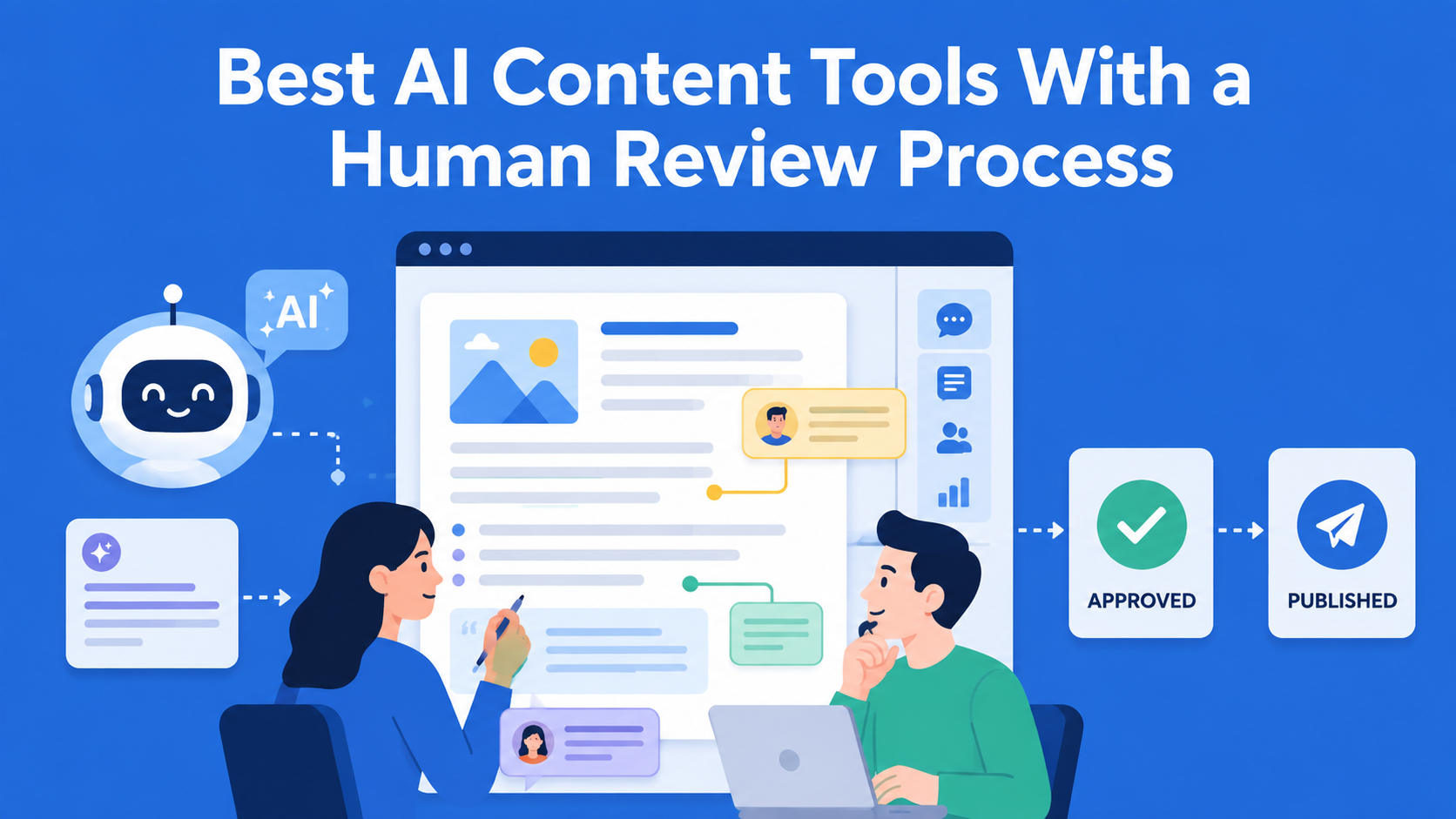
- AI-generated content must always be reviewed by humans-errors can cause legal or reputational damage.
- Clearly assign content ownership, accountability, and approval roles in your workflow.
- Legal and compliance teams should be involved early, not at the end of the publishing process.
- Establish strict brand voice and tone guardrails to prevent off-brand outputs from AI.
- Prompts are strategic assets-maintain a centralized, documented prompt library.
- Scale AI use gradually-start small, monitor results, and expand once governance is working.
- Continuously audit AI outputs for factual accuracy, tone alignment, and bias.
- Educate your teams-train everyone involved in AI workflows on ethics, limitations, and best practices.
- Governance ensures AI supports your content goals safely, without sacrificing speed or compliance.
1. Understand the Risks Before You Reap the Rewards
AI can produce impressive content quickly, but it doesn't always get it right. "Hallucinations" - confidently incorrect information generated by AI models are a known issue. Without careful oversight, these errors can damage credibility or even lead to regulatory repercussions.
Actionable Steps:
- Establish a policy that no AI-generated content is published without human review.
- Categorize risk levels based on content type. A blog may be low-risk, but investor relations material or health advice may be high-risk.
- Maintain transparency: clearly disclose if content was AI-assisted where relevant.
2. Define Ownership and Accountability
One of the most overlooked aspects of using GenAI in large organizations is accountability. Who "owns" a piece of content that was drafted by AI? And who is responsible when it goes wrong?
Recommendations:
- Assign specific roles: content owners, reviewers, legal approvers, and final sign-off authorities.
- Document workflows. AI doesn't absolve teams of accountability - it shifts it.
- Track every version of content, including the AI prompt used and the output it generated.
How to integrate AI into an existing content creation process
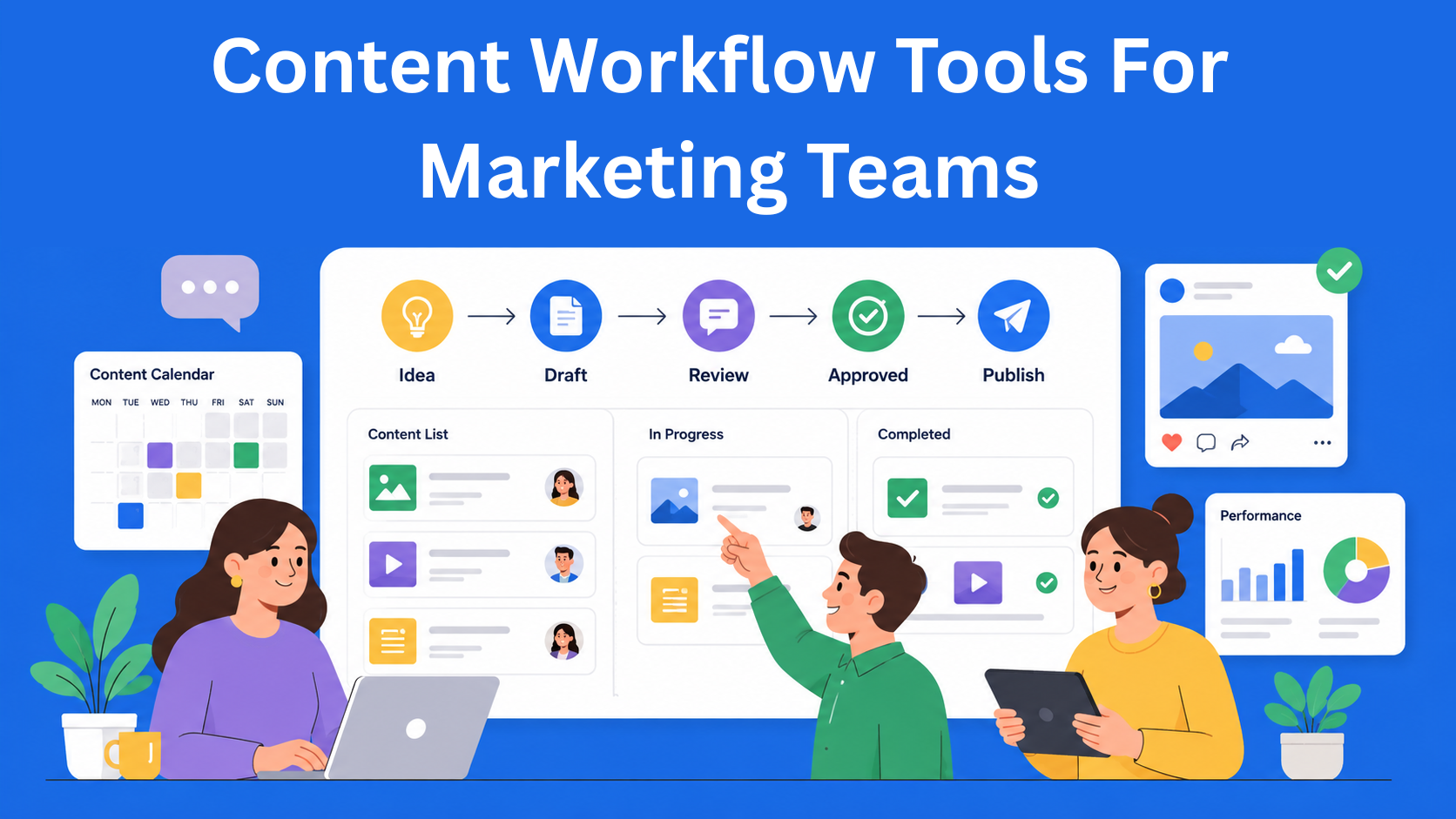
AI delivers the best results when it is integrated into an existing content creation process, rather than creating a completely separate process for it. Large teams need to clearly define in which steps AI can help, who reviews the content it generates, and which decisions must remain in human hands.
A practical content creation process with the help of artificial intelligence could look like this:
- Research and planning: AI helps organize research, summarize sources, and suggest content ideas. The content manager decides which topics are worth covering.
- Drafting the first version of the text: Authors use artificial intelligence to write the first version of the text based on a previously approved content plan, writing guidelines, and the target audience.
- Editorial review: The editor checks accuracy, clarity, alignment with the brand’s communication style, and relevance of the text. Artificial intelligence can suggest improvements, but the editor decides which changes to accept.
- Compliance check: When dealing with sensitive content, the legal team or the compliance team reviews claims, terminology, and legal requirements before publication.
- Final approval: The person responsible for the content reviews the final version of the text and gives approval for publication.
For example, a financial services company that uses artificial intelligence to create educational articles may require three separate approvals: editorial approval, compliance team approval, and final approval for publication. Even if artificial intelligence produces the first draft of the text in a few minutes, the content cannot be published until it has been approved by all responsible parties.
Platforms such as EasyContent help teams manage this process through clearly defined workflows, assigned roles, content templates, and approval steps. Its AI Writer and AI Editor tools can assist in creating and improving content, while the existing review process ensures that final decisions remain in human hands.
The goal is not to automate every step of the process, but to reduce the amount of repetitive work without compromising accountability, quality, and control over the content.
3. Involve Legal and Compliance Early
Legal teams should not be the last stop in your AI content workflow. They need to be embedded from the start to ensure guidelines are followed and risks are mitigated.
Best Practices:
- Educate legal and compliance stakeholders about how GenAI works.
- Build custom approval workflows that route content through legal, where needed.
- Ensure that terms of use, data privacy, and intellectual property considerations are clearly addressed.
How EasyContent Can Help: EasyContent allows enterprises to design custom workflows where legal and compliance reviews are built into the publishing process. You can ensure that no content goes live without being seen by the right eyes.
4. Set Clear Brand and Messaging Guardrails
AI is only as good as the input it receives. Without proper guidance, it may generate tone-deaf, off-brand, or even contradictory messaging.
To Do:
- Develop and enforce prompt libraries that align with brand voice.
- Maintain up-to-date brand guidelines and messaging frameworks.
- Regularly audit AI-generated outputs to ensure alignment with strategic messaging.
Ethical boundaries in using AI for creating marketing content
Using AI in marketing requires clear ethical boundaries to protect the audience’s trust and privacy. The most important principles are honesty, transparency, and respect for users.
Honesty means avoiding fake reviews, invented client testimonials, and inaccurate results. Artificial intelligence can help with writing, but it must not be used to deceive the audience.
Transparency means that the audience should not be misled. For example, an AI-generated video in which a well-known person supposedly recommends a product, even though they never did so, represents a serious ethical problem.
Respect for users includes protecting personal data and avoiding manipulation. Entering confidential client data into unprotected AI tools can put their privacy at risk.
An additional risk comes from invented statistics, non-existent sources, and inaccurate information that artificial intelligence can generate.
Therefore, every piece of content should be checked for accuracy, transparency, privacy, and fairness before publication.
EasyContent enables teams to incorporate these checks into their workflow, assign responsible people, and require approval before publishing.
The goal is to create content faster without compromising quality and the audience’s trust.
5. Create a Centralized Prompt Strategy
Prompts are now strategic assets. A well-crafted prompt can generate a solid first draft; a weak one can result in misleading or unusable content.
Prompt Governance Tips:
- Maintain a central repository of vetted, approved prompts.
- Train internal teams on how to write effective, brand-safe prompts.
- Require attribution of prompts and associate them with published content for traceability.
6. Build for Scalability - But Start with Control
The ultimate goal is to scale AI-assisted content creation across departments, but this cannot be done haphazardly.
Phased Approach:
- Pilot with one team or department before rolling out company-wide.
- Monitor key metrics: content accuracy, review turnaround time, compliance flags.
- Gradually expand to other teams once governance frameworks prove effective.
Why team organization affects the successful implementation of AI
AI delivers the best results in teams that already have clearly defined work processes. When there are responsible people, writing guidelines, and approval rules in place, it can speed up content creation without compromising quality.
However, if a team does not have a well-organized process, AI will not solve existing problems. On the contrary, it can make them worse.
For example, if five authors use AI to create texts but there is no shared style guide, each text may have a different tone and structure. As a result, editors will spend more time on corrections, despite the faster writing.
That is why it is important to first establish clear working rules and then introduce artificial intelligence into the steps where it brings the greatest benefit.
EasyContent helps teams organize this process through templates, defined workflows, and approval steps, while AI tools can speed up research, writing, and editing of content.
7. Audit and Monitor AI Outputs
A good governance program includes continuous oversight.
What to Monitor:
- Misinformation or factual errors.
- Repetition and redundancies across AI content.
- Instances of bias, exclusionary language, or compliance issues.
Recommendation:
- Use third-party tools to scan AI-generated text for plagiarism, hallucinations, and tone-of-voice alignment.
- Conduct quarterly content audits to assess AI reliability and content quality.
Final review of content created with the help of AI
Even when content has passed editorial and legal review, it still needs to be further prepared for publication. AI can speed up writing, but it does not guarantee that the text is properly formatted, optimized for search engines, or adapted to the target audience.
Before publishing, teams should check:
- SEO optimization: Are the keywords naturally distributed, and are the title, meta description, and URL properly prepared?
- Readability: Does the text have clear subheadings, short paragraphs, and a clear structure?
- Content usefulness: Have concrete examples, experiences, and information that artificial intelligence cannot provide on its own been added?
- Distribution: Is the content adapted to the channels where it will be published?
For example, AI can write a 1,500-word article with the appropriate keywords, but the editor must check whether the text truly answers readers’ questions, contains accurate information, and provides practical value.
8. Educate and Train Your Teams
Your content, legal, marketing, and comms teams are your first line of defense. Ensure they're equipped to collaborate effectively in an AI-assisted workflow.
Training Should Include:
- How AI models work and their limitations.
- Ethical implications of using AI.
- Prompt writing best practices.
- Review and approval workflows.
Ongoing learning is key. As AI evolves, so should your team's understanding of it.
Training teams to recognize errors in AI-generated content
AI can also be used to train employees, not just to create content. One practical approach is generating texts with intentionally inserted errors that authors and editors need to identify and correct.
For example, a content manager can ask AI to write an article containing three inaccurate facts, an inconsistent writing style, and poorly organized subheadings. The employees’ task is to find the problems, correct the text, and explain their changes.
Such exercises help teams improve fact-checking, text editing, and critical thinking.
Conclusion
AI is not a silver bullet, nor should it replace human judgment, especially in complex enterprise environments. It is, however, a powerful tool when governed well.
The most successful enterprises will not be those who use AI the most, but those who use it most responsibly. Governance isn't about slowing down innovation - it's about making sure that when you scale, you scale safely.
By embedding governance into every stage of your content creation process - from prompt to publish - you ensure quality, compliance, and consistency.
And with platforms like EasyContent helping manage these workflows at scale, enterprise content teams can finally combine speed and safety.
EasyContent gives government teams a structured way to review before publishing
- Approval stages match however many reviewers a public update requires
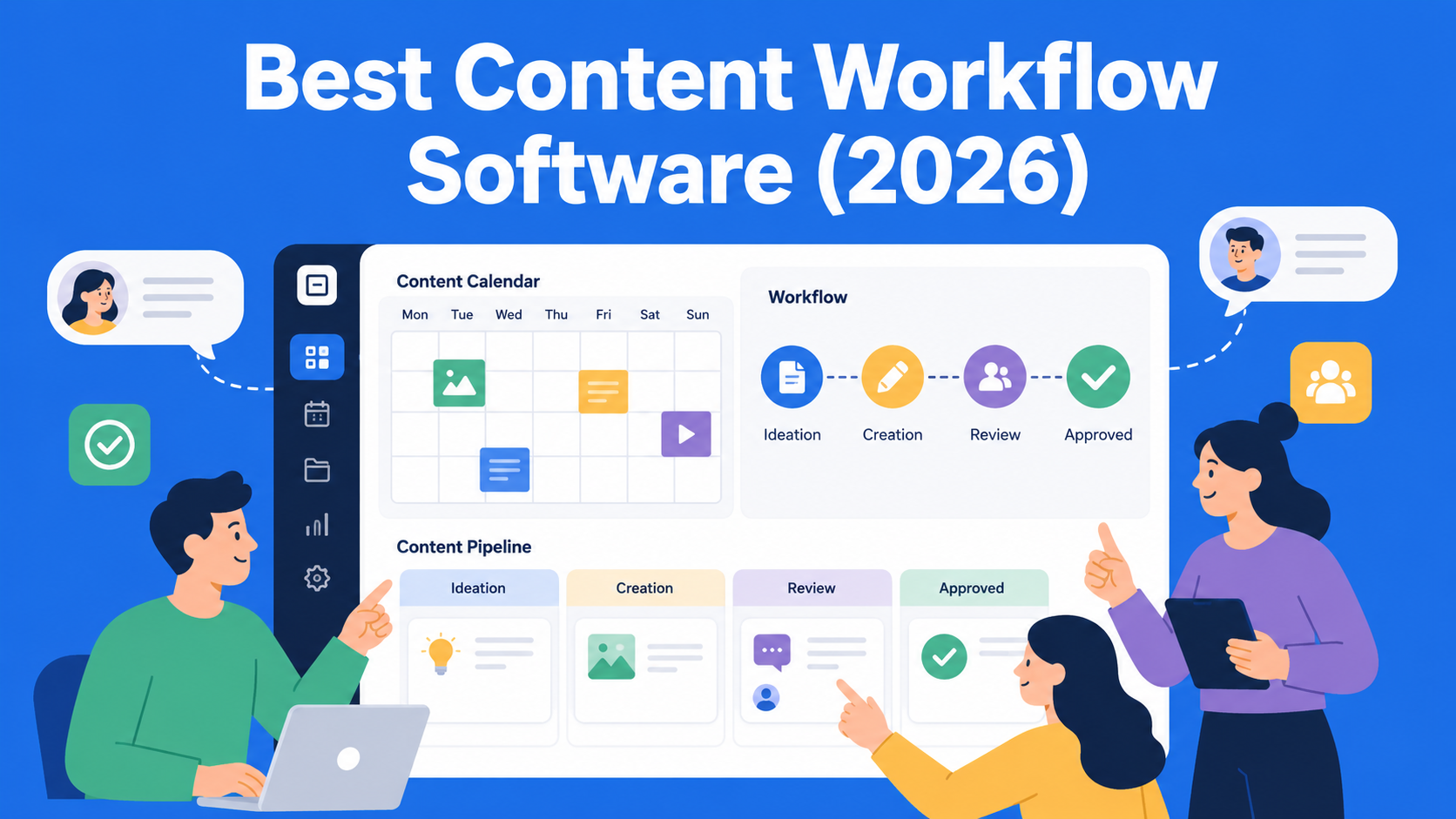
- A calendar view shows every scheduled update across departments
- Guest reviewers can weigh in through a free guest account, never a login to your organization's own systems
- A status-change version is saved automatically every time an item moves through the workflow