Best 5 AI Visibility Tools for SEO Agencies
Compare the best AI visibility tools for SEO agencies, including Allmond, Promptwatch, Mentions.so, Trakkr, and LLMrefs. See how they differ in tracking, reporting, pricing, and agency-focused features.

AI search has changed how clients get found, and SEO agencies are right in the middle of figuring out what that means for their work. Research from Rand Fishkin at SparkToro found that zero-click searches now account for more than 60% of Google queries, and a growing share of that traffic ends up inside AI-generated answers instead of landing on client websites. For SEO agencies, that creates a new reporting problem: how do you track visibility that does not show up in traditional rank trackers? A dedicated AI visibility tool is becoming a standard part of the agency stack. This guide covers the five best options available right now so you can find the one that fits how your team actually works.
Quick Tool Comparison
| Platform | AI Models Tracked | Key Feature | Pricing | Best For |
|---|---|---|---|---|
| Allmond | 5 (ChatGPT, Claude, Gemini, Perplexity) | Brand mentions + competitor visibility tracking | From $29/mo | Marketing teams and SEO agencies monitoring AI visibility |
| Promptwatch | Multiple AI models | Sentiment analysis + competitor monitoring | From $99/mo | Marketers wanting deep analytics and actionable recommendations |
| Mentions.so | 3+ (plan-dependent) | Clean UI + industry ranking | From $49/mo | Small teams wanting affordable and intuitive AI visibility tracking |
| Trakkr | 8 AI models | AI-to-revenue attribution via Google Analytics | Free / From $79/mo | SEO agencies connecting AI visibility to traffic and revenue |
| LLMrefs | 10+ AI engines | Keyword-centric tracking + geo-targeting | From $79/mo | SEO agencies using keyword-driven workflows |
1. Allmond
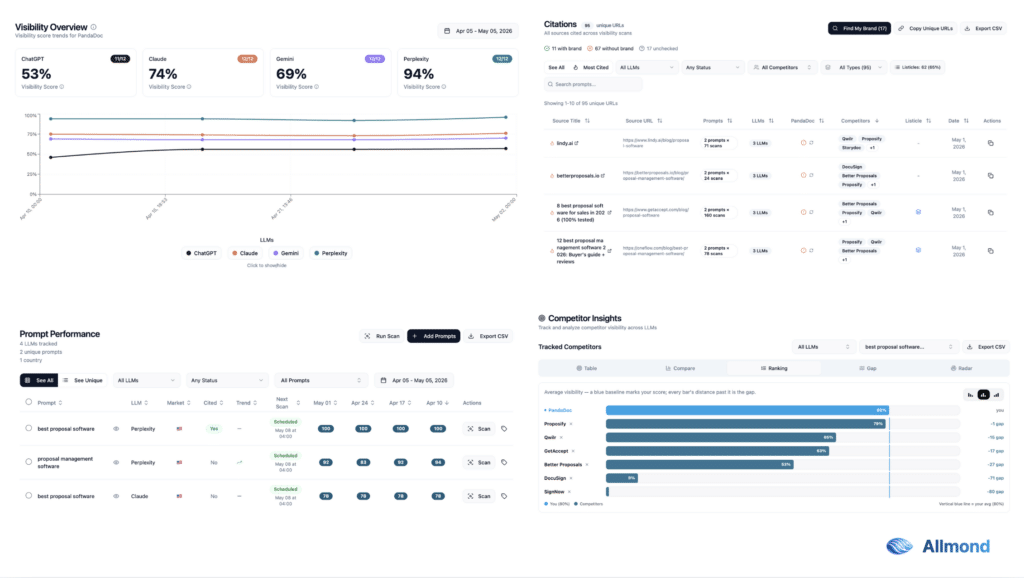
Best for: Marketing teams and SEO agencies looking to monitor AI visibility across major AI platforms.
Allmond is an AI visibility tracking platform that helps brands monitor how they appear across ChatGPT, Claude, Gemini, Perplexity, and Google AI Overviews. The platform enables teams to track brand mentions, monitor competitor visibility, and better understand their presence in AI-generated answers.
It is designed for businesses that want to measure AI search visibility alongside their broader SEO efforts and identify opportunities to improve their brand's presence across AI-powered search experiences.
Key strengths:
- Tracks visibility across ChatGPT, Claude, Gemini, Perplexity, and Google AI Overviews
- Brand mention monitoring
- Competitor visibility tracking
- AI search visibility monitoring
Pricing: Plans start at $29/month, with Growth (99/month) and Pro (199/month) plans available. A 14-day free trial is included, and no credit card is required to get started.
Trade-off: Allmond is built specifically for AI visibility monitoring, so it works best alongside a traditional SEO platform rather than replacing one. If your workflow also relies on keyword rankings, backlink analysis, or technical SEO audits, you'll still want a dedicated SEO tool.
2. Promptwatch
Best for: SEO agencies and marketers who want deep analytics and clear recommendations, not just raw data
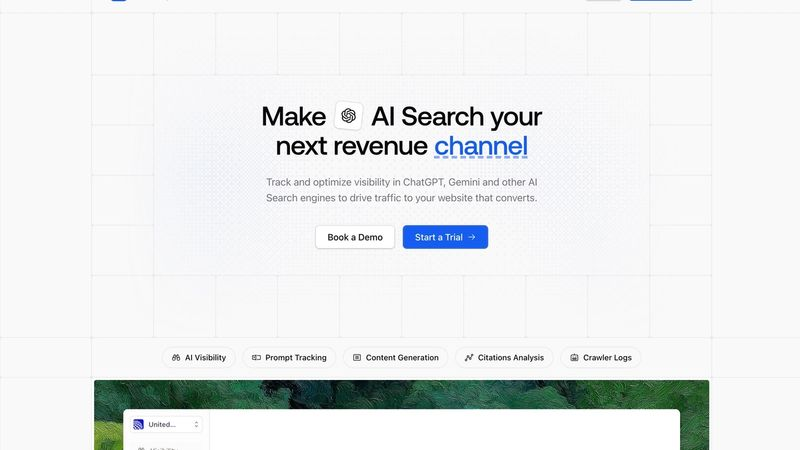
Promptwatch is built for marketers who want more than just a list of mentions. It combines brand tracking with sentiment analysis and competitor monitoring, and instead of just showing you the data, it packages things into actual recommendations you can act on.
The analytics side is where it really stands out compared to lighter tools. You can track share of voice over time, see how you stack up against competitors across multiple AI models, and get a prioritized list of things to work on to improve how often you get cited.
Key strengths:
- Robust analytics and reporting dashboard
- Brand mention tracking with sentiment scoring
- Competitor performance monitoring across AI models
- Actionable recommendations built into the workflow
- Multi-model tracking with trend analysis
Pricing: Essential $99/month; Professional $249/month; Business $579/month. Trial available for $1.
Trade-off: There is a learning curve here. The depth of the analytics is genuinely useful, but new users usually need some time to get comfortable with it before they can pull full value out of the reporting.
3. Mentions.so
Best for: Small teams and individuals wanting affordable, intuitive AI visibility tracking
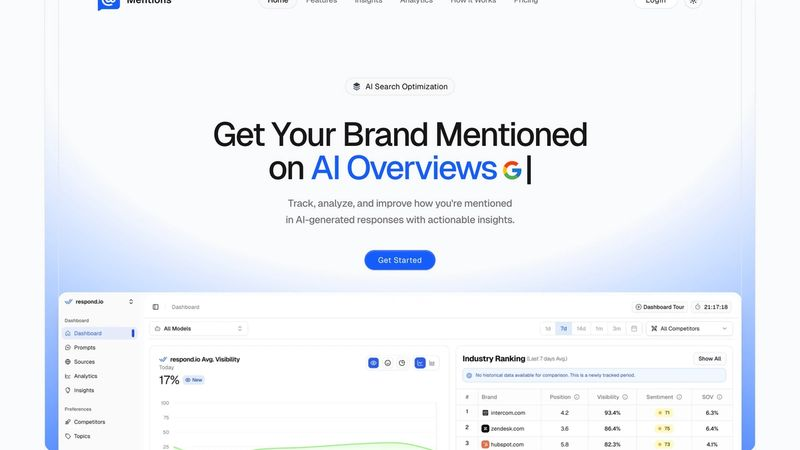
Mentions.so is one of the easier tools to get started with. The interface is clean and straightforward, which makes it a good fit for smaller teams that do not have a dedicated analytics person. On the starter plan you get tracking across ChatGPT, Gemini, and Claude, and higher plans expand that to more models.
It also has an industry ranking feature that shows you how your brand compares to competitors in your category. That is handy if you are just starting out with AI visibility and want a quick sense of where you stand. There is an agency plan at $399 per month for teams managing multiple clients.
Key strengths:
- Clean, intuitive interface requiring minimal onboarding
- Tracks ChatGPT, Gemini, and Claude at entry level
- Industry ranking and competitor tracking
- Sentiment analysis included
- Agency tier available for multi-client management
Pricing: Starter $49/month; Pro $99/month; Business $199/month; Agency $399/month.
Trade-off: The starter plan only covers three LLMs, so if your clients are spread across a wider range of AI tools, you might not get the full picture at that tier. The platform is also still adding features, so it is not as fully developed as some of the older options.
4. Trakkr
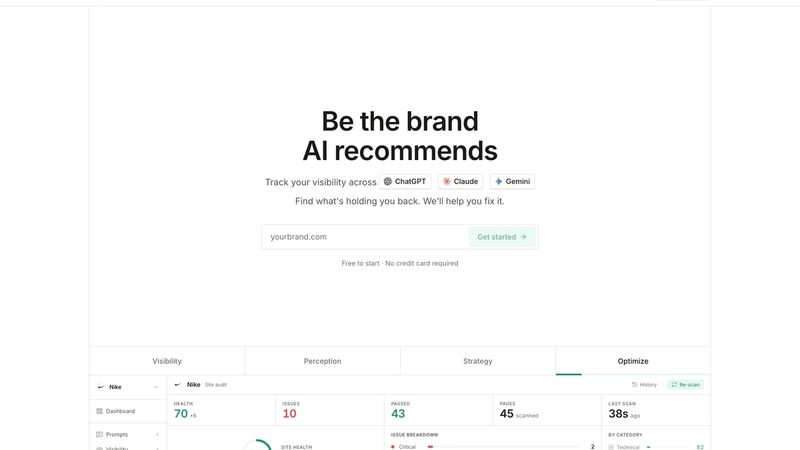
Best for: SEO agencies that need to show clients how AI visibility connects to actual traffic and revenue
One of the harder conversations in AI SEO is proving ROI to clients. Trakkr helps with that by connecting AI citation data to Google Analytics, so you can see whether the traffic coming from AI mentions is actually converting. That kind of attribution makes it easier to build a case for the work you are doing.
It tracks eight AI models and includes the standard features like citation tracking and perception analysis. There is a free plan for testing it out and white-label reporting for client-facing work. It is a good fit for SEO agencies that manage e-commerce clients or any account where performance metrics matter as much as visibility.
Key strengths:
- AI-to-revenue attribution via Google Analytics integration
- Tracks 8 AI models including major platforms
- Citation tracking and perception analysis
- Automatic site optimization suggestions
- White-label agency reporting
- Free plan available (1 brand, 5 queries)
Pricing: Free plan; Growth $79/month; Scale $399/month.
Trade-off: The interface feels a bit cluttered compared to some of the cleaner options on this list. The free tier is also quite limited at one brand and five queries, so you will need to upgrade to properly test it.
5. LLMrefs
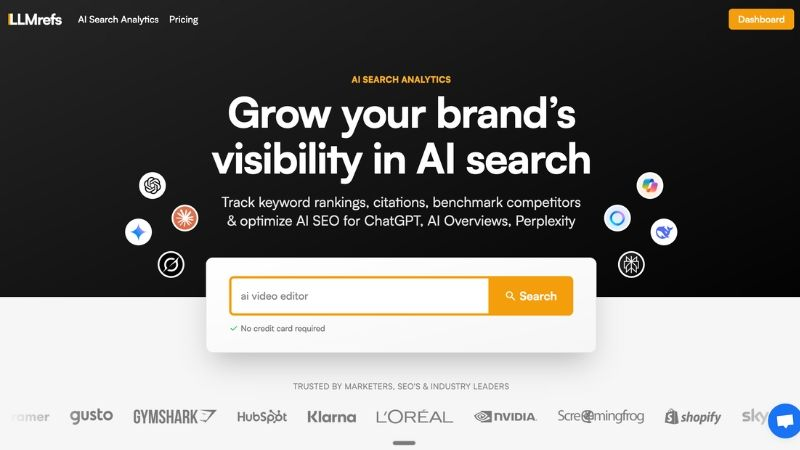
Best for: SEO agencies already working in keyword-driven workflows who want broad AI engine coverage
LLMrefs takes a keyword-based approach to AI visibility tracking rather than tracking at the prompt level. If you already work in keyword-driven workflows, it will feel familiar right away. It covers more than ten AI engines, which is the widest coverage of any tool on this list, and it includes geo-targeting for brands that care about performance in specific regions.
The interface is simple and does not take much time to learn, which is a plus for SEO teams moving over from traditional rank trackers. Pricing is reasonable given how many engines it covers.
Key strengths:
- Tracks 10+ AI engines, the broadest coverage in this comparison
- Keyword-centric approach familiar to SEO professionals
- Geo-targeting capabilities included
- Affordable pricing relative to feature set
- Straightforward interface with low onboarding friction
Pricing: Starter $79/month; Pro $159/month; Business $399/month.
Trade-off: Because it works at the keyword level rather than the prompt level, it can miss some of the nuance in how AI models actually talk about your brand in open-ended conversations. If that matters to your team, a prompt-level tracker might serve you better.
Selection Criteria
Price alone will not tell you much. A $50 per month tool with white-label reporting and a proper multi-client dashboard can easily be more useful to an SEO agency than a $500 per month platform that was designed for single in-house teams.
Google AI Overviews and Google AI Mode are the two channels that matter most for most SEO clients right now, and not every tool on the market actually tracks both. Make sure the platform you pick covers them before committing. If you have clients with regional audiences, check whether geo-targeting is included.
Agency infrastructure should be non-negotiable. White-label reporting, a proper multi-client dashboard, and sensible team seat policies are the difference between a tool that scales with your agency and one you have to replace once your client list grows.
Think about how you will report on this work to clients. Most tools only show visibility numbers. If you want to show that AI mentions are driving traffic or conversions, you need a platform that connects to analytics. That is a short list.
Also worth checking is how often the data refreshes. For SEO agencies monitoring clients through launches, campaigns, or reputation events, daily tracking catches things that weekly snapshots will miss.
Conclusion
For SEO agencies managing multiple clients, AI Peekaboo is the strongest fit on this list. White-label reporting is included on every plan, the multi-client dashboard handles unlimited brands, and you get a dedicated ChatGPT tracker, AI Overview tracker, Looker Studio connector, Read + Write API, and MCP integration with Claude and ChatGPT all without needing to upgrade to an enterprise tier. If your agency has specific needs that go beyond the standard plans, the sales team can put together custom pricing. The other tools here each have a use case worth considering: Promptwatch if your clients expect serious analytics depth in their reports, and Trakkr if proving AI-to-revenue attribution is a priority for the accounts you manage.
EasyContent turns a brief into a structured page from the start
- Templates carry field guidelines so writers know what's expected before they start
- Recommended word and character limits show live as a writer types
- A template can prefill the main content field the first time an item is created
- Every template lives per project, so client A and client B never mix structures