From Brief to Publish: Streamlining Content Approvals in Agency Life
Content approvals don't have to be a struggle. Discover how to simplify your workflow - from brief to publish, so your team delivers faster, with less stress and better results for clients.

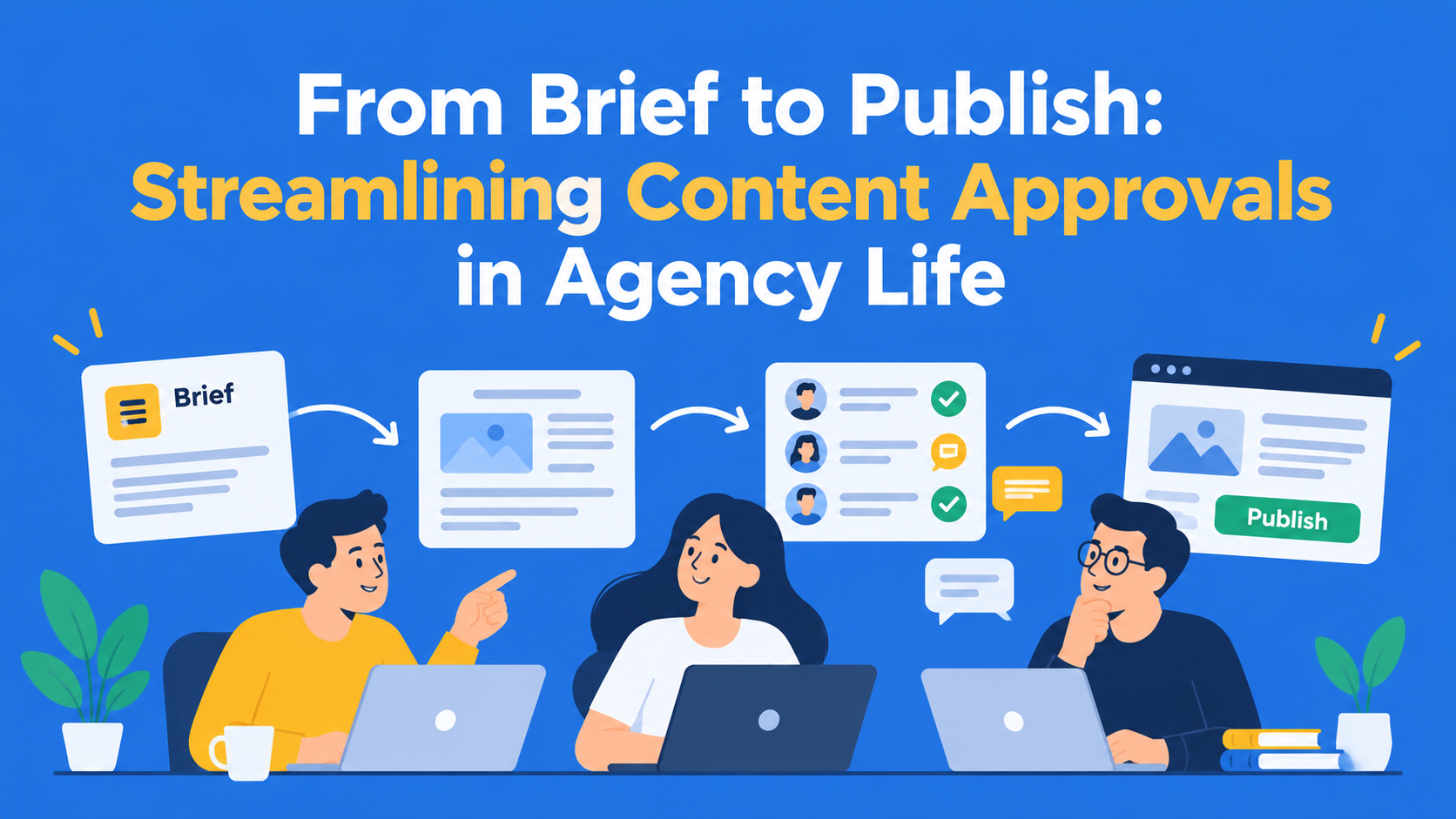
Imagine a typical day at an agency: parallel projects, tight deadlines, endless emails, and messages popping up every five minutes. In all that chaos, the content approval process tends to be the biggest slowdown. Even when the team has done a great job, delays in getting approval can slow everything down, which often leads to stress within the team and frustration from the client. The good news is, there are ways to turn that journey from brief to publish into a much simpler and more organized process. In this blog, we’ll walk you through every step that can help you make the entire path easier.
Key Takeaways
- Strong briefs set the tone for faster execution - clearly defined goals, audience, and tone help teams avoid missteps and speed up first drafts.
- Defined approval workflows prevent chaos - know exactly who reviews what, in which order, and how feedback is collected to avoid endless revision loops.
- Use tech to centralize, track, and remind - tools like EasyContent keep everyone aligned with notifications, version history, and status dashboards.
- Train clients on giving clear, actionable feedback - set expectations early, limit rounds of revisions, and educate on how to comment effectively.
- “Good enough” beats endless perfection - if content meets quality standards and delivers the message, don’t let tiny tweaks delay publishing.
From Brief to First Draft
Great content starts with a great brief.
If you have clearly defined:
- Goals
- Target audience
- Tone and voice
The team already has a strong foundation to work from. One important thing here is to have the right tools. A content manager connects the client and the creative team, while tools like Asana, ClickUp, or EasyContent give everyone a clear overview of tasks. This makes it super easy for everyone to be on the same page.
How AI speeds up content creation in agencies
Marketing agencies often work with multiple clients, each of whom has different requirements and deadlines. AI can help them prepare content faster and organize their work more easily.
For example, an agency that writes 20 blog posts per month for five clients can use artificial intelligence for topic research, preparing the structure, and writing first drafts of the texts. This way, authors have more time to verify information, edit the texts, and adapt them to each client.
However, AI can make mistakes or write text that does not match the client’s style. That is why it is important for every text to go through a review before publication.
Defining Approval Workflows
Without a clear workflow, projects often get stuck in endless revisions. That’s why you need to define roles upfront: who’s involved and when. Copywriters, designers, editors, clients, even legal teams all play a part, but if everyone jumps in at once, you end up with conflicting feedback and chaos. Too few people, and important checks get missed.
The goal is balance: enough eyes to catch mistakes, but not so many that the process grinds to a halt.
If you’re wondering how to keep that balance without losing control, that’s where EasyContent comes in. You can set clear approval steps, assign responsibilities, and let the system handle reminders and notifications. The visual dashboard shows exactly where each piece of content stands, so no one has to ask, “Who’s next?”.
Common Delays and How to Overcome Them
The most common issues in the approval process are:
- The client delays their feedback.
- Multiple stakeholders give conflicting comments.
- Revisions take longer than content creation itself.
The solutions are actually quite simple: set clear deadlines for feedback from the start, use a central document, or even better, EasyContent, where everyone can leave their comments, and help clients learn how to give focused, clear, and useful feedback. This saves time and makes collaboration easier for everyone.
How to give clear and useful feedback
Vague comments often slow down the work of marketing agencies. When a client writes “I don’t like this part” or “Change the introduction,” the author doesn’t know exactly what needs to be fixed.
That’s why it’s important for every piece of feedback to be clear and specific. Instead of “The introduction isn’t good,” it’s more useful to write: “The introduction is too long. Shorten it and immediately explain the main topic of the text.”
Problems also arise when multiple people give different comments. For example, one person wants a shorter text, while another asks for more details. That’s why it’s good to determine in advance who makes suggestions and who makes the final decision.
Also, comments should focus on the quality of the content and the needs of the audience, not just the personal taste of the person giving them.
EasyContent allows clients and team members to leave comments directly on specific parts of the text. This way, all feedback is in one place, and authors can more easily understand what needs to be changed.
Technology as an Ally
Digital tools are a real lifesaver in agency life. Platforms like Trello, EasyContent, or Monday.com significantly speed up communication and give the team a better overview of tasks. Besides faster communication, they also offer features like deadline reminders, document versioning, and content calendars. All of this helps teams clearly see upcoming content, plan tasks in advance, and reduce the risk of delays or duplicated efforts. That way, every team member knows their next step, and the entire process becomes more organized and predictable.
Best Practices for a Transparent and Fast Approval
If you want the approval process to run smoothly and stress-free, it’s important to set clear rules and structure from the start:
- Set clear expectations - When you first talk to the client, explain how many rounds of revisions are included and when you expect their feedback. This avoids misunderstandings later and sets healthy boundaries that everyone respects.
- Standardize your processes - Use simple templates for briefs and feedback. For example, when a client knows they should leave comments directly under specific paragraphs, it helps the whole team understand what the feedback is about. Clear formats save time and make communication more efficient.
- Limit the number of people involved in approvals - The more people give feedback, the more chance there is for confusion. Include only those who really need to give input, for example, one person from marketing and one from the legal team, instead of the entire group. This speeds things up and reduces conflicting comments.
When all of this is agreed on up front, communication flows faster and easier, a win-win situation for both you and your client.
From Approval to Publish
In agency work, it’s important to know when it’s time to hit publish. We often fall into the trap of endless tweaking in search of “perfection.” But perfection is a relative thing, what seems perfect to you may not be to someone else. That’s why you shouldn’t focus too much on getting every little detail right. If the content feels solid and delivers the message, go ahead and publish it. Constant delays over small changes slow down the whole process.
When the team knows what "good enough" means and there’s an agreed-upon quality standard, it becomes easier to make that final decision and move forward.
Conclusion: The Agency as a Partner, Not Just a Vendor
When you optimize the approval process, you’ll deliver content faster, reduce stress, and provide more value to clients. That’s why the agency should be seen as a true partner who helps clients reach their goals, not just a "content factory."
EasyContent keeps a large asset library organized by project
- Folders and search make thousands of files findable without a shared drive
- Every asset stays isolated to the project it belongs to
- Sorting by upload date, name, or size keeps the library manageable
- Every asset shows who uploaded it and when