The Mindset Shift Content Leaders Need to Thrive in 2026
Discover the leadership mindset shift content teams need to thrive in 2026. It's not about speed - it's about structure, visibility, and smart systems that scale. Learn how top content leaders stay ahead in a world where AI levels the playing field.

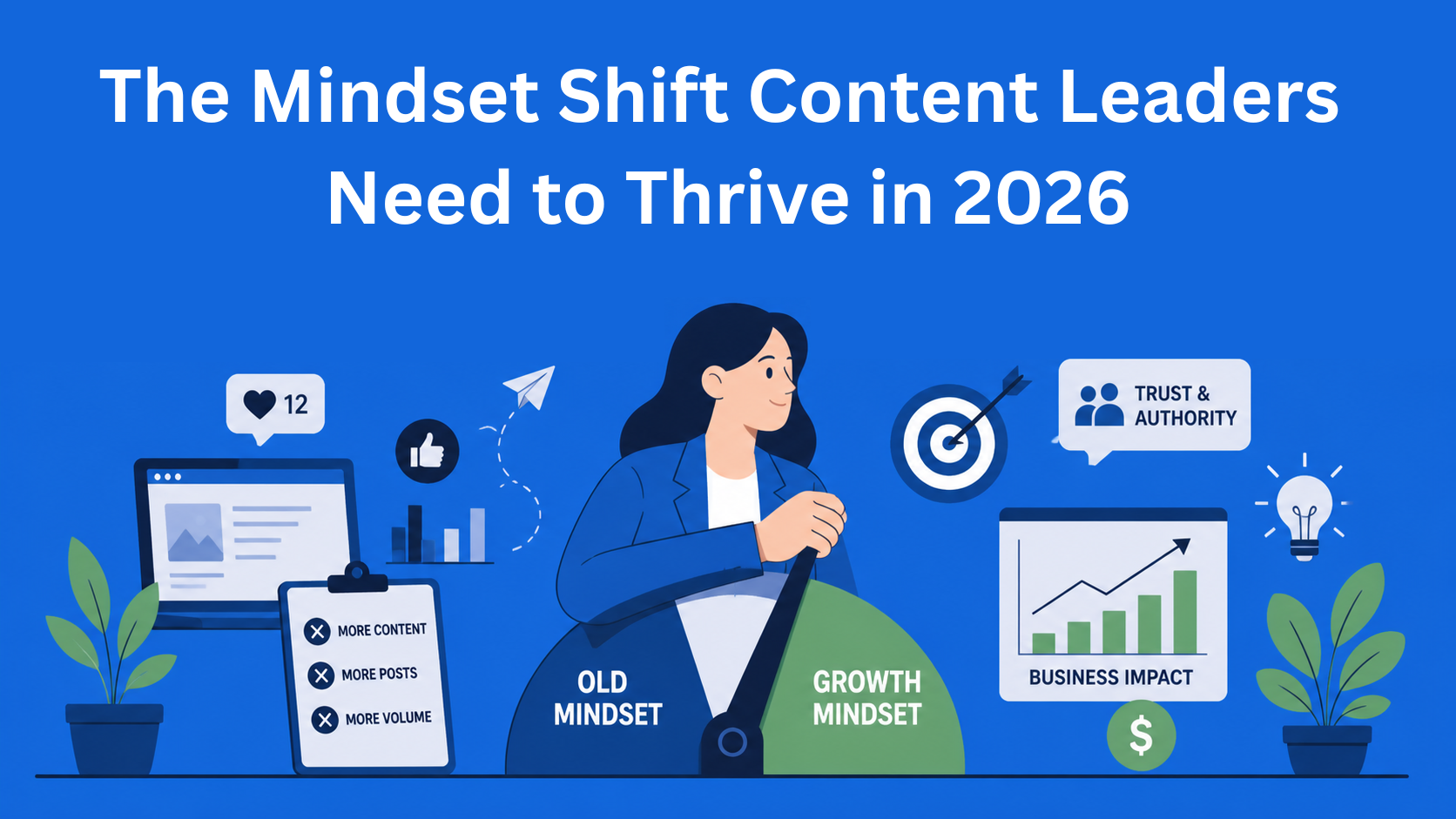
Every year, the same story. The content team is working at full speed - posts are going out, articles are being published, numbers are growing. And then the end of the quarter comes, you sit in a meeting with leadership, and realize that no one actually knows what all of that brought to the company.
The problem is not effort. The problem is not tools. The problem is how you think about your work.
Content leadership in 2026 is not a competition of who can publish more.
The real point is how you think about your work — what you are trying to achieve and what role you play in it.
And that difference in thinking is exactly what separates teams that move forward from those that keep working but never see real results.
Here are five mindset shifts that truly change the game.
Key Takeaways
- Speed is no longer a competitive edge - coordination and clarity are what truly matter in 2026.
- Broken workflows aren’t a tooling issue - they’re usually a leadership gap in disguise.
- Today’s leaders don’t hustle harder; they design systems that scale and simplify.
- Content chaos often stems from a lack of visibility, structure, and accountability.
- The mindset shift? Move from “just get it done” to “build something that works repeatedly.”
Stop creating content. Start building trust.
Old way: publish as much as possible, be active everywhere. New way: every piece of content should have a reason to exist.
There are two types of content teams. One publishes five articles a week because "that’s what you’re supposed to do" and because the calendar needs to be filled. The other publishes one article that truly answers something the audience wants to know, and that one article does more than those five combined.
A real content strategy is not measured by the number of posts. It is measured by how many people say after reading, "this actually helped me" or "these people know what they’re talking about."
Leaders who move forward don’t sit and ask "what are we going to publish this week?" They ask "what does our audience need to know and why should they trust us?"
Try this: Take the last ten pieces your team published. For each one, ask a simple question, does this build trust with the reader, or does it just fill space? The answer will tell you everything.
Stop measuring likes. Start measuring money.
You know that moment when you present results and say "website traffic is up 40%, engagement is great", and someone from finance asks "okay, but how much money did we make from that?" and the room goes quiet?
That’s a signal something is off.
Likes, views, and followers are not bad. But if those are the only things you track, you position yourself as someone who spends company money, not someone who generates it. And that directly affects how big your budget will be next year.
Today, digital marketing requires content teams to speak the same language as the rest of the company, the language of money and results.
In practice, that means before you start working on anything bigger, you should know the answers to three questions:
- Who will read this and why does it matter to them?
- What do we want that person to do after reading?
- How will we know that it happened?
You don’t need a perfect system from day one. But there must be some connection between the content you create and the things that actually matter to the business, sales, leads, faster buying decisions.
Stop chasing trends. Start building authority.
Many teams fall into the same trap: the moment something becomes popular, they rush to create content about it. A viral video, a new topic, something everyone is talking about, and they hurry to jump in.
The problem is that by the time they publish, everyone else has already done it. And a brand that constantly chases trends never becomes an expert, it stays a follower.
Teams that move forward in 2026 don’t ask "what’s popular right now?" They ask "in what area can we become the first thing people think of when they follow us?"
That is a completely different approach. Instead of chasing what is in demand today, they build content that educates the audience about what will matter tomorrow.
Does it sound slow? It is slow. But after a year, a brand that consistently covers one specific topic becomes an authority that cannot be bought with ads. It gets invited as an expert, quoted, recommended.
Ask yourself: Is there one narrow topic where your brand can be the most reliable voice? If there is, why haven’t you started building it systematically yet?
Stop controlling every piece. Start building a system.
This is probably the hardest shift for people who grew up in journalism or agencies, where editorial control was everything.
The classic situation: every piece has to go through the leader. The leader reads, edits, sends it back. The content waits two days, sometimes a week. The team is frustrated because it cannot move forward. The leader is exhausted from spending the whole day reading other people’s work. And in the end, the content gets published, but slower than it should and with a lot of unnecessary stress.
Content management today does not work when one person is a bottleneck for everything. Especially not now when AI tools allow teams to produce more content faster than ever.
The solution is not that the leader "trusts the team more" and just hopes for the best.
The solution is a system.
Clear rules: tone, style, what is acceptable, what is not, what a good piece looks like, what a bad one looks like.
When the team has that framework, it does not need the leader for every small detail. The leader can then focus on what truly requires experience and judgment, strategy, new formats, important decisions.
Try this: Write an internal writing guide. Include examples, both good and bad. Share it with the team and let them work. You will see the difference in a month.
Stop being a "content team." Start being a strategic asset.
In most companies, the content team is seen as support. Someone who writes when sales needs it, creates presentations when HR asks, posts on Instagram because "you need to be present." Useful, but not critical.
And as long as the team behaves that way, that is how it will be treated.
Teams that move forward don’t wait for someone to give them a better position inside the company. They take it, through how they talk about their work and what results they highlight.
The difference is in how you present what you did:
An average team says:
- "We published 20 articles this month."
- "We made a video."
- "Engagement increased by 40%."
A strong team says:
- "These three articles ranked in top searches that bring us customers."
- "The video helped the sales team shorten customer calls by half."
- "This content brought in 30 people who left their contact details."
Content marketing that is presented through business results gets a bigger budget, more influence, and a better position in the company. That’s not politics, that’s reality.
Conclusion
In the end, all of this comes down to one thing: how you think about your work is what you get.
A team that thinks "our job is to publish" will publish a lot and not know why. A team that thinks "our job is to build trust, measure results, and position the company as an expert" will do less, but with much more impact.
None of this requires more money.
It does not require new tools or a bigger team.
It only requires a different way of looking at what you do every day.
EasyContent let Teambuilding.com bring on freelance writers without WordPress access
- Teambuilding.com collected freelance writer submissions without giving them CMS access
- The team described almost no writer questions, because the interface was self-explanatory
- Weekly output rose 6 to 8 times over the previous process
- Monthly traffic reached over 2 million visitors during the same period