Content Ops for Startups: Lightweight Systems That Grow with You
Most startups treat content like an afterthought and pay the price. This guide shows how to build a simple content ops system with planning, production, and distribution so your content stays consistent, scalable, and actually drives results.

When you start a startup, the last thing on your mind is how to organize the content creation process. You need to build a product, find customers, and convince investors. No one is thinking about systems.
Most startups begin like this: someone from the team writes a blog when they have time, posts something on LinkedIn when they remember, and sends a newsletter when enough topics pile up. It looks fine at the beginning. But as the team grows, no one knows who is doing what, and everyone wonders why content isn’t bringing results. That’s why Content Ops matters.
Content Ops is simply the way you organize everything that goes into creating and publishing content. Who writes, who approves, when it gets published, where it’s stored. It’s the system behind your content.
And it doesn’t have to be complicated.
Key Takeaways
- Startups need simple systems early - without structure, content quickly becomes inconsistent and ineffective as the team grows.
- Content Ops is about clarity, not complexity - defining who does what, how, and when is enough to build a functional system.
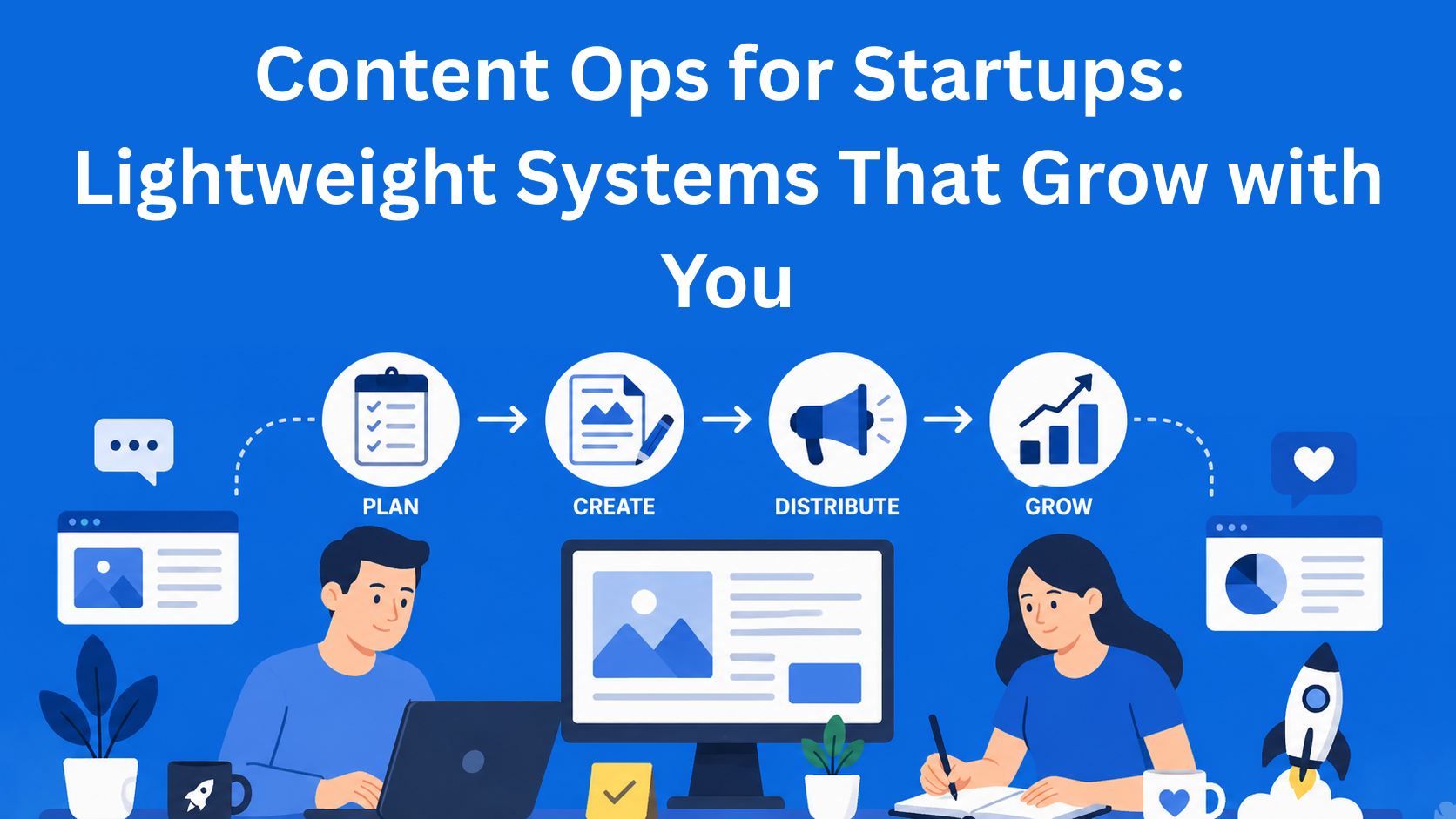
- Planning, production, and distribution are the core pillars - each piece of content should have a clear purpose, process, and channel strategy.
- Repurposing multiplies output without extra effort - one piece of content can be adapted across multiple formats and platforms.
- Start small and improve over time - simple workflows, basic tools, and clear roles are enough to build a system that scales.
The Trap Almost Every Startup Falls Into
There’s one approach that’s almost universal in early-stage startups: write and hope for the best. You publish something and hope people read it, share it, and that it brings customers.
Sometimes it works. But that’s not a system, that’s pure luck.
Problems start as soon as the team grows a bit. Suddenly, multiple people are creating content, but there’s no agreement on how it should look. One writes in a formal tone, another in a casual tone, a third repeats a topic that was already covered because no one tracked it.
Because of that, your brand sounds inconsistent, you’re doing duplicate work, and your content isn’t being used properly.
But you don’t have to wait to grow before you bring order. You should introduce a content system earlier than you think, even when there are just two of you.
The Three Pillars of a Lightweight Content Ops System
Think of Content Ops like a chair with three legs. If one is missing, the chair falls over. Those three legs are: planning, production, and distribution.
1 Planning - Know What You’re Creating and Why
Planning doesn’t mean you need a spreadsheet with 200 rows and color-coded columns. It means you know, at least three months in advance, which topics you’re covering and why.
The simplest tool for this is a content calendar.
The key part of planning is that every piece of content has a purpose. It’s not enough to say “let’s write a blog about productivity.” A better question is: “Will this blog bring people who could buy our product?” If the answer is no, it might not be the right topic.
Batch planning is another technique that saves a lot of time. Instead of thinking every week about what to publish, you sit down once a month for an hour or two and plan the next 4-6 weeks.
2 Production - Create a Process You Can Repeat
This is the most important part of your content system.
The most useful thing you can introduce is a short plan before writing (a content brief). It’s a simple document that says: what the content is about, who it’s for, what it should achieve, and roughly how long it should be.
At first, it might seem like extra work, but it actually saves time. The writer knows what to do, and the reviewer doesn’t have to keep sending the content back for fixes.
Besides the brief, roles need to be clear. Who writes? Who reviews? Who publishes? Even in a team of two, this must be defined. Otherwise, you’ll always have that awkward moment where no one knows whose turn it is.
Keep all brand guidelines, image templates, and tone examples in one place. Not scattered across Slack threads from 8 months ago that no one can find.
3 Distribution - Publish Once, Use It Many Times
This is where most startups miss out.
You write a blog, publish it, and stop there.
But that same blog can easily be turned into a LinkedIn post, a short thread, a newsletter section, a podcast idea, or a webinar topic. One piece of content, many uses.
For a small startup team, this is great. You don’t always need to create new content, you just reuse what you already have in different ways.
When it comes to channels, you don’t need to be everywhere. It’s better to be strong on two channels than average on fifteen. For most B2B startups, a combination of a blog and LinkedIn is a solid starting point. You can add more later when you have the capacity.
Tools That Don’t Cost Like Enterprise Software
One of the biggest myths is that you need expensive software to have a good content management system. You don’t.
Here’s a simple stack that works:
- Planning: Notion or Google Sheets for a content calendar
- Writing & collaboration: Google Docs (free and familiar)
- Content communication: A dedicated Slack channel (separate from everything else)
- Distribution & scheduling: Buffer or Later for social media
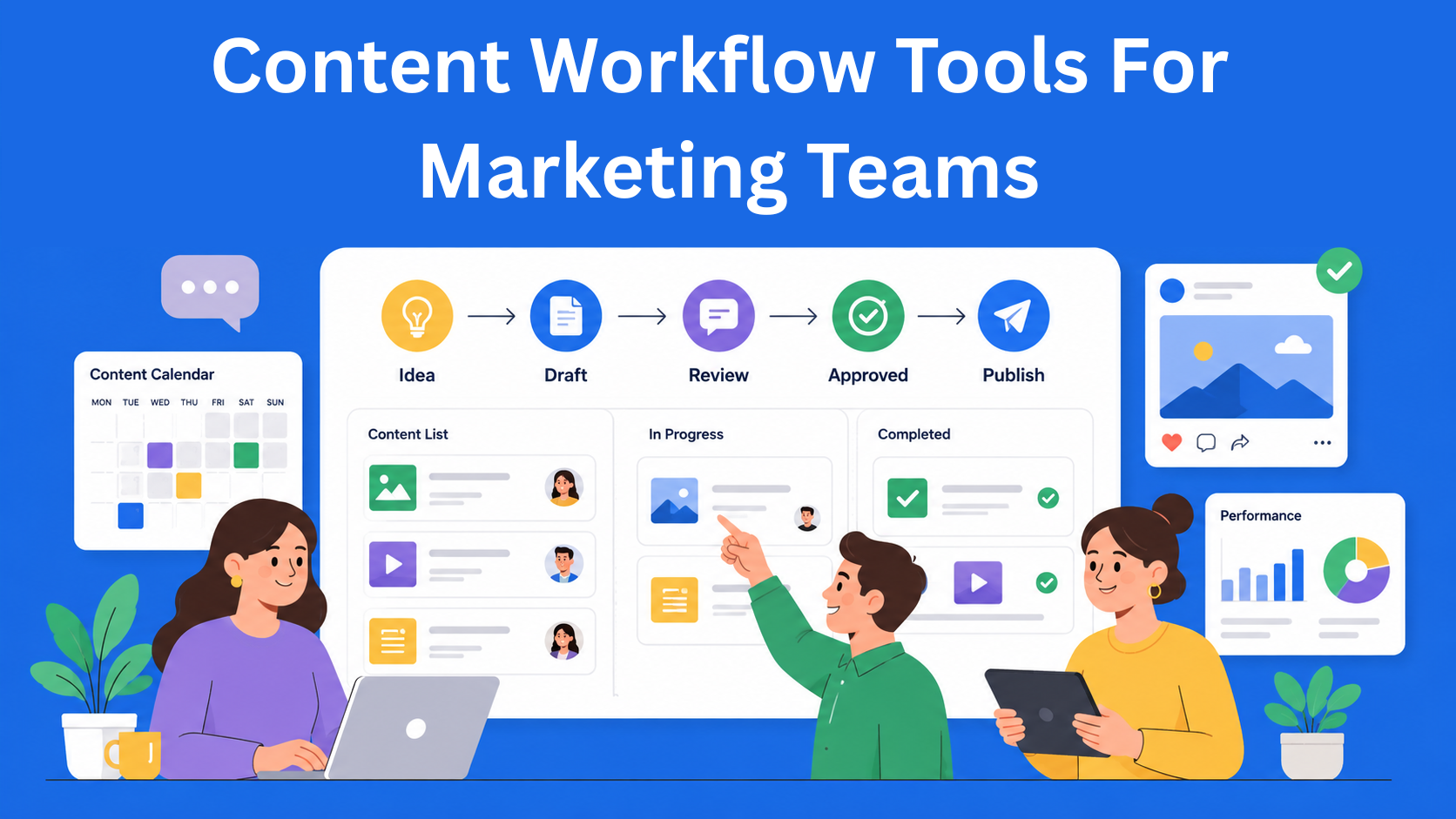
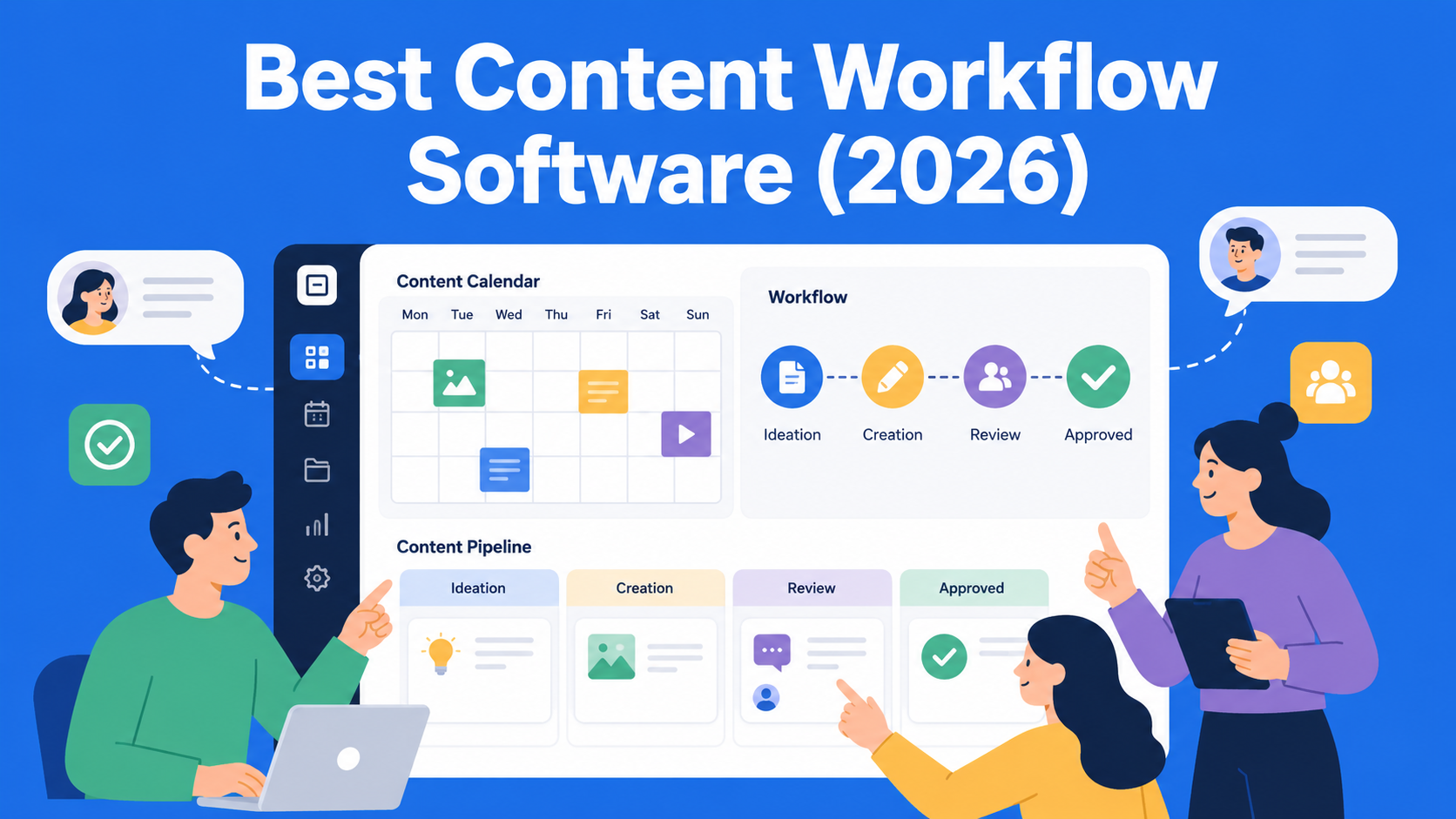
If you don’t want multiple tools, you can use EasyContent. It lets you build your own workflow, assign roles, plan content in a calendar, communicate with your team in real time, and create templates for any type of content. This saves money because you don’t need four tools, everything is in one place.
Build for Growth, But Don’t Overdo It
There’s also the opposite mistake, over-organizing.
Some teams try to plan everything perfectly and end up never creating content. They write rules, draw processes, choose tools… but there’s no content.
What matters more is that your content is good enough at the start, you’ll improve it later. Build a simple system that works for your current team. As your team grows, you can adjust it.
Documentation is useful, but only if it’s short and clear.
When should you hire someone for content operations? Only when your team grows to around 5-10 people and you feel things are no longer working well. Until then, you can manage the basics yourself.
Conclusion
Content Ops sounds serious and complex. But in reality, you’re just answering a few simple questions: what are we creating, who is doing it, how is it done, and where does it live.
If you have answers to those questions, you have a system.
Start with one process. Take your blog as an example. Create a brief template. Decide who writes and who approves. Set up a place where everything is stored. That’s your content ops system, and it’s more than enough to start.
As your company grows, your system will grow with it. You don’t need everything at once. You just need to start.
EasyContent applies AI to your content without bypassing your review process
- EasyAI drafts and edits inside the same workflow your team already reviews content through
- Style guide rules apply automatically to anything AI writes or edits
- Every AI change is reviewed by a person before it's accepted
- AI can be restricted to specific projects or team members