Content Quality Control: How to Set Up Review Processes That Actually Catch Errors
Content quality control helps you catch errors before publishing. Learn how to set up a simple review process with clear steps, checklists, and roles so your content stays accurate, easy to read, and optimized for better Google rankings.

Today, it is very easy to make a mistake in the content you publish online. One wrong piece of information, a broken link you forgot about, or a sentence that sounds strange can ruin the impression for readers. That’s why content quality control has become an important part of the job for anyone who writes blogs, website pages, or social media posts.
If you don’t have a good review system, mistakes easily slip through. And then you lose time, the trust of your readers, and you may rank worse on Google. Many teams just quickly read through a text before publishing and think that’s enough. But real content quality control is a way of working that helps you catch mistakes early, before others see them.
In this blog, I will explain how to set up a review process that actually works. Step by step.
Key Takeaways
- Content quality requires a structured review system - simple proofreading is not enough to catch deeper issues like accuracy, tone, and SEO.
- Most mistakes come from missing processes, not lack of effort - without clear rules and responsibilities, errors easily slip through.
- Multi-layer reviews improve content reliability - combining self-check, peer review, and expert review reduces the risk of mistakes.
- Checklists make quality consistent and repeatable - simple pre-publish checks ensure nothing important is missed.
- Tools support the process, but people ensure quality - AI and tools help, but human judgment is essential for accurate and useful content.
Common mistakes that slip through
Most mistakes are not a big deal at first glance, but they add up over time. Here’s what most often slips through:
- Incorrect or outdated information (e.g., “in 2023” in a text published in 2026)
- Grammar mistakes, poorly written sentences, or typing errors that make reading harder
- Content that doesn’t sound like your brand - sometimes too formal, sometimes too casual
- SEO issues: either too many keywords forced into the text or not enough useful content
- Broken links, poor images without descriptions, or bad formatting
- Claims without proof that could lead to legal issues
With the rise of AI writing tools, a new type of mistake has appeared - “hallucinations.” AI sometimes makes up information that sounds convincing but is not true. That’s why content quality control today also needs to catch these problems.
Small mistakes cost you in the long run: you lose reader trust, Google may lower your rankings, and in worse cases, you can lose money due to poor conversions.
Basic principles of a good content quality system
Content quality control is not the same as simple proofreading. Proofreading catches commas or spelling mistakes. A real system prevents mistakes and catches them on multiple levels.
The main idea is: it’s better to prevent than to fix later. Instead of only looking for mistakes at the end, set clear rules from the start.
Another important principle is having multiple layers of review. One person can miss something, but it’s much harder when several people check it. And finally - everyone needs to know exactly what they are responsible for checking. Without clear rules, the review process becomes random.
How to set up a review process step by step
Start with the basics.
1. Create clear rules (Content Style Guide):
- How your brand sounds (friendly, professional, simple…)
- Which words you like to use and which ones to avoid
- How you cite sources and check facts
- Basic SEO rules and technical details (headings, image alt text…)
If you don’t have this guide, everyone writes based on their own feeling, and quality varies.
2. Set up a multi-layer review process
Here is a simple structure you can use:
- Layer 1: Writer self-check - before sending the text, the writer goes through a basic checklist (are all facts correct, do links work, is the text clear).
- Layer 2: Colleague (peer review) - someone else from the team reads it and gives feedback on clarity and style.
- Layer 3: Main quality review - a more experienced person or someone responsible for content quality control checks everything: accuracy, SEO, brand voice, and legal aspects.
- Layer 4 (if needed): SME (subject matter expert), a specialist for a specific area (e.g., a lawyer for legal content or an SEO expert).
At the end, there is final approval before publishing. This may sound like a lot of steps, but once you get used to it, it becomes fast.
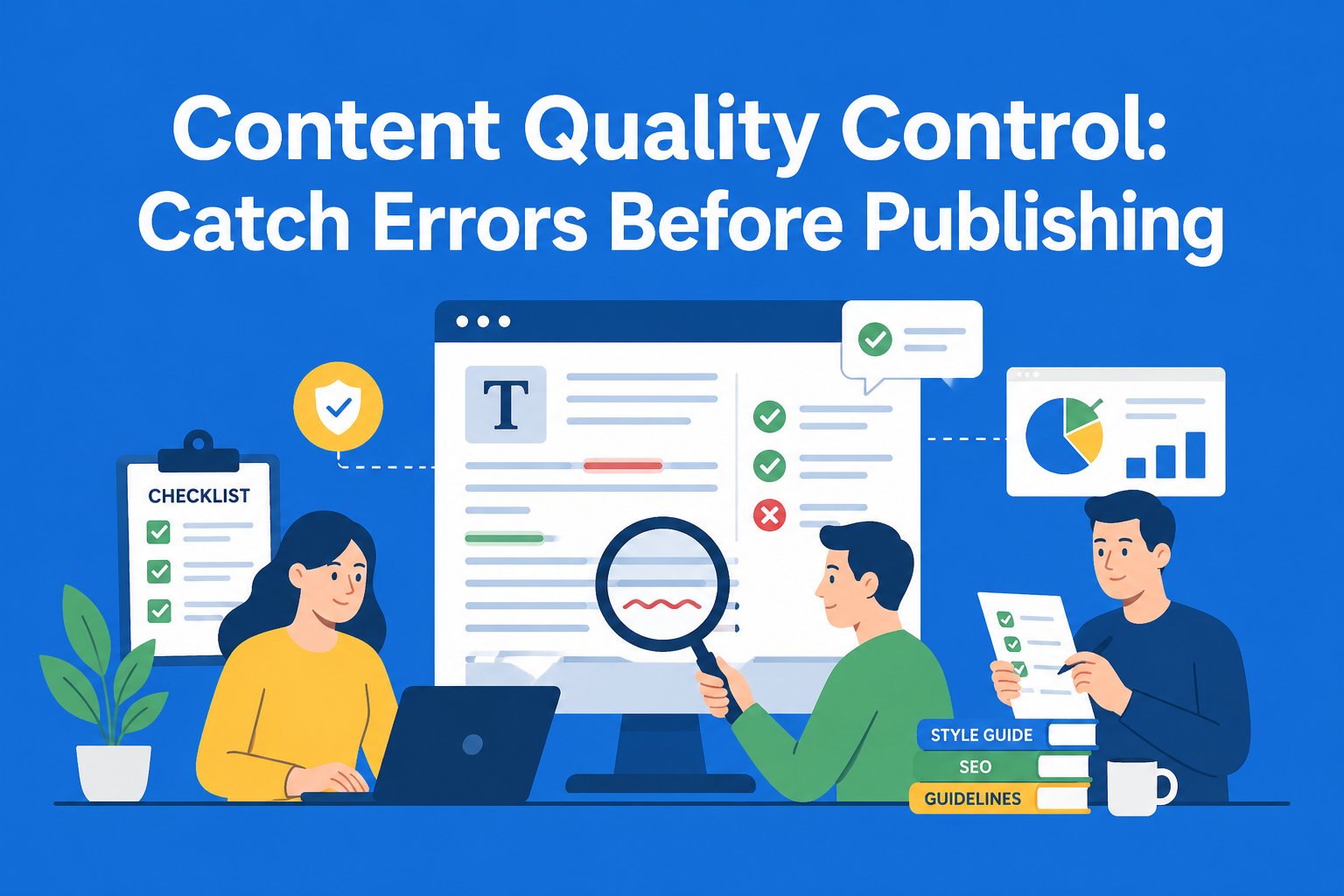
3. Use checklists The best tool for content quality control is a simple checklist. It helps you avoid forgetting things.
Example of a basic pre-publish checklist:
- Are all facts correct and from reliable sources?
- Does the text clearly communicate the main message?
- Does the tone match the brand?
- Are grammar and spelling correct?
- Do all links work?
- Are images described (alt text)?
- Is there a call to action at the end?
- Is the content useful for the reader?
You can create separate checklists for writers, editors, and final review.
Tools that help you do the job
You don’t have to do everything manually. There are tools that make content quality control easier:
- Grammarly - checks grammar, style, and tone
- Hemingway App - shows which sentences are too long and hard to read
- SEO tools (like Surfer or similar) - help optimize content without overdoing it
- AI content check tools (to see where AI may have made things up)
- EasyContent - for comments and team collaboration
The most important thing is to use tools as support, not rely only on them. A human still does the best job of judging whether content makes sense and sounds natural.
How to make the process actually work
Many teams set rules but don’t follow them. Here’s how to avoid that:
- Set deadlines (e.g., reviews should take no more than 1-2 days)
- Train your team on how to review properly (it’s not the same as just reading)
- Occasionally audit already published content and fix old mistakes
- When a mistake slips through, quickly look at what went wrong and how to prevent it next time
- Create a culture where it’s okay to report mistakes. It’s better to fix them than hide them.
The goal is for content quality control to become a normal part of the workflow, not extra stress.
Conclusion
You don’t have to do everything at once. Start like this:
- In the next few days, create a simple Content Style Guide (even one page is enough).
- Create a basic pre-publish checklist.
- Introduce at least three layers of review for the next 5 pieces of content you create.
- Test and see what needs improvement.
After a month or two, you’ll notice fewer mistakes, better content, and a calmer team.
Content quality control is not something only big companies do. Anyone who publishes content can apply this and quickly see the difference. Good content builds trust, is easier to find on Google, and brings better results over time.
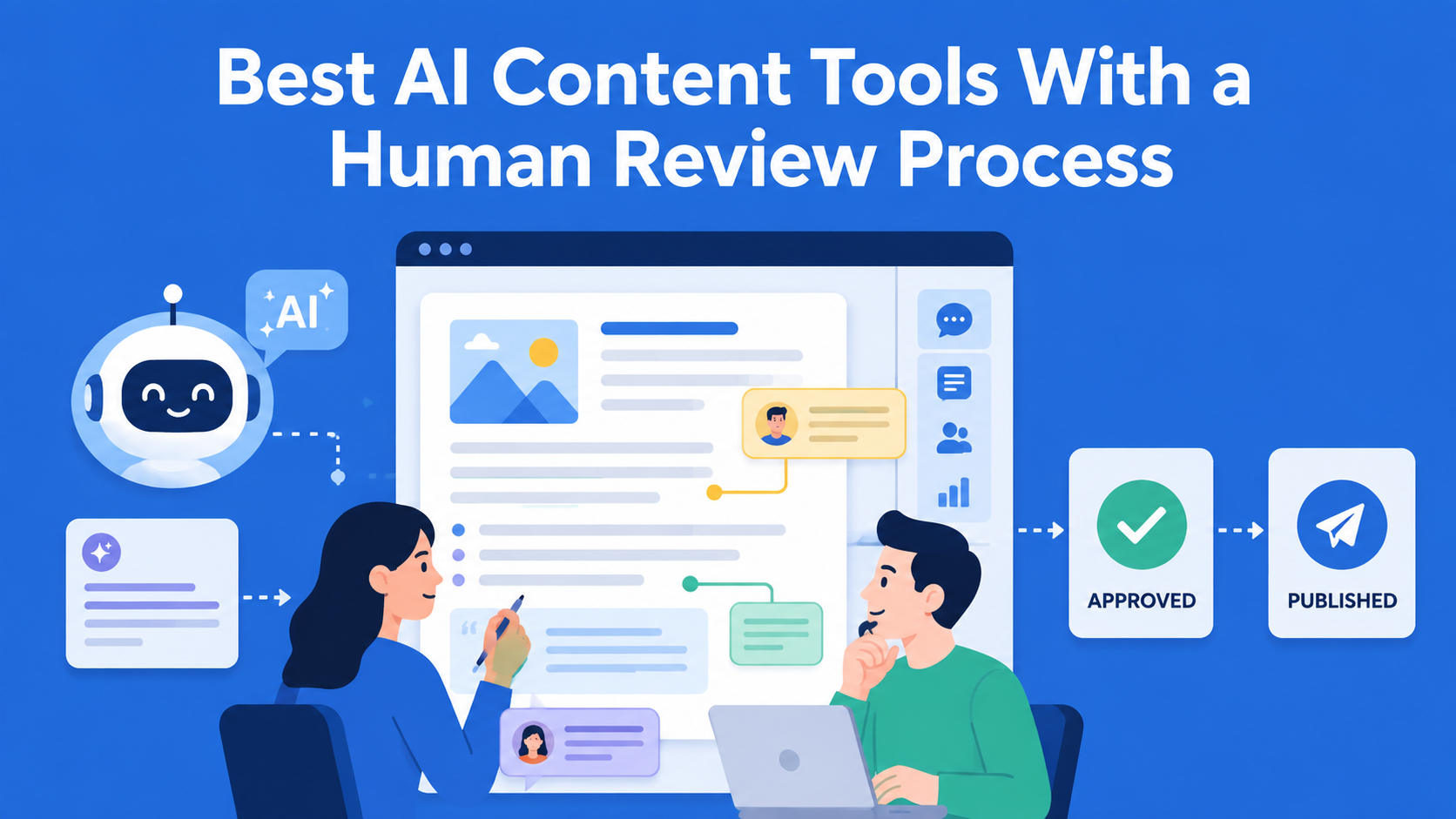
EasyContent lets AI draft content without removing the human sign-off step
- AI permission controls sit at the account, project, and user level
- Style guide enforcement applies to AI output the same way it applies to a person's
- Every AI suggestion goes through the same review stage as a human draft
- A version history records who approved each AI-touched change