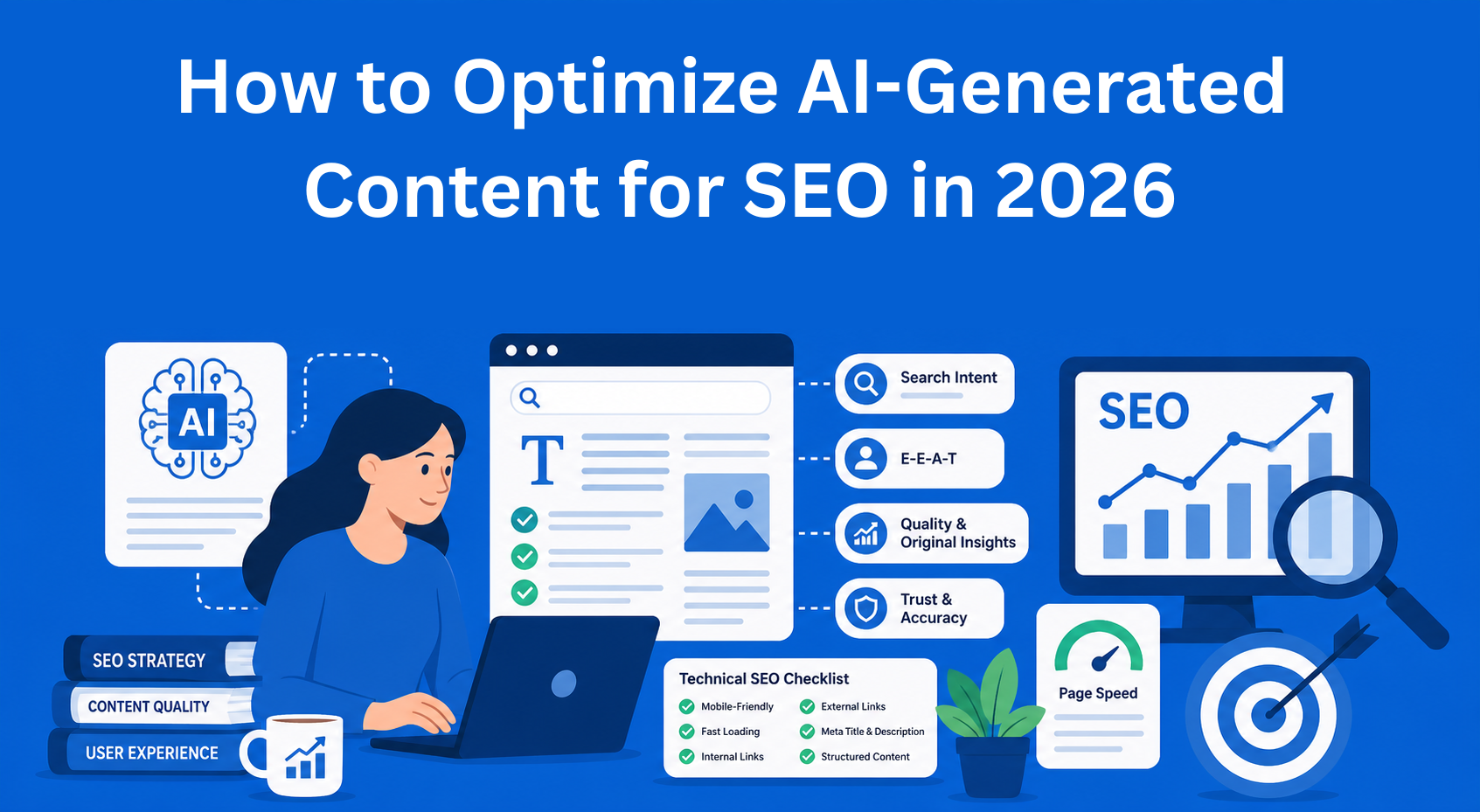
How to Optimize AI-Generated Content for SEO in 2026
AI content without optimization doesn’t guarantee success. To rank on Google in 2026, human input, SEO standards, authenticity, and clear structure are essential. Tools like EasyContent help turn AI-generated text into valuable, accurate, and competitive content.

AI is now fully integrated into content creation workflows, but that doesn’t mean that everything AI writes will automatically rank well on Google. Competition is much stronger, algorithms are smarter, and user expectations are higher than ever. Simply generating content with the help of AI is no longer enough.
In this blog, we will talk about how you can take AI-generated content and further adapt it to modern SEO standards, so that your content remains visible, credible, and competitive.
Key Takeaways
- AI content doesn’t rank by default - in 2026, publishing AI-generated drafts without refinement leads to weak visibility and poor engagement.
- E-E-A-T matters more than ever - experience, expertise, authority, and trust must be clearly added by humans, not left to AI.
- Human editing is non-negotiable - AI drafts need real insights, validation, and depth to stand out from generic content.
- Structure and intent drive SEO results - clear formatting, strong search intent alignment, and helpful visuals improve rankings and retention.
- Process + AI beats tools alone - combining AI with structured workflows, reviews, and technical SEO creates content that actually performs.
Understanding SEO in 2026
SEO has evolved significantly over the past few years, and today Google’s algorithms prioritize content that is authentic, useful, and valuable. This is especially important when AI is part of the workflow, because AI-generated drafts must be shaped and reviewed within a structured process, rather than published without additional refinement. The E-E-A-T framework (Experience, Expertise, Authoritativeness, Trustworthiness) sits at the very core of successful rankings. AI content that lacks a human touch or original insights often ranks lower, while content that demonstrates real experience and genuine value consistently rises to the top.
Challenges of AI-Generated Content
AI tools have significantly accelerated content writing, but at the same time they often produce predictable and generic results. This happens because AI lacks the nuance and depth that real writers naturally bring into their work. As a result, AI-generated content can feel shallow or disconnected. In addition, relying too heavily on AI templates can lead to content duplication, which negatively impacts a website’s SEO potential.
How to Optimize AI-Generated Content for SEO
For AI-generated content to be truly SEO optimized, detailed human editing is essential. AI works best when it supports writers and editors, not when it completely replaces them.
Every piece of content must be carefully reviewed, with unique perspectives, personal stories, or insights added, things that AI cannot authentically replicate.
Using a platform like EasyContent can significantly streamline this review process. Its built-in AI layer supports both content creation and optimization, while workflows, templates, and approval processes ensure that every article is reviewed, edited, and aligned with quality standards before publication.
One of the key elements is understanding search intent. Simply put, this means adapting content to match exactly what users are actually searching for.
AI content should be further strengthened with original research. When AI is used to generate the first draft, it must be paired with human validation and enrichment to ensure depth, accuracy, and originality. This can include expert quotes, interviews, personal experiences, or detailed analysis. These additions make a significant difference in both quality and rankings.
Content structure also plays an important role.
Clear subheadings, readable formatting, and concise paragraphs contribute to a better user experience and help keep visitors on the page longer.
Visual elements such as images, infographics, or video clips not only enrich the content but also positively impact SEO performance.
Fact-checking is another critical step. AI-assisted editors can help identify potential issues, but human oversight is still necessary to confirm accuracy and credibility.
AI occasionally “hallucinates” facts or confidently presents inaccurate information. That is why verifying names, data, and claims before publishing is of essential importance.
Finally, technical SEO should never be overlooked. Even the best AI-supported content requires strong technical foundations in order to perform well in search results.
Make sure your content is mobile-friendly, loads quickly, includes internal and external links, and is supported by well-optimized meta titles and descriptions.
Tools That Help Optimize AI Content
- SEO Surfer helps with keyword optimization and on-page SEO guidelines.
- Grammarly improves tone, clarity, and readability.
- Originality.ai is useful for plagiarism checks and detecting AI-generated content.
Once these tools have done their part, EasyContent helps manage editorial workflows. With AI-assisted writing and editing built directly into the platform, teams can move from the first draft to reviewed, optimized, and publish-ready content, without losing control or visibility at any stage.
Conclusion
Generating content with AI is only the beginning today. The real difference is made through optimization.
By combining the speed of AI with careful human editing, real-world examples, and strong SEO standards, teams can create content that not only ranks well on Google, but also delivers real value to readers.
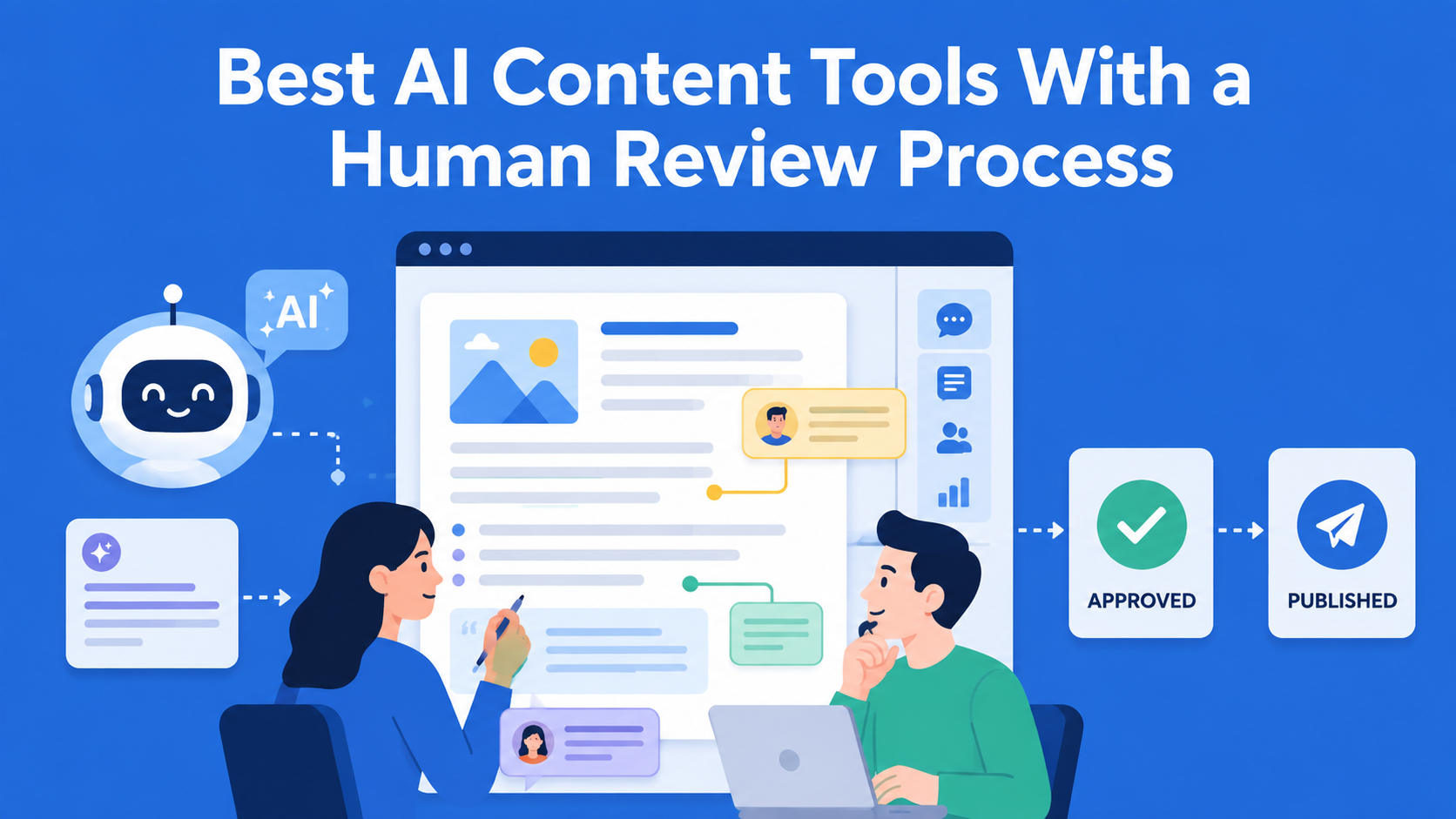
EasyContent lets AI draft content without removing the human sign-off step
- AI permission controls sit at the account, project, and user level
- Style guide enforcement applies to AI output the same way it applies to a person's
- Every AI suggestion goes through the same review stage as a human draft
- A version history records who approved each AI-touched change