How to Scale Content Production with AI Without Sacrificing Quality or Trust
Learn how to scale content production with AI without losing quality, trust, or your brand voice. This guide shows how to use AI as a helper, build a simple workflow, and keep every piece of content useful, natural, and trustworthy.

Today, almost everyone needs more content. If you sell products, build a brand, or want people to find you online, you need to publish articles, posts, emails, and videos regularly. The problem is that there is often not enough time for all of that, and teams are small. That is why many people start using AI tools, because they can create text quickly. But if that text is not checked and edited, it can easily sound boring, generic, or dishonest. When that happens, people can lose trust.
The good news is that you can increase content production several times over without losing quality and trust.
In this blog, we will show you a simple way to do that, step by step.
Key Takeaways
- AI can scale content production without losing quality - when used correctly, it helps teams produce more content while maintaining consistency and trust.
- AI should assist, not replace human input - human editing, experience, and decision-making are essential for valuable content.
- Clear rules and workflows ensure quality control - brand guidelines, review steps, and structured processes prevent generic or low-quality output.
- Using the right tools improves efficiency - combining tools for research, writing, SEO, and repurposing makes content production faster and more organized.
- Measuring real impact is more important than volume - engagement, conversions, and trust matter more than how much content you publish.
Why Most AI Content Performs Poorly Today
When someone simply types a topic into ChatGPT or another similar AI tool and immediately publishes the text they get, the result is often not good. That kind of text can sound empty, boring, and the same as many other texts on the internet. Readers notice that quickly. Because of that, this kind of content can perform poorly both with the audience and on Google.
People want useful, honest, and helpful information. When they feel that something was written by a machine without control, they lose trust. That is why it is important to use AI as an assistant, not as a complete replacement for yourself or your team.
The Right Way to Think About It: AI Is a Helper, Not the Boss
Look at AI as a helper, not as someone who should do everything instead of you. AI can quickly help you with the boring parts of the work. It can suggest ideas, create the first draft of a text, or come up with several headlines. But you still decide what is good, what should be removed, what should be added, and whether everything is correct.
In other words, AI can speed up the work, but a human still has to make the main decisions. When you use it this way, you can create many more texts per month, while they still sound normal, useful, and professional.
Five Pillars for Scaling Content Production with AI
1. Set Clear Rules for Quality and Trust
Before you start using AI, create simple rules. For example, write a short description of your brand — how you sound, which words you like to use, and which words you do not want to use. This is your Brand Voice guide. Every text should follow it.
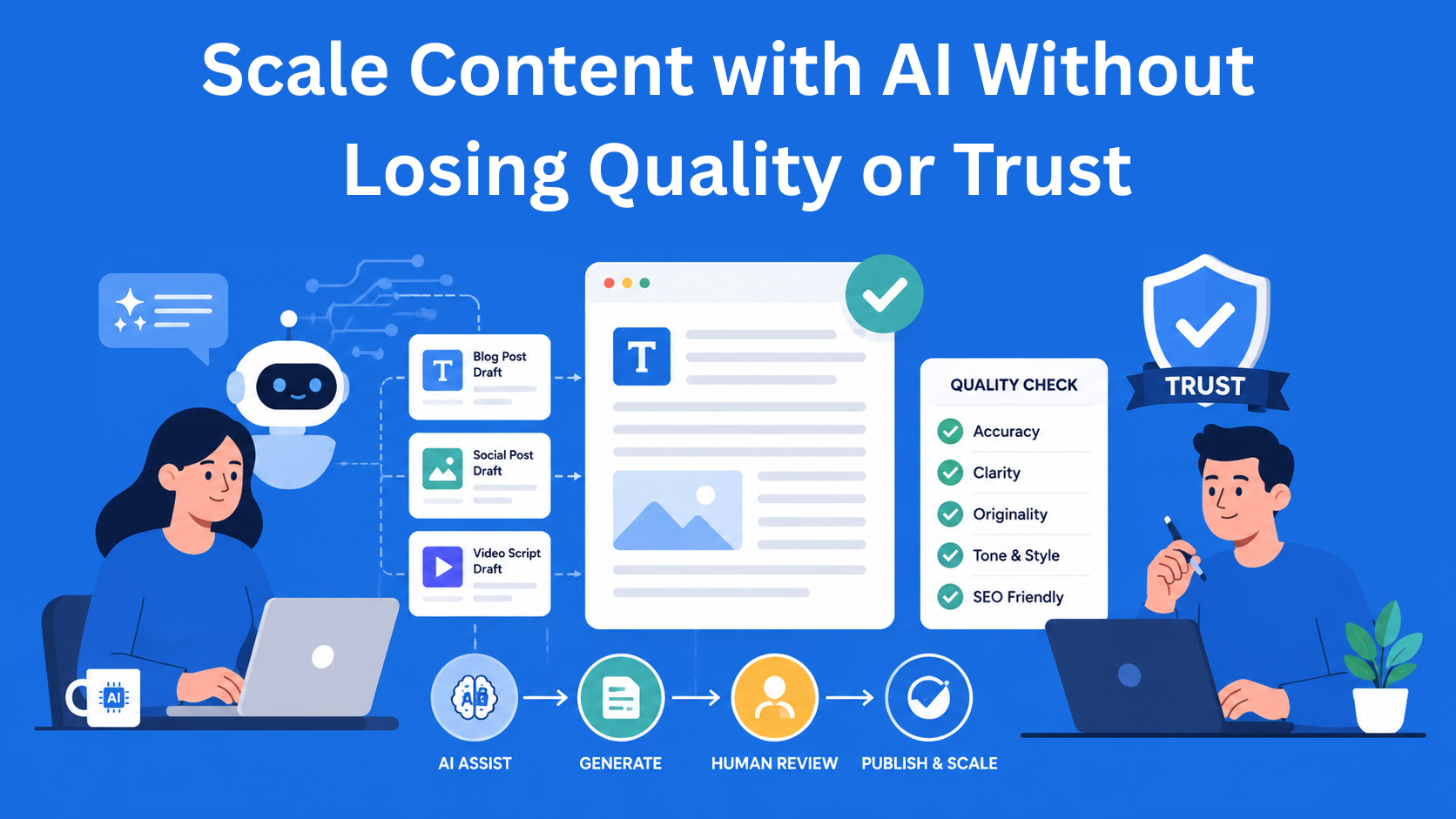
Also, create a short checklist for reviewing the text. For example, check whether the text has good examples, whether the information is accurate, and whether the reader can really get something useful from it. It is also important that the text shows you know what you are talking about, instead of sounding like it was just thrown together for the sake of publishing. When you have rules like this, AI can help you work faster, but you still keep quality under control.
2. Create a Clear Workflow
The best results come when AI and a human work together in steps:
- First, with the help of AI, you come up with ideas and quickly collect basic information.
- After that, you create a plan for the text, which means you decide what you will write and in what order.
- Then AI can write the first version of the text.
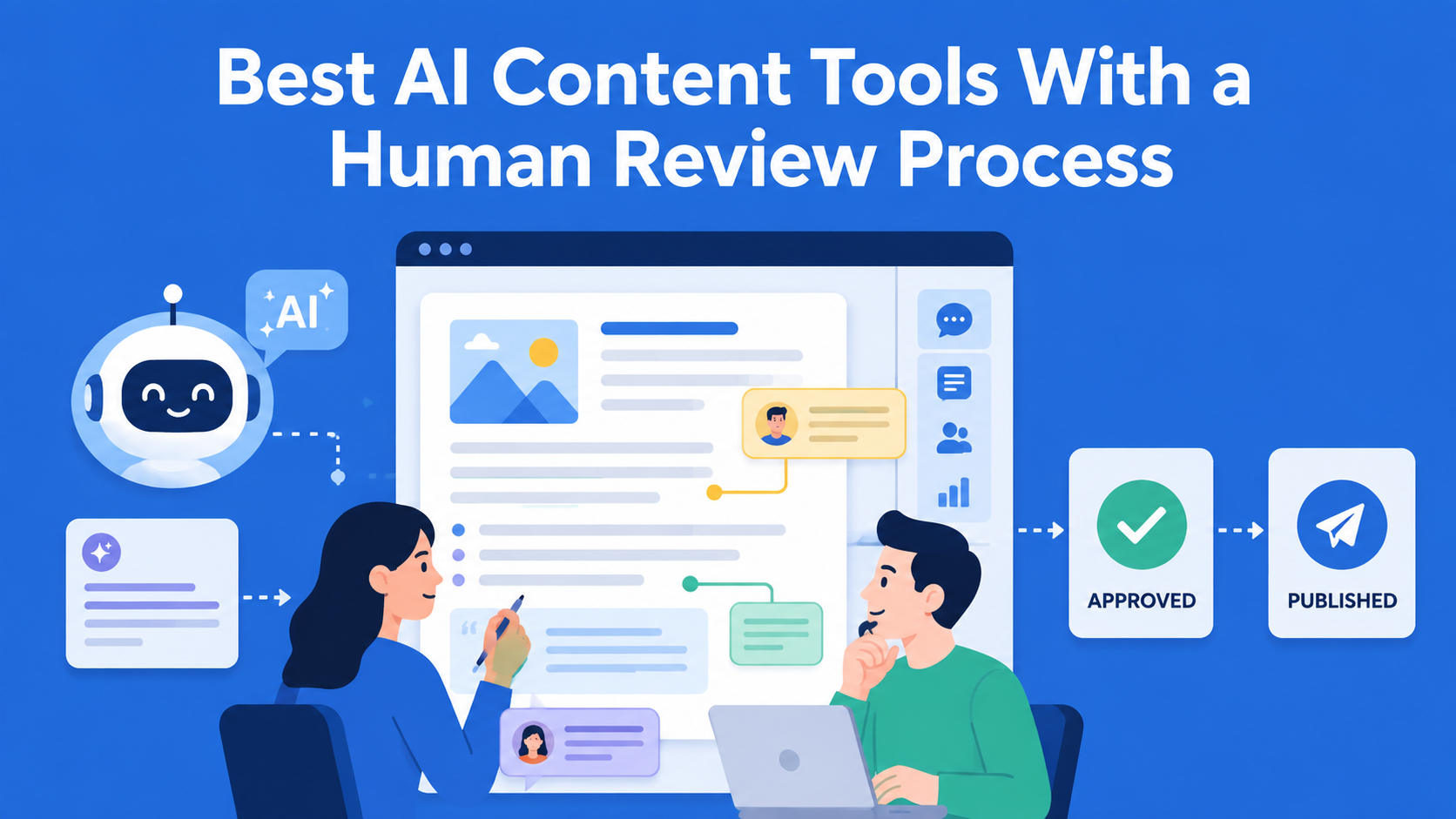
- Then you or someone from your team reads that text, improves it, adds real examples, and checks whether everything sounds natural.
- In the end, you check one more time whether the information is accurate and whether the text is good for Google search.
This way, AI handles the heavy and fast parts, while you keep control over quality.
3. Use the Right Tools
You do not need ten different programs. Start with a few good ones:
- For research: Perplexity or Claude.
- For writing: Claude or Grok.
- For SEO checking: Surfer or similar tools.
- For turning one text into multiple formats, also known as repurposing: tools like Descript or Munch.
The important thing is not to change tools every week. Choose two or three and learn how to use them well.
4. Protect Quality with a Process
Do not publish the text that AI creates for you right away. Always read it first, check it, and improve it. Add your own experience, real examples, or data you have. That is what makes the text better and more natural, because AI cannot replace your knowledge and your way of thinking.
Also, regularly check whether your texts actually help people. Look at comments, messages, and how readers behave on the page. If people stay longer on the text, click on links, or contact you after reading it, that is a good sign that the content means something to them. When people see real value, they build trust more easily.
5. Measure What Really Matters
Do not only look at how many texts you have published. The point is not to have a lot of content if nobody reads it and if it does not help anyone. It is better to look at whether people stay on the text, whether they click on links, whether they send you messages, or whether they eventually buy something from you. One good text, created with the help of AI and properly edited, can be worth much more than ten poor texts created in a rush.
Mistakes You Should Avoid
- Do not copy everything AI writes without checking it. First read the text and check whether everything makes sense.
- Do not use one tool for absolutely everything. Some tools are better for research, some for writing, and some for checking the text.
- Do not forget your own writing style. The text should sound like you or your brand, not like a robot.
- Do not skip your own examples, experience, and research. That is what gives the text value and makes it different from ordinary AI content.
If you just let AI do everything instead of you and do not check anything, people will notice it quickly. The text can sound empty, unnatural, and without real experience. And when people notice that, it becomes much harder for them to trust you.
What Awaits Us in the Coming Years
AI will become better over time, but that does not mean humans will become unimportant. Quite the opposite. People who know how to use AI wisely will have a big advantage. They will be able to create content faster, but they will still need to add their own knowledge, experience, and common sense.
The people who will do best are those who do not use AI only to publish as many texts as possible, but to create content that truly helps readers and sounds honest.
Conclusion
You can create much more content with the help of AI, but only if you use it in the right way. AI should not be someone who writes everything instead of you, but a helper that speeds up your work. You still need to set rules, create a clear process, use good tools, and check every text before publishing. That way, you can get more content, while it still remains high-quality, useful, and trustworthy.
Start slowly. You do not have to change everything right away. For the beginning, try to create a plan for one text with the help of AI and see how it goes. After that, you can gradually use AI for other parts of the work as well. The more you use it in the right way, the easier it will be to create more content without hurting the quality.
EasyContent onboards a new contributor without a training session
- Field guidelines and templates tell a new writer what's expected before they start
- Briefs can be claimed by a contributor the moment they're ready to start
- Mentions route a comment straight to the person who needs to see it
- Teams group contributors by client or project for quick reference