How Universities Can Manage 200+ Content Contributors Without Chaos
Managing university content across multiple teams doesn’t have to be difficult. Learn how to structure roles, workflows, and systems to keep content consistent, up-to-date, and easy to manage at scale.

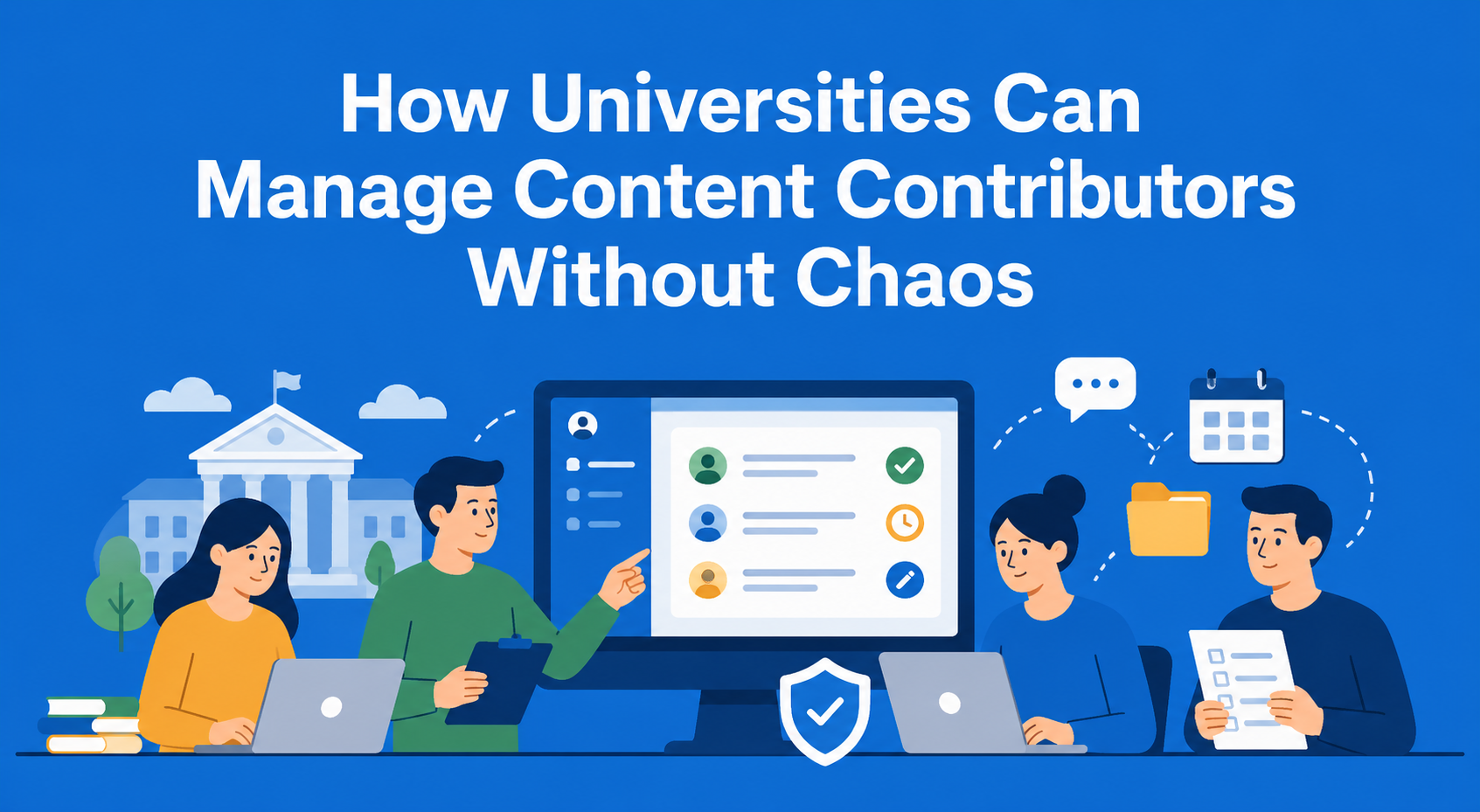
Every university has the same problem. There are many pages on the website and many different teams working on them, student services, research centers, libraries, sports clubs. Everyone writes their own part, following their own rules and style. And almost no one looks at what others are doing.
This often leads to pages not being updated for years. Documents that contradict each other. A visual identity that looks different across departments. University content management becomes a nightmare for the people responsible for keeping everything under control.
This is not a people problem. The problem is that everything has become too big. And this is not solved with better tools or more control, but with a clear system that everyone can easily understand and follow.
Key Takeaways
- Managing content at scale requires a clear system - large numbers of contributors lead to inconsistency, outdated pages, and confusion without structure.
- Lack of ownership is the biggest risk - when everyone can edit content, no one feels responsible for keeping it accurate and updated.
- A three-level role model creates balance - content creators, department editors, and a central team distribute responsibility without bottlenecks.
- Simple workflows and templates drive consistency - clear steps, deadlines, and predefined formats make it easier for contributors to follow the process.
- Adoption depends on culture, not just tools - training, guidelines, and internal champions turn contributors into active participants.
Why things go wrong
Before we start talking about solutions, it’s important to understand why this happens in the first place.
At a typical university, between 150 and 400 people have access to the content management system. That’s a huge number. And each of them has their own rules, expectations, and ideas about what should be on the website.
The first problem is that each department works on its own.
- Admissions focuses on attracting new students.
- Research centers promote their projects.
- Student services publish deadlines and announcements.
Everyone is focused only on their part, and very few people see the bigger picture.
The second problem is that people are constantly changing. Students who help with content come and go every year. Staff members also change. Every new person has to learn everything from the beginning, and while doing that, they often make mistakes.
The third problem might be the worst: no one is responsible. When everyone has access, no one feels ownership. A page becomes outdated, a link breaks, information becomes incorrect, and no one notices because no one sees it as their responsibility.
Because of this, you end up with broken links, a website that is not accessible to everyone, an inconsistent look and feel, and users who can’t easily find what they are looking for.
Solution: Three levels of responsibility
The foundation of any good university content management system is a clear distribution of roles. The simplest and most effective model is the one with three levels.
- Level 1 - Content creators. People who write content, prepare materials, and update information. They cannot publish anything on their own. Everything they create must be reviewed by someone above them before it goes live.
- Level 2 - Department editors. Each department has one or two people who review the content created by their team and approve it for publishing. They understand their department well and can judge whether something is accurate and relevant.
- Level 3 - Central web team. This is a small team that makes sure everything on the website looks and sounds consistent and follows basic rules. They don’t need to approve every piece of content, but they set the standards and occasionally check if they are being followed.
Why three levels instead of two? If you only have two levels, the central team has to approve everything. That quickly overwhelms them and slows everything down. With three levels, the work is distributed, everyone knows their role, and no one is overloaded.
The key question is who assigns these roles and how they are updated when someone changes jobs or leaves the institution. This needs to be clearly defined from the start.
A workflow people will actually follow
A good content strategy is not just about roles. It’s also about how content moves from idea to publication. If the process is complicated, people will avoid it, and things will fall apart again.
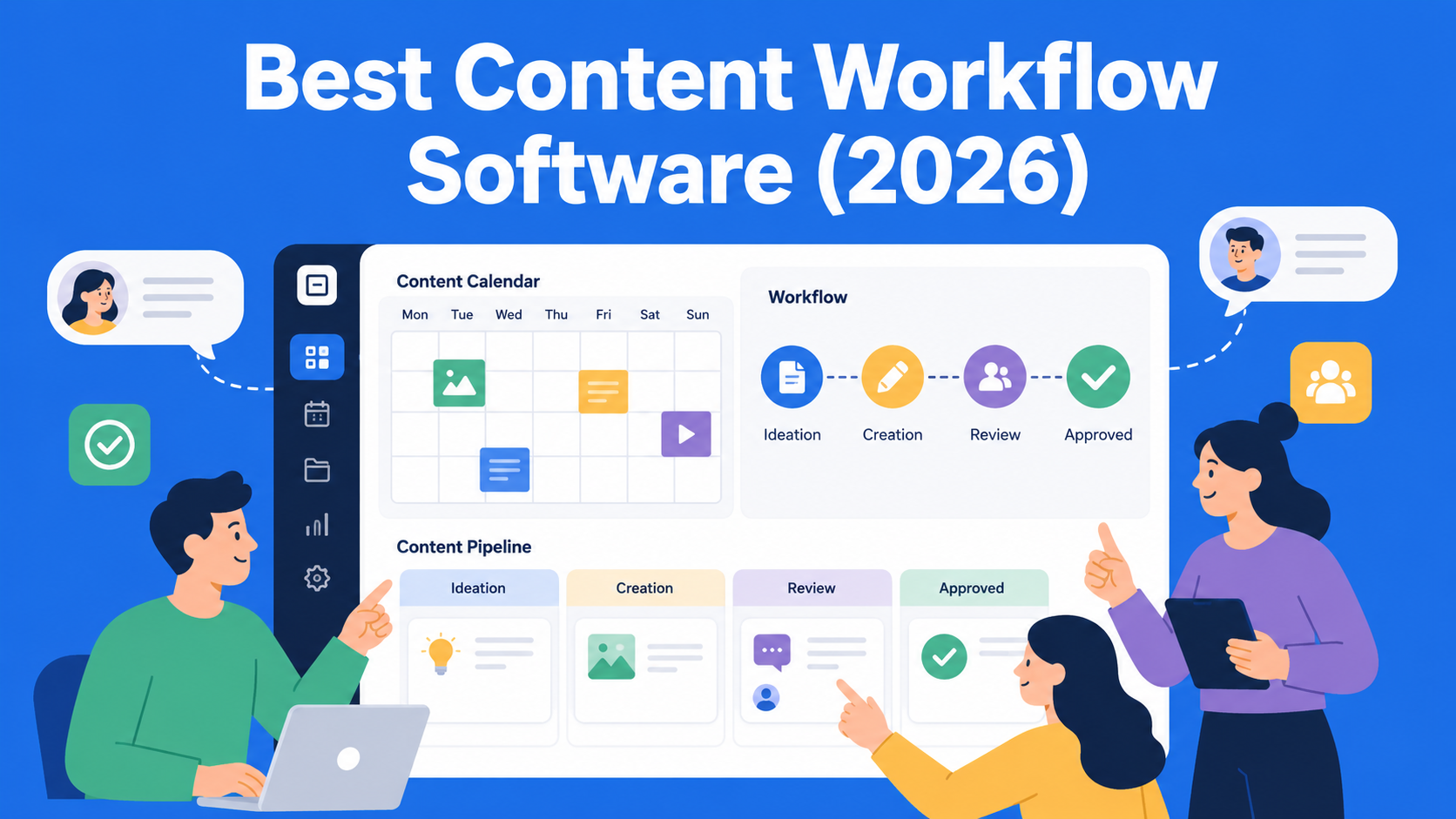
The simplest workflow looks like this: content request → draft writing → review → publication → periodic content review.
Each step must have a clear time frame. For example, an editor has three working days to review a draft. If they don’t respond, the content goes back to the writer with a note to find another editor. Without rules like this, drafts can sit for weeks.
Templates are extremely helpful, predefined formats for common types of content (announcements, program descriptions, faculty bios, etc.). Templates reduce pressure on writers because they don’t have to figure out the format every time, and they automatically ensure a certain level of consistency.
When you have 30 or more departments, things quickly become complicated. It’s hard to track who is publishing what and when. That’s where an editorial calendar helps, a simple plan where everyone can see who is publishing what and at what time, so multiple teams don’t publish similar or conflicting content at the same time.
Turning contributors into allies
One of the biggest mistakes teams make is treating content contributors as a risk that needs to be controlled. That’s the wrong approach.
If people feel constantly monitored, they pull back and do the bare minimum. If you involve them and treat them as partners, they put in more effort and are more willing to help.
Good onboarding doesn’t have to be long. One hour of a clear introduction, who the key contacts are, how the system works, what is not allowed and why, is more than enough to get started. Details come with experience.
A brand guideline document, explaining how communication should look and sound, should not be written as a list of rules and restrictions. It should be written as guidance. “This is how we communicate because we want students to clearly understand what we offer” sounds very different from “it is forbidden to use unapproved fonts.”
A very effective model is introducing a content liaison in each department, someone who understands the rules well enough to help colleagues, so they don’t have to contact the central team every time. This person becomes the bridge between departments and the central team.
And of course, highlight good examples. Internal awards, recognition in newsletters, or a simple “site of the month” all boost motivation and send a clear message that quality content matters.
Tools that help, not get in the way
Many teams make the mistake of buying expensive tools thinking they will solve the problem. A tool doesn’t solve anything if there is no system behind it.
But when the system exists, the right tools make everything easier.
When choosing a CMS for a large team, look at three things:
- does it support different access levels (not everyone should see and edit everything),
- does it keep a history of changes (who changed what and when),
- is it easy to use (because even non-technical staff will use it).
One such tool is EasyContent, where you can create your own workflow, define roles for each team member, communicate in real time, access version history, create flexible templates for any type of content, track content status through a clear dashboard, and much more.
What to measure to know if the system works
Metrics are an important part of any content management system. But many teams track the wrong things.
Website traffic is important, but it doesn’t tell you anything about the health of your content process. Here’s what you should actually track:
What percentage of pages has been reviewed in the last 12 months? If it’s below 70%, you have a problem with outdated content.
How long does it take from request to publication? If it takes more than two weeks for standard content, there is a bottleneck somewhere slowing things down.
What percentage of pages meets accessibility standards? This is not just about quality, it’s also a legal requirement.
Is your brand consistent? Occasionally review 20-30 pages and check if they look and sound similar. You don’t need to control every detail, just identify bigger inconsistencies and fix them.
Conclusion
In the end, it all comes down to this: good content management at a university is not about the central team controlling everything. It’s about enabling each department to communicate clearly, effectively, and consistently.
Start with one faculty or department and implement this model there. If it works, it will be much easier to roll it out across the entire university. The best proof is when something already works.
The best websites are not built by universities with the fewest contributors. They are built by those who know how to align a large number of people toward a shared goal, instead of letting everyone pull in different directions.
EasyContent applies AI to your content without bypassing your review process
- EasyAI drafts and edits inside the same workflow your team already reviews content through
- Style guide rules apply automatically to anything AI writes or edits
- Every AI change is reviewed by a person before it's accepted
- AI can be restricted to specific projects or team members